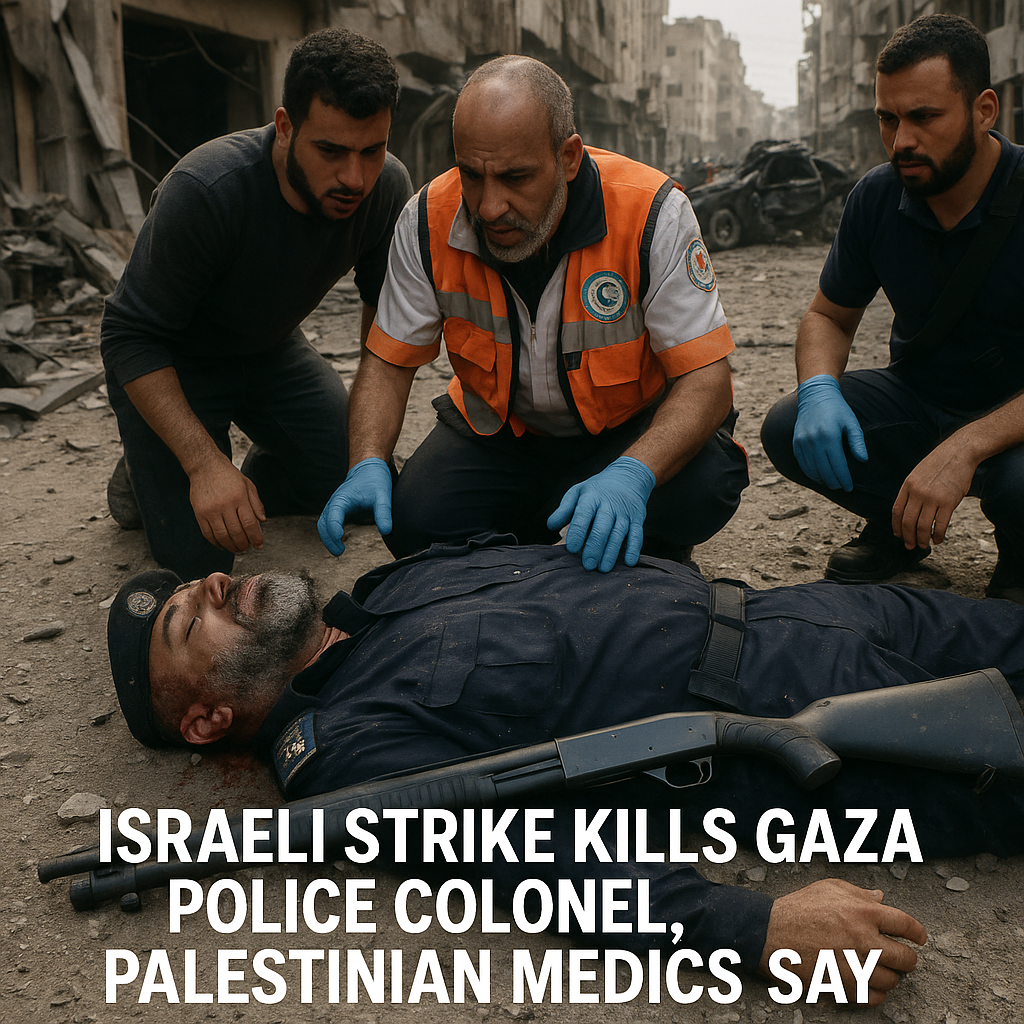
Israeli Strike Kills Gaza Police Colonel, Palestinian Medics Say
Understanding the Impact of the Israeli Strike on Gaza’s Police Leadership
The recent Israeli strike that resulted in the death of a Gaza police colonel has reignited layers of complex tensions in the region. Reports indicate that the targeted airstrikes have impacted not only the immediate victims but have broader implications for the ongoing Israeli-Palestinian conflict and regional stability.

The Context of the Strike
According to Palestinian medics, the airstrike took place in Gaza City, killing Colonel Mohammed Sabaaneh, a senior member of the police force affiliated with Hamas. This incident comes amid heightened hostilities as both sides have exchanged fire over the past weeks, escalating an already fraught situation. Al Jazeera reported that this attack is seen as part of a broader Israeli strategy to undermine Hamas’s control within Gaza, highlighting the delicate balance of power in the territory.

The Israeli government has characterized its military actions as necessary responses to ongoing threats posed by militant groups. Defense officials assert that Hamas and other factions continue to operate within Gaza, posing risks to Israeli civilians. This justifies their military engagement, they argue, as part of national security efforts.

Reactions and Perspectives
The strike has garnered a variety of reactions from both local and international communities. Palestinian authorities condemned the airstrike as a blatant act of aggression and a violation of international law. They argue that targeting police officials contributes to a sense of lawlessness and incites further violence. Many locals share this sentiment, expressing fears that repeated strikes could destabilize Gaza further and undermine any hope for peace negotiations.
Conversely, Israeli officials have defended their military strategy, citing intelligence that linked Colonel Sabaaneh to militant operations. An official stated, “We will take action against those who threaten our citizens.” This response underscores a significant divergence in viewpoints regarding the legitimacy of military actions in urban settings.
The polarization of perspectives surrounding this strike illustrates the complexities at play. Some argue that the strikes are essential to achieving short-term stability by dismantling militant operations. Others warn that such actions may provoke retaliation, hamper peace efforts, and ultimately lead to civilian casualties.
The Broader Implications for Gaza and Israel
As the situation develops, the ramifications extend beyond immediate fatalities. With each airstrike, the humanitarian crisis within Gaza intensifies. The United Nations has warned of dire conditions, noting shortages in essential goods, medical supplies, and basic services. Civilians find themselves caught in the crossfire, with mounting casualties and growing discontent toward both their own leadership and the Israeli state.
Conversely, within Israel, concerns rise about national security and the ongoing threat posed by groups operating from Gaza. Public opinion remains divided; while there are calls for bombings to cease, there is also significant support for military actions deemed necessary for preserving safety.
The ideological divide about the principles of military engagement raises critical questions about the morality and legality of striking civilian or quasi-civilian targets. Critics of Israeli military actions argue that embedding leaders in civil services like police exacerbates tensions and leads to unnecessary violence and retaliation.
Conclusion: A Continuing Cycle of Violence
The Israeli strike that killed the Gaza police colonel highlights the ongoing cycle of violence and retribution in the region. With polarized opinions and escalating tensions, both sides face significant obstacles in moving toward meaningful dialogue or peace agreements. While some might view military action as a necessary evil, the long-term consequences could entrench divisions even deeper, perpetuating a cycle of violence that hinders any progress.
As this conflict unfolds, it’s essential for global communities to engage in discussions that not only focus on immediate security needs but also emphasize the humanitarian context and long-term solutions. Acknowledging the multiple narratives and experiences in this conflict is crucial for understanding the road ahead.