
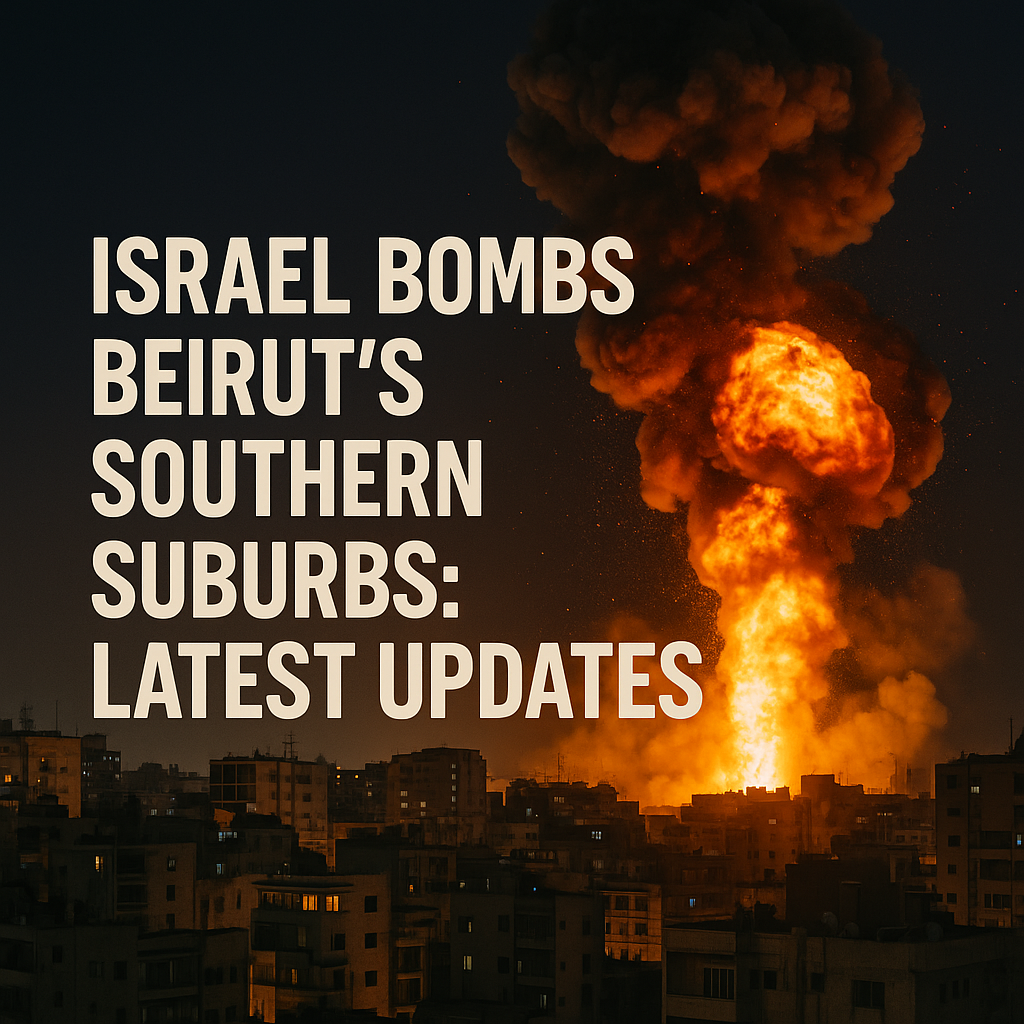
Israel Bombs Beirut’s Southern Suburbs: Latest Updates
Israel Bombs Beirut’s Southern Suburbs: A Complex Situation Unfolds

On a recent evening in Beirut, Israel conducted airstrikes in the southern suburbs, escalating tensions in an already volatile region. The strikes reportedly targeted sites associated with militant groups, but the implications of such actions reverberate far beyond the immediate destruction, impacting the political landscape and further straining daily life in Lebanon.

The Context of Escalation
Tensions between Israel and various groups in Lebanon, particularly Hezbollah, have seen significant fluctuations, often spurred by political and military developments in the region. The latest bombings appear to be a direct response to perceived threats from Hezbollah, an organization that Israel has long regarded as a formidable adversary. Israeli officials have stated that these actions are necessary for national security; they claim that the threat posed by Hezbollah’s military buildup warrants preemptive measures.

However, this perspective is not universally accepted. Hezbollah and many Lebanese citizens view Israel’s military actions as acts of aggression, exacerbating the already precarious situation in Lebanon. The suburbs targeted in the recent airstrikes are known to house both civilians and Hezbollah operatives, raising questions about the proportionality and morality of such military tactics.
Civilian Impact and Responses
The civilian toll of the airstrikes has been profound. Reports indicate that homes have been destroyed, and residents have been left in shock. Local media coverage reflects a profound sense of insecurity among the population, prompting many to voice concerns about their safety and the future stability of Lebanon. In an interview with a local news outlet, one resident expressed that “we are tired of living under constant fear of bombings,” highlighting the everyday anxiety faced by those in the targeted areas.
International responses to the airstrikes have been mixed. Some nations and organizations have condemned Israel’s actions as disproportionate, demanding a halt to military operations that threaten civilian lives. Conversely, certain Western governments have backed Israel’s right to defend itself, framing their actions within the context of ongoing threats posed by militant groups in Lebanon. This dichotomy illustrates the complexities of international politics where support is often contingent on national interests and alliances.
A Looking Glass into Future Relations
The aftermath of the airstrikes indicates a precarious future for Israeli-Lebanese relations. As the situation evolves, speculation abounds about potential retaliatory actions from Hezbollah. The group’s leadership has historically vowed to respond to Israeli aggression, and many analysts anticipate a possible escalation in hostilities.
Moreover, the international community’s role remains critical. Countries in the region, such as Iran and Syria, have vested interests in the outcome of these tensions, potentially influencing Hezbollah’s next moves. Analysts argue that without a proactive diplomatic effort to address the underlying grievances, the cycle of retaliatory strikes may continue, further destabilizing the region.
A Balancing Act
For observers, the situation underscores the complexities of Middle Eastern geopolitics and the difficulty of achieving a lasting resolution. While it is evident that Israel perceives these strikes as a legitimate action against a terrorist threat, this viewpoint must be weighed against the significant humanitarian concerns raised by the bombings.
As the dust settles in Beirut’s southern suburbs, one thing remains clear: the delicate balance between military action and civilian safety is fragile at best. Both local populations and international stakeholders will need to engage in dialogue to foster understanding and minimize the risk of further conflict.
In conclusion, the recent airstrikes by Israel on Beirut’s southern suburbs have not only heightened immediate tensions but also raised broader questions about the nature of conflict in the region. As the situation continues to develop, it remains imperative to examine all perspectives involved, acknowledging the complexities that define this ongoing struggle for security, sovereignty, and peace.















