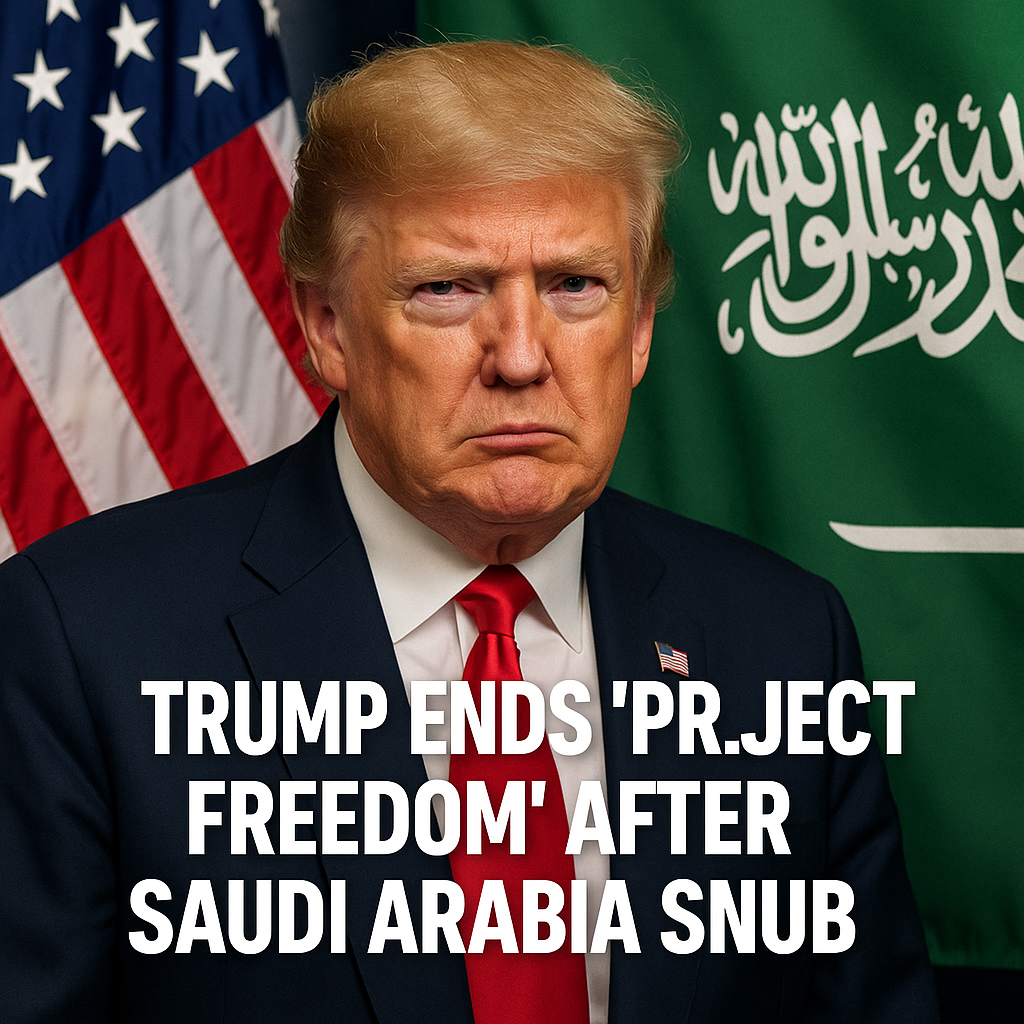
Trump Ends ‘Project Freedom’ After Saudi Arabia Snub
Trump Ends ‘Project Freedom’ After Saudi Arabia Snub
Former President Donald Trump has recently decided to abandon “Project Freedom,” a diplomatic initiative aimed at strengthening ties between the United States and Saudi Arabia. This decision follows significant diplomatic tensions highlighted by a perceived snub during a crucial meeting between US and Saudi officials. The ramifications of this pivot are far-reaching, impacting not only US-Saudi relations but also the broader geopolitical landscape in the Middle East.

The Collapse of ‘Project Freedom’
Project Freedom was introduced by Trump in an effort to foster a stronger alliance with Saudi Arabia, focusing on security cooperation, arms sales, and energy partnerships. However, a recent meeting between US Secretary of State Antony Blinken and Saudi Foreign Minister Prince Faisal bin Farhan reportedly left American officials feeling undermined. The Saudi side’s lukewarm response to strategic proposals raised questions about their commitment to the alliance.

According to reports from RT, the meeting unveiled stark differences in priorities between the two nations. While the United States has sought to strengthen military ties and expand economic partnerships, Saudi Arabia appears increasingly focused on its regional agenda, particularly its relationship with Iran and OPEC’s strategic decisions. This disconnect may have contributed directly to Trump’s decision to halt the initiative, signaling a significant shift in diplomatic engagement tactics.

Different Perspectives on the Decision
While the snubbing of US officials at the recent talks was a blow to Project Freedom, the decision to terminate it opens up a variety of perspectives on what this means for US-Saudi relations and the broader Middle East.
Domestic Implications
From a domestic standpoint, some supporters of Trump view this decision as a necessary recalibration of America’s foreign policy, emphasizing that strained relationships could allow the US to refocus on home-grown issues. Trump supporters argue that strong alliances should not come at the expense of American interests or geopolitical independence. As foreign policy scholars note, this decision could reflect a growing sentiment among certain factions in the US that traditional alliances need reassessment in light of emerging global dynamics.
However, critics warn that this decision could reinforce perceptions of American unreliability on the world stage. A strong diplomatic relationship with Saudi Arabia has historically provided the US with leverage in the region, particularly concerning energy stability and counter-terrorism efforts. Al Jazeera reports concerns among analysts who believe that abandoning such initiatives may embolden adversaries like Iran, who could seize the opportunity presented by a diluted US presence in Middle Eastern affairs.
International Reactions
The international response to the termination of Project Freedom has been mixed. Observers across multiple sources suggest that regional actors like Iran and Turkey are closely monitoring the situation, considering how the shift might affect their interests. Many are questioning whether the reduction of American engagement will lead to opportunities for aggressive diplomatic maneuvers in the region.
Moreover, Saudi Arabia faces its own internal pressures. Economic diversification efforts under the Vision 2030 initiative could be jeopardized if the kingdom’s relationship with the US continues to deteriorate. In a complex web of alliances and rivalries, the termination of Project Freedom may lead to new realignments that could alter the balance of power in the Middle East.
The Path Forward
As Trump publicly distances himself from Project Freedom, both allies and adversaries are left grappling with the outcomes. While the decision may resonate positively among some domestic audiences, its broader implications for international relations cannot be understated. The US has long played a pivotal role in Middle Eastern diplomacy, and any perceived retreat could have unintended consequences.
Future engagement with Saudi Arabia will likely depend on multiple factors, including regional security developments, oil prices, and the evolving landscape of US domestic politics. Ultimately, while Trump’s announcement signals a dramatic shift, the underlying issues prompting this decision demand ongoing evaluation and strategic recalibration in the realm of US foreign policy.
In conclusion, the end of Project Freedom encapsulates the complexity of US-Saudi relations—depicting a landscape fraught with tension, opportunity, and the necessity for thoughtful engagement. As global dynamics shift, it remains to be seen whether this represents a lasting change in strategy or merely a temporary step back in a deeply interconnected political arena.