
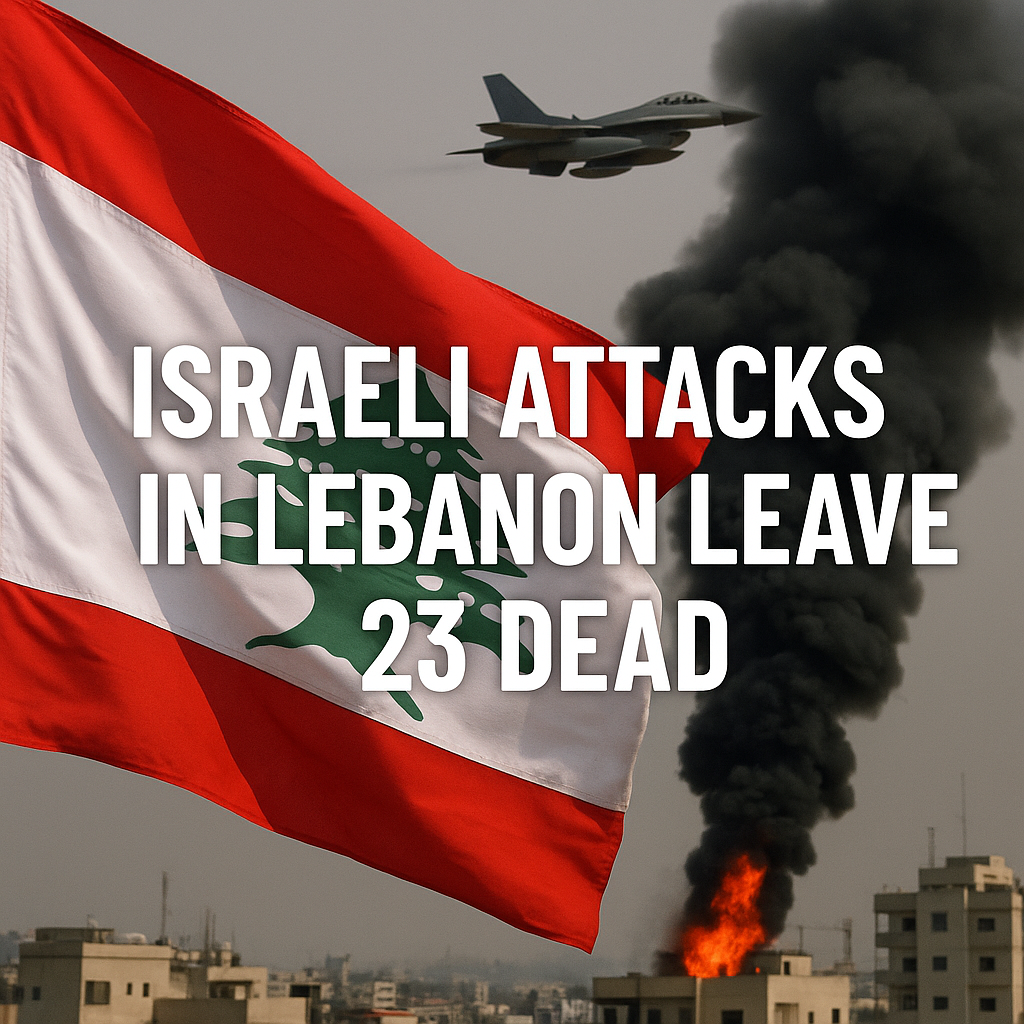
Israeli Attacks in Lebanon Leave 23 Dead
Rising Tensions: Israeli Attacks in Lebanon Leave 23 Dead
Recent Israeli military operations in Lebanon have escalated tensions in the region, resulting in the tragic deaths of 23 individuals, as reported by various news outlets. The violence has drawn a significant response both locally and internationally, reflecting deep-rooted conflicts and complex geopolitics that have characterized the Israeli-Lebanese relations for decades.

Context of the Conflict
The backdrop of this violent episode involves longstanding disputes over territorial rights, security concerns, and ideological differences. Historically, southern Lebanon has been a battleground, particularly with militant groups such as Hezbollah, which Israel designates as a terrorist organization. According to Al Jazeera, the recent attacks were aimed at multiple locations believed to harbor Hezbollah operatives, igniting fierce aerial bombardments that left numerous civilians caught in the crossfire.

Reports indicate that a mix of airstrikes and ground operations contributed to the high casualty figures. Amidst the chaos, civilian infrastructure—schools, homes, and hospitals—suffered extensive damage, raising urgent humanitarian concerns. Sky News reported that many regions have seen a significant number of displaced families fleeing their homes, further exacerbating an already dire economic situation in Lebanon.

Diverging Perspectives
The Israeli government has framed these attacks as necessary defensive measures aimed at neutralizing perceived threats from Hezbollah. Israeli officials argue that actions are crucial to maintaining national security, particularly in light of increased rocket fire into northern Israel. This viewpoint echoes the sentiment that proactive military measures are required to deter future assaults.
Conversely, Iranian media outlets and some international observers argue that such military actions disproportionately affect civilians and could lead to broader destabilization. The RT publication emphasizes the risk of escalation, asserting that such operations could trigger retaliatory strikes from Hezbollah and, in turn, further military responses from Israel. Critics argue that the cycle of violence must be addressed through dialogue, advocating for diplomatic approaches rather than military solutions.
While both perspectives highlight genuine security concerns, they also underscore a fundamental disconnect regarding the rights and lives of Lebanese citizens. Many civilians express feeling trapped in a precarious situation where military confrontations dictate the rhythm of daily life.
Humanitarian Impact and International Response
As attacks continue, humanitarian organizations warn of a looming crisis. Civilian casualties not only amplify the tragedy but also instigate a broader international outcry centered on human rights violations. Aid groups stress the urgent need for access to affected areas and calls for international intervention.
The United Nations has begun to revisit peacekeeping mandates, with some arguing that renewed efforts are essential to prevent further loss of life. Yet, the response from the international community has been cautious, with some countries prioritizing geopolitical alliances over humanitarian concerns. This has led to criticisms about the effectiveness of international bodies in addressing such crises.
Uncertainty Ahead
As discussions unfold regarding a possible ceasefire or diplomatic engagement, uncertainties loom. There appears to be no uniform approach among global powers on how to mediate the conflict effectively. While some advocate for more robust intervention, others promote a laissez-faire policy, arguing that sovereignty must be respected.
With demographic tensions in Lebanon and the historical animosities between Israelis and Palestinians frequently complicating matters, the region remains a volatile flashpoint. The challenge lies in moving beyond reactive militaristic strategies toward a more comprehensive approach that genuinely considers the needs and rights of civilians.
In summary, the recent Israeli attacks resulting in 23 deaths not only escalate an ongoing conflict but also spotlight pressing humanitarian concerns and diverging international perspectives. In navigating these multilayered issues, the hope remains that dialogues can prevail over destruction, advancing toward a more stable and peaceful coexistence.















