
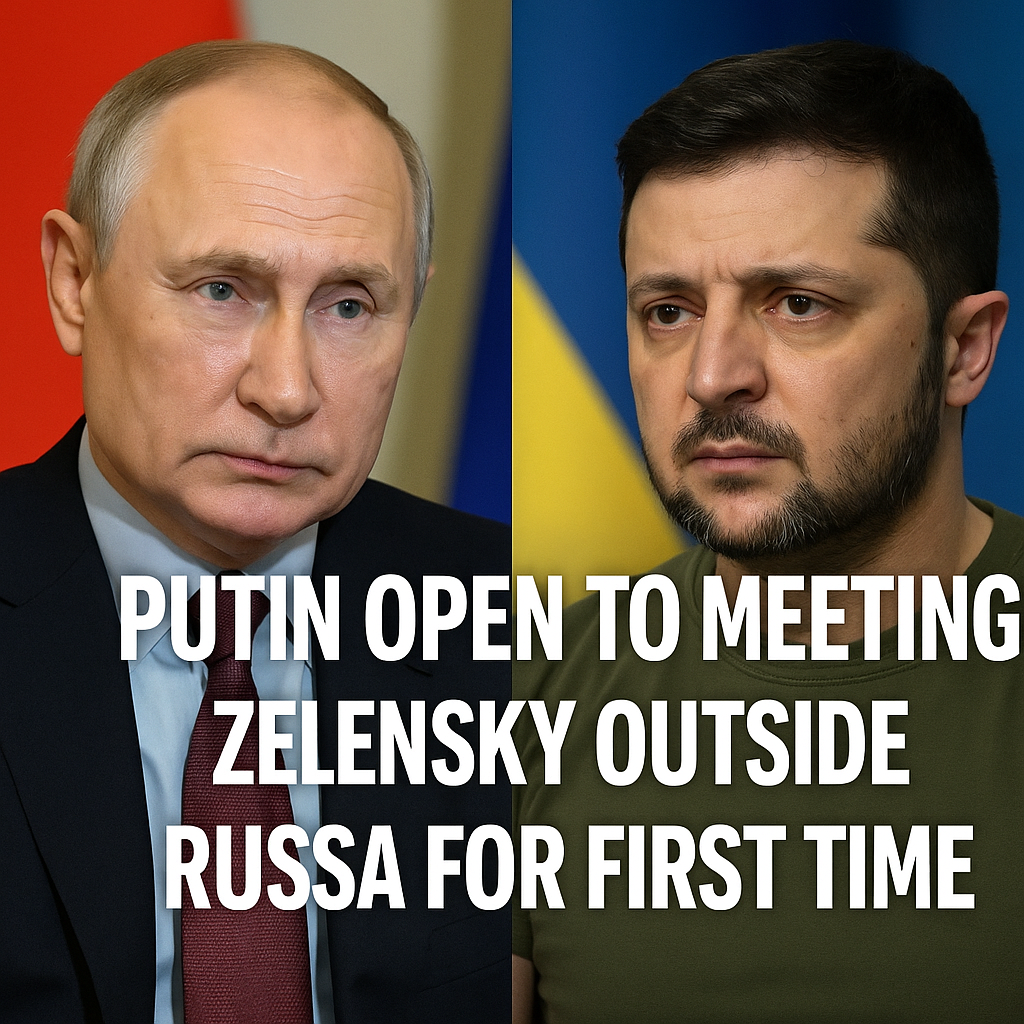
Putin Open to Meeting Zelensky Outside Russia for First Time
Putin Open to Meeting Zelensky Outside Russia: A Potential Diplomatic Shift
In a surprising turn of events, President Vladimir Putin has expressed openness to meeting Ukrainian President Volodymyr Zelensky outside Russian borders for the first time since the onset of the conflict in Ukraine. This development raises questions about the potential for diplomatic engagements that could reshape the ongoing crisis and hint at a shift in Russia’s diplomatic strategy.

Understanding the Context of the Proposal
The statement from Putin comes amid a complex geopolitical backdrop characterized by a protracted war that has resulted in significant human and economic costs for both nations. Analysts view this openness as a potential olive branch, signaling a change in Putin’s previously rigid stance. Reports indicate that during a recent event commemorating the Second World War, Putin remarked, “If there is the slightest possibility of discussing important issues with the current leadership of Ukraine, it would be right,” suggesting he may be ready to engage in dialogue under the right circumstances.

However, skepticism remains prevalent. Former officials and security experts caution that such meetings have historically served as strategic posturing rather than genuine efforts towards resolution. They acknowledge that any proposed meeting would require significant groundwork and mutual concessions—elements that have been in short supply amid ongoing hostilities.

The Reaction from Zelensky and the International Community
Zelensky has remained cautious yet optimistic in response to Putin’s comments. At a recent press conference, he stated, “We are ready to discuss all critical issues, but any meeting is to be directed towards achieving a meaningful end to this war.” His emphasis on substantive progress highlights the broader sentiment shared by many in the international community: talks without genuine intent might lead nowhere.
Analysis from NATO representatives indicates they are closely monitoring this development, recognizing it as a potential flashpoint for renewed negotiations. Yet, they echo the sentiment that trust must be rebuilt. “It’s critical for Ukraine to see engagement not merely as a tactic but as a pathway to lasting peace,” one NATO spokesperson shared anonymously.
The Implications of Such a Meeting
Should this meeting come to fruition, it could have several implications:
– Regional Stability: A direct dialogue could provide a platform for addressing humanitarian concerns and discussing potential ceasefires.
– International Relations: A successful meeting could also influence Russia’s standing on the global stage, potentially easing tensions with Western nations.
– Domestic Sentiment: The reception of such a meeting would vary greatly within both nations. In Ukraine, there are vivid memories of the war’s devastation, while internal support for Zelensky’s administration may hinge on visible accomplishments from such talks.
Conversely, failure to broker any meaningful agreements could lead to further entrenchment of positions and heightened hostilities. Both leaders face the delicate challenge of domestic politics while trying to navigate complex international expectations.
Conclusion: A Tentative Ray of Hope or a Tactical Maneuver?
Putin’s remark about being open to a meeting with Zelensky outside Russia could be perceived as a tentative ray of hope in a landscape fraught with tension. The divergence of reactions from Zelensky, NATO, and commentators suggests a cautious optimism tempered with wariness about the intentions behind the overture.
As conversations around this potential meeting unfold, it remains crucial for both leaders to clarify their desired outcomes and operational frameworks. While dialogue is often hailed as a necessary tool for de-escalation, the path to genuine and constructive engagement is layered with historical grievances, mutual distrust, and divergent aims.
Only time will reveal whether this indication from Putin is a precursor to a significant diplomatic breakthrough or simply another chapter in a long-standing narrative of conflict.















