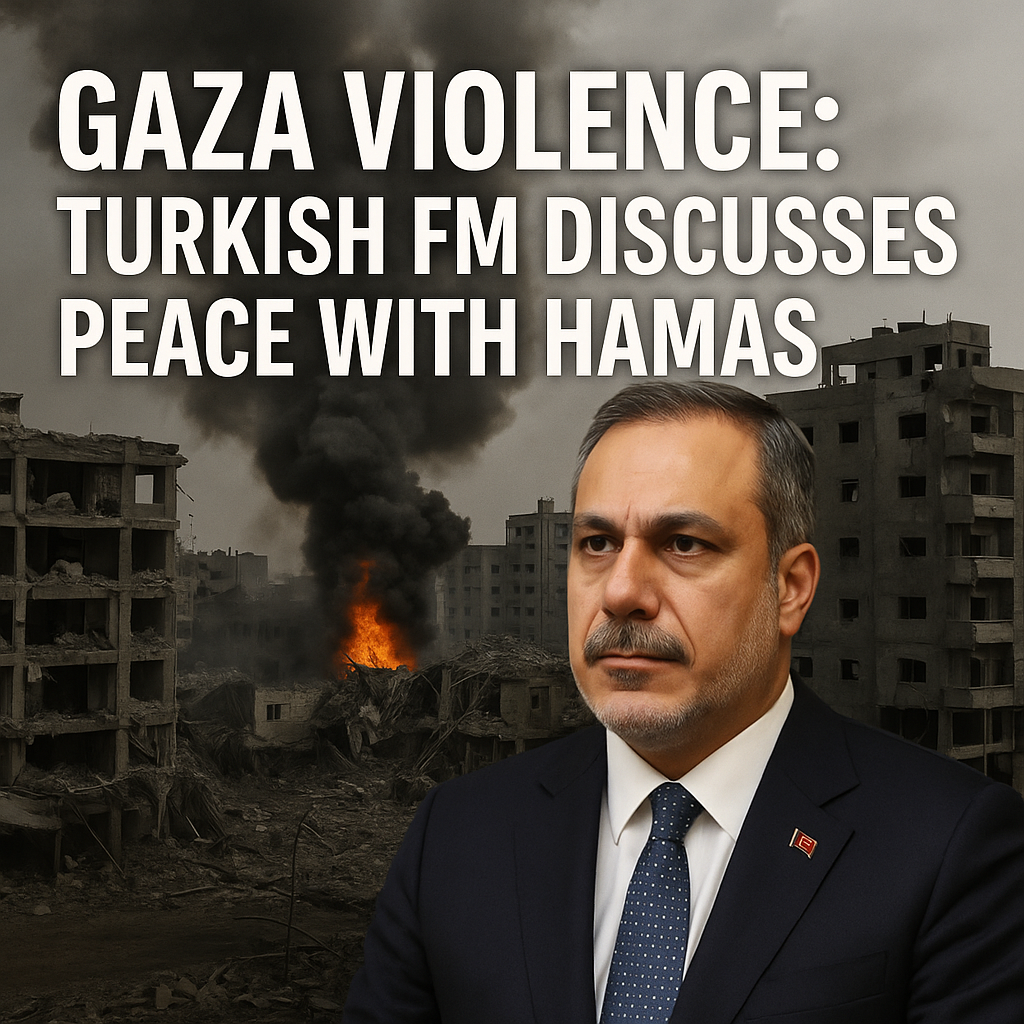
Gaza Violence: Turkish FM Discusses Peace with Hamas
In recent months, the ongoing violence in Gaza has once again captured international attention, with Turkish Foreign Minister Mevlüt Çavuşoğlu advocating for a dialogue with Hamas to foster peace. As hostilities escalate, the quest for a resolution in this convoluted conflict remains fraught with complexity and diverse opinions.

The Context of Gaza Violence
The region has witnessed a concerning uptick in violence, leaving many civilians caught in the crossfire. According to reports, a recent incident resulted in the death of a Palestinian youth, igniting further tensions and highlighting the dire situation on the ground. Many citizens express fears that the cycle of violence is perpetuated by both military engagements and failed diplomatic efforts.

In this landscape, the role of international diplomacy, particularly by influential nations like Turkey, is paramount. Çavuşoğlu’s statements underscore Ankara’s commitment to facilitating dialogue with Hamas, a designated terrorist organization by several countries, including the U.S. and the EU. His assertions suggest that engaging with Hamas could be pivotal in crafting a pragmatic solution to the recurring violence.

Turkey’s Role and Reception
Turkey, alongside Qatar, has positioned itself as a key player in mediating discussions between Palestinian factions and the Israeli government. Çavuşoğlu emphasized that Turkey’s objective is to prevent further bloodshed and to lay down the groundwork for peace. “We are here to support a dialogue that prioritizes the welfare of the Palestinian people,” he stated, indicating that humanitarian considerations drive Turkey’s outreach.
However, not all factions view Turkey’s involvement as a positive development. Some analysts argue that Hamas’s alignment with Turkey, a country that has openly supported the Palestinian cause, might further complicate negotiations with Israel. They contend that Turkey’s backing could embolden Hamas and hinder moderate voices within Palestinian society advocating for peace.
Diverging Perspectives on Dialogue
While Turkish officials argue that engaging with Hamas is essential for advancing peace, critics question whether such a strategy is feasible or effective. Some voices within the international community contend that legitimizing Hamas through diplomatic channels could potentially undermine other Palestinian factions that lean towards moderation. These skeptics highlight the risks of inadvertently validating an organization that has been responsible for orchestrating rocket attacks against Israeli civilians.
On the other hand, proponents of the dialogue approach assert that excluding Hamas from the peace process is a recipe for ongoing violence. They argue that a sustainable resolution is only achievable when all parties, including those with differing viewpoints, are included in discussions. This sentiment reflects a broader understanding that peace negotiations are not merely about politics; they also encompass social and humanitarian dimensions.
Ultimately, the effectiveness of Turkey’s diplomatic overtures hinges on multiple factors, including the willingness of all parties to engage in meaningful dialogue. The regional geopolitical dynamics further complicate this landscape, as interests from countries like the U.S., Iran, and Egypt intertwine with the ongoing conflict.
A Fragile Path to Resolution
The future of Gaza remains uncertain as Turkish officials continue to foster dialogue with Hamas amidst rising tensions. While the urgency for peace is palpable, achieving a resolution is a multilayered challenge that demands collaboration across contentious divides.
As discussions unfold, there’s a palpable need for a fresh approach—one that prioritizes the voices of ordinary citizens affected by the violence and recognizes the complexities of regional geopolitics. The Turkish FM’s commitment to peace talks signals both hope and caution, highlighting the delicate balance required for effective diplomacy.
In conclusion, while the idea of opening a dialogue with Hamas may face skepticism, it cannot be dismissed as an option without consideration. The stakes are high, and the consequences of continued violence will undoubtedly resonate throughout the region and beyond. Addressing the needs and concerns of the Palestinian people while navigating the challenges of engaging with contentious factions will be critical in any lasting peace effort in Gaza.