
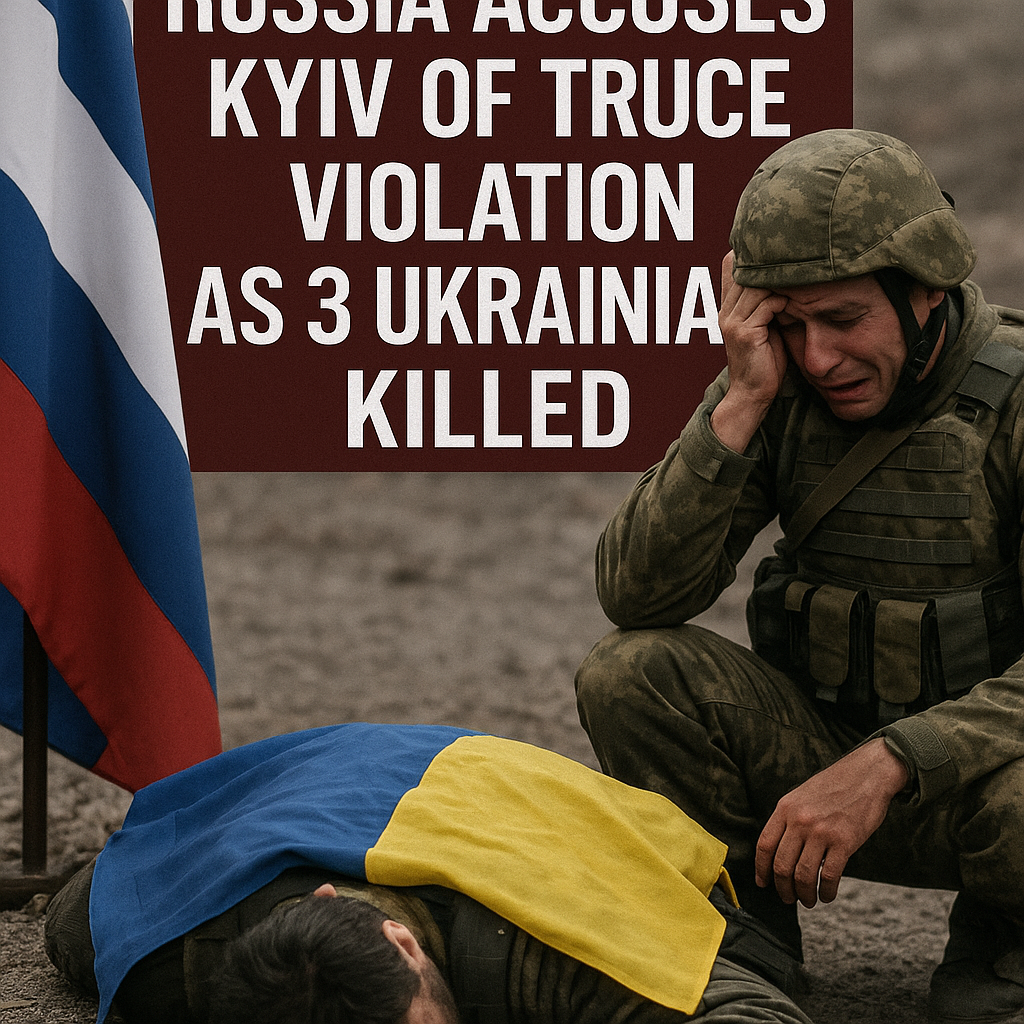
Russia Accuses Kyiv of Truce Violation as 3 Ukrainians Killed
The ongoing conflict between Russia and Ukraine has witnessed significant developments recently, particularly concerning accusations of truce violations that have escalated military tensions. In a startling claim, Russia has accused Kyiv of violating a truce agreed upon earlier, following the tragic deaths of three Ukrainians in a reported attack.

The Context of the Accusations
The backdrop of these allegations is complex, rooted in a long-standing conflict characterized by shifting tides and numerous ceasefires that have frequently fallen short of lasting peace. Various international bodies, including the United Nations, have urged both sides to adhere to ceasefire agreements, yet incidents like the recent fatalities highlight the fragility of these accords. The reported attack, which resulted in three Ukrainian deaths over a span of just 24 hours, has sparked a wave of outrage and calls for accountability from Ukrainian officials.

According to Al Jazeera, Russian sources claim that these casualty figures are a direct result of Ukrainian military activities that breach the terms of the truce. In their narrative, they argue that Kyiv’s actions not only contravene the agreement but also exacerbate the humanitarian crisis already evident in war-stricken regions. The Russian government has called for international scrutiny, positioning itself as a party harmed by ongoing aggressions from Ukraine.

Conversely, Ukrainian officials have vehemently denied these accusations. They argue that the situation on the ground is more nuanced, asserting that the military engagements were defensive in nature. Ukraine’s response suggests that any aggression attributed to them stemmed from provocations by Russian forces. This perspective is reinforced by statements from international observers who caution against taking unilateral claims at face value without context.
Diverging Perspectives on Accountability
The question of accountability in the conflict cannot be easily answered, as both sides present evidence to support their claims. Russian media channels frequently emphasize Ukrainian transgressions, while Kyiv works to highlight the ongoing threat from Russian military operations. As reported by Sky News, the death of the three Ukrainians has reignited discussions about the need for more robust mechanisms to ensure compliance with peace agreements.
Here are some critical points from both sides:
– Russian Claims:
– Emphasis on alleged violations by Ukraine.
– Calls for international monitoring of the situation to verify their claims.
– Portrayal of their military actions as defensive responses to Ukrainian provocations.
– Ukrainian Response:
– Assertion that their military actions are retaliatory.
– Calls for an independent investigation into the circumstances of the three deaths.
– Frustration over what they perceive as misinformation disseminated by Russian state media.
In such a polarized environment, finding common ground becomes increasingly challenging. The international community remains watchful, aware that the stability of Eastern Europe hinges on a resolution to this conflict. Diplomats have been urging both sides to return to the negotiation table, although neither faction seems willing to compromise under the current conditions.
Looking Ahead: The Path to Peace
As tensions simmer and both nations entrench their positions, the question remains: how can a lasting resolution be achieved? The repeated cycle of accusations demonstrates a need for more than just diplomatic talk; it calls for tangible actions that affirm commitments to peace. Rebuilding trust is essential, yet both sides appear to be trapped in a cycle of blame that hampers progress.
What is clear is that without cooperative dialogue and an earnest willingness to pursue de-escalation, the risk of further violence persists. The deaths of the three Ukrainians could serve as a wake-up call, prompting all parties involved to reassess their strategies and approach to the peace process. It is vital that external actors, including international organizations, take an active role in mediating discussions and fostering a climate conducive to sincerity and mutual respect.
Although the path to peace may seem arduous, the urgency of the situation necessitates continued dialogue and collaboration. With both sides acting under the weight of historical grievances and national pride, the challenge lies in forging a new narrative focused on reconciliation rather than retribution. The world watches, hopeful yet cautious, ready to support any genuine steps taken towards a unified and secure future for the region.















