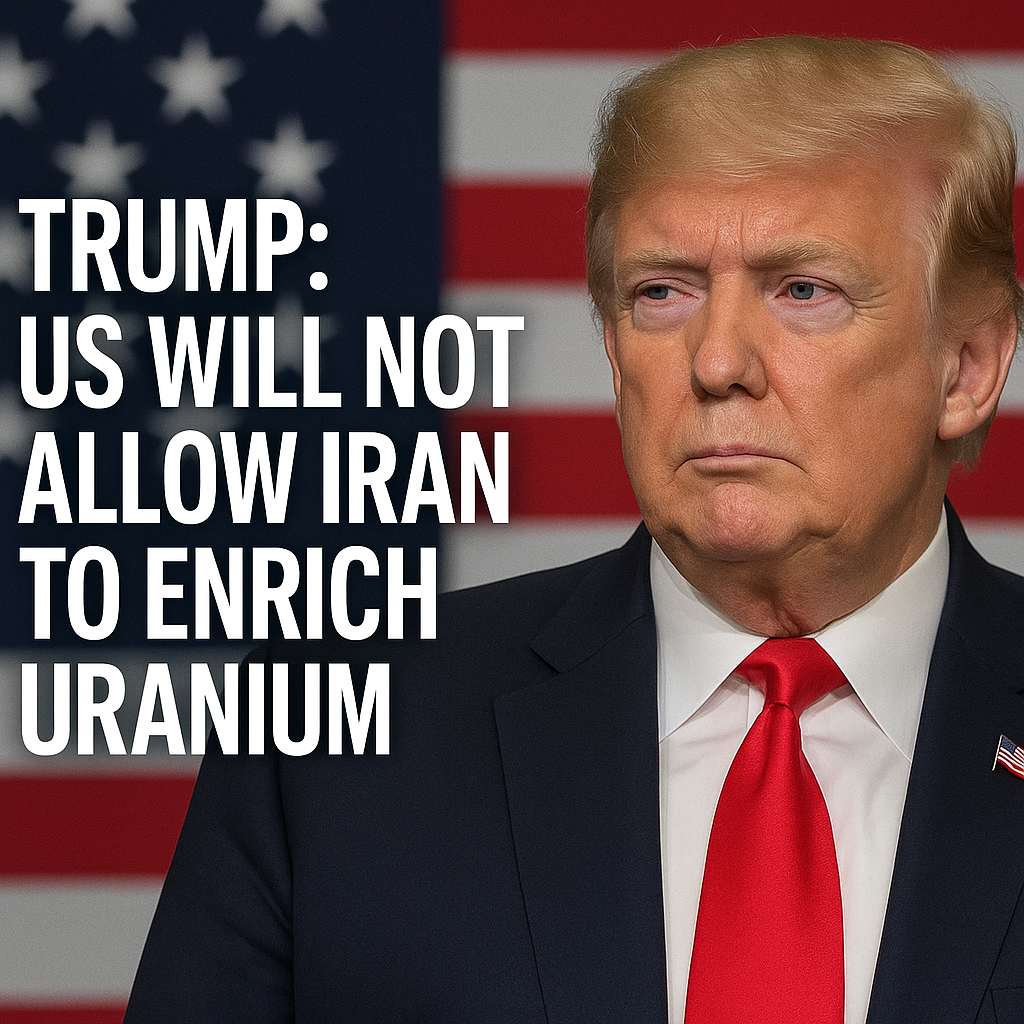
Trump: US Will Not Allow Iran to Enrich Uranium
In the evolving landscape of international relations, the United States has firmly articulated its position regarding Iran’s nuclear aspirations. The assertion that the US will not permit Iran to enrich uranium is not merely a political statement; it reflects a broader commitment to regional stability and non-proliferation efforts.

Historical Context and Current Developments
The complexities surrounding Iran’s nuclear program date back to the early 2000s, marked by suspicions over the true intentions behind Tehran’s civilian nuclear energy pursuits. In 2015, the Joint Comprehensive Plan of Action (JCPOA) aimed to curtail Iran’s nuclear capabilities in exchange for the lifting of economic sanctions. However, the US withdrawal from the agreement in 2018 under the Trump administration reignited tensions and suspicions surrounding Iran’s nuclear ambitions.

Recently, Trump reiterated his administration’s hardline stance on Iran, emphasizing that the US will not stand idly by as Iran seeks to enhance its uranium enrichment capabilities. This declaration comes at a time when Iran has begun to enrich uranium to levels that exceed the limits set by the JCPOA, further complicating the diplomatic efforts to re-engage Iran in discussions about its nuclear program.

The Implications of Uranium Enrichment
The enrichment of uranium is a pivotal issue in nuclear non-proliferation discussions. Low levels of enrichment are suitable for civilian energy purposes, whereas higher levels can lead to weapons-grade material. As Iran continues its enrichment activities, its decision-making raises alarms not only in Washington but also among its regional neighbors and global powers.
Critics of Iran argue that its pursuit of advanced nuclear technology is a cover for developing nuclear weapons. Conversely, Iran maintains that its nuclear program is peaceful in nature, aimed at producing energy to meet its domestic needs. The tension between these contrasting viewpoints adds a layer of complexity to the discussions surrounding uranium enrichment.
The Global Response
Reactions to Trump’s statements have been varied. On one hand, allies such as Israel have supported the US stance, perceiving a nuclear-armed Iran as a direct threat to their national security. Israeli Prime Minister Benjamin Netanyahu has repeatedly called for stronger measures to prevent Iran from acquiring nuclear weapons, highlighting a unified front among those opposed to Tehran’s nuclear ambitions.
On the other hand, other nations, including some European powers, advocate for a diplomatic approach to resolving the crisis. They argue that engaging Iran through negotiation rather than confrontation could yield more sustainable results. These nations emphasize the necessity of dialogue to restore trust and ensure compliance with international agreements.
Weighing the Evidence
While Trump’s remarks resonate with those who favor a stringent approach to Iran’s nuclear activities, they can also be seen as contributing to increased hostility and potential isolation of the US on the international stage. Critics argue that an unwavering stance without room for negotiation might lead to further entrenchment rather than constructive outcomes. The absence of diplomatic engagement risks alienating potential allies and could diminish the efficacy of American influence in the Middle East.
Moreover, there is a palpable concern that a hardline policy may spur Iran to accelerate its nuclear program rather than curb it. The balance of pressure and negotiation remains delicate; both sides must navigate the intricate geopolitical landscape to avoid miscalculations that could lead to conflict.
Conclusion: A Path Forward
The situation surrounding Iran’s uranium enrichment presents an intricate puzzle for policymakers. While the US has made its position clear—asserting that it will not allow Iran to achieve significant uranium enrichment—crafting a feasible path forward necessitates flexibility and foresight.
As the international community grapples with this pressing issue, it becomes evident that a collective approach involving both diplomatic engagement and firm stances will be essential. Leveraging multilateral frameworks may not only promote accountability but also pave the way for a more comprehensive resolution.
The issue of uranium enrichment is not merely a question of national security; it involves the overarching principles of international diplomacy, trust, and the shared goal of ensuring a more secure world. As various stakeholders respond to ongoing developments, the hope remains that dialogue will prevail in mitigating the tensions surrounding Iran’s nuclear program, steering everyone towards a peaceful resolution that serves the interests of all involved.