
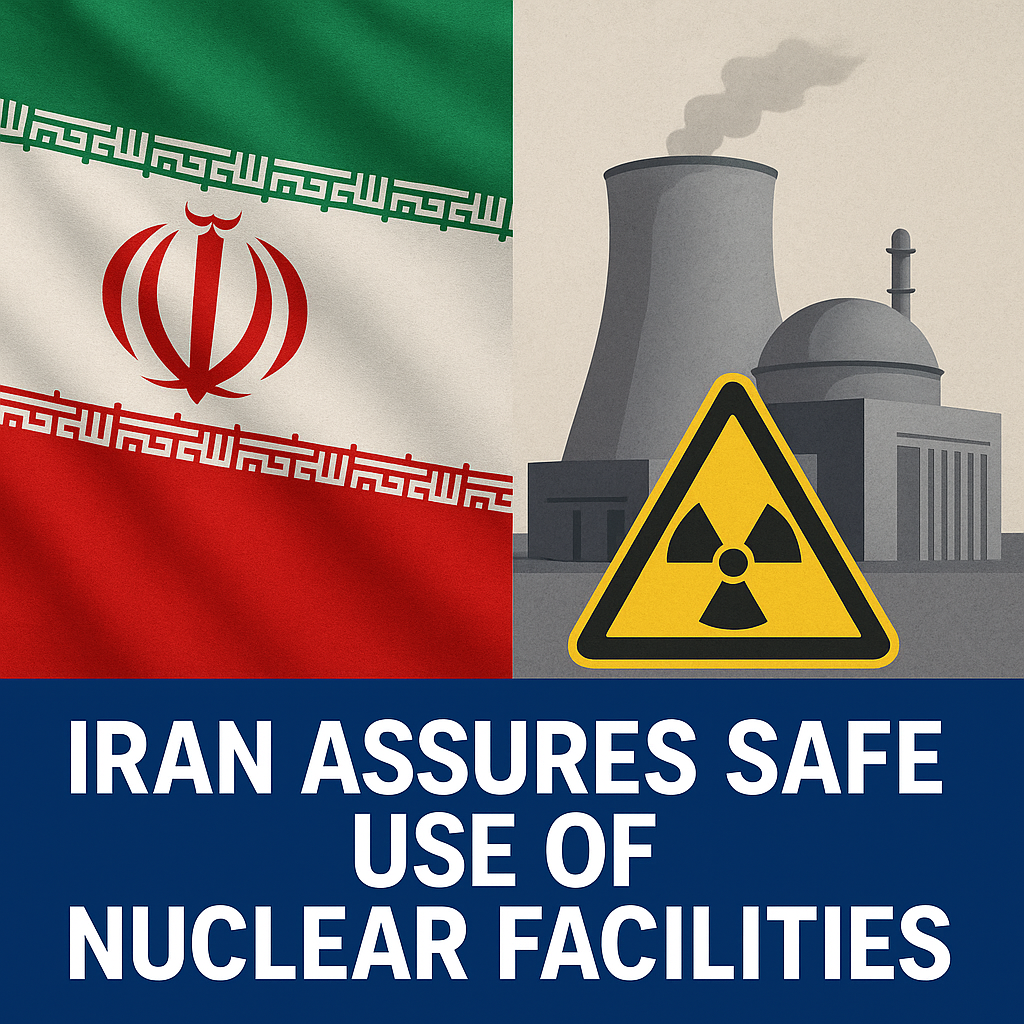
Iran Assures Safe Use of Nuclear Facilities
Iran Assures Safe Use of Nuclear Facilities
Iran has recently reiterated its commitment to the safe operation of its nuclear facilities, responding to both domestic concerns and international scrutiny. This assurance comes at a critical juncture as the nation seeks to strengthen its position amid ongoing geopolitical tensions.

Context of Iran’s Nuclear Program
Iran’s nuclear ambitions have long been a source of contention, particularly with Western nations. The 2015 Joint Comprehensive Plan of Action (JCPOA) initially aimed to curb Iran’s nuclear activities in exchange for sanctions relief. However, the U.S. withdrawal from the agreement in 2018 and the subsequent re-imposition of strict sanctions have escalated hostilities and uncertainty around Iran’s nuclear intentions.

Recent discussions indicate that Iranian officials are willing to provide additional assurances regarding the peaceful nature of their nuclear program. According to a statement made by Iran’s Foreign Minister, the country emphasizes that its nuclear facilities are strictly for civilian purposes. This pledge is directed not only at allaying fears among international watchdogs but also at reassuring its citizens about the safety and security of these installations.

Domestic and International Responses
The Iranian government’s promise has received varied responses. Domestically, many citizens welcome the assurance as a necessary step toward stabilizing the economy, which has been heavily impacted by sanctions and a stagnant nuclear deal negotiation process. Iranian officials argue that transparency in their nuclear operations could foster a more constructive dialogue with the international community.
Conversely, international skepticism remains high. Critics argue that Iran’s track record of transparency has been inconsistent. Reports from various sources indicate that external observers, including the International Atomic Energy Agency (IAEA), have expressed concerns about the potential for military applications of Iran’s nuclear capabilities. According to a recent IAEA report, while there have been no signs of diversion, the agency cannot fully guarantee that all of Iran’s nuclear material is used for peaceful purposes.
Moreover, differing perspectives emerge from various outlets. Al Jazeera emphasizes the Iranian government’s assurances as a sign of its intent to mitigate external pressures and stabilize relations. In contrast, RT highlights the potential geopolitical implications, suggesting that these assurances may not alleviate concerns for nations such as Israel, which perceives Iran’s nuclear capabilities as a direct threat.
The Road Ahead: Complexities and Implications
As Iran seeks to navigate this complex terrain, the balance between national pride in its nuclear development and international obligations presents a significant challenge. The country’s leaders appear to be aware that military aggression and disrespect for international norms could provoke further isolation. This understanding seems to amplify their efforts to guarantee safety and transparency.
However, achieving a consensus between regional adversaries and the broader international community remains elusive. The stark divide in perceptions complicates the pathway forward, especially as the U.S. continues to play a pivotal role in regional politics. Suspicion surrounding the true motives of Iran’s nuclear program lingers, particularly amid criticisms that the regime may use the assurances as a bargaining chip rather than a commitment to transparency.
Conclusion
In conclusion, while Iran’s assurances regarding the safe use of its nuclear facilities may represent a step towards reassurances both within and beyond its borders, an undercurrent of skepticism persists. The challenge lies not just in productive dialogue but in fostering genuine trust, as geopolitical complexities further entangle the issues at hand. The path forward will require effective communication, continuous oversight, and mutual concessions to ensure the peaceful use of nuclear technology and regional stability.















