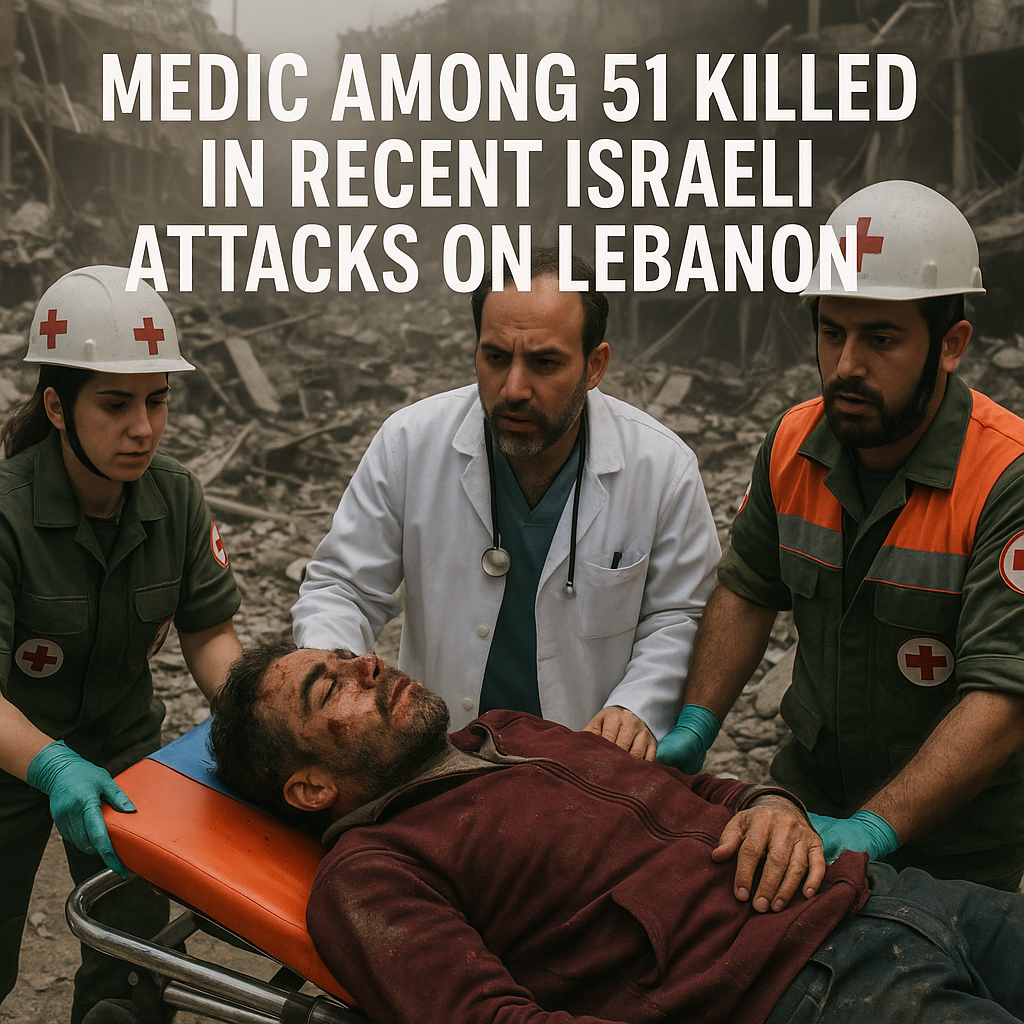
Medics Among 51 Killed in Recent Israeli Attacks on Lebanon
Rising Toll of Conflicts: Medics Among 51 Killed in Recent Israeli Attacks on Lebanon
In a tragic escalation of violence, recent Israeli attacks on Lebanon have claimed the lives of 51 individuals, including medics who were in the line of duty. The ongoing conflict has raised serious concerns about humanitarian conditions and the targeting of healthcare workers in conflict zones.

The Human Cost of Conflict
The recent strikes have been described as some of the most intense in recent months, with reports indicating that medics, who often find themselves on the frontlines of humanitarian crises, were killed while trying to provide care. As per reports from Al Jazeera, the victims were engaged in rescue operations when they were tragically caught in the crossfire. This loss underscores the perilous environment healthcare professionals face, particularly in regions afflicted by protracted conflict.

Experts emphasize that attacks on healthcare workers constitute a violation of international humanitarian law, which is designed to protect medics and civilians. Human rights organizations have condemned these strikes, calling for accountability and highlighting the need for a ceasefire to restore peace and safety for civilians and those providing care.

Diverse Perspectives on the Conflict
The Israeli government has defended its military actions, citing the need to respond to threats from militant groups within Lebanon, including Hezbollah. Israel maintains that their operations are aimed at dismantling what they perceive as imminent dangers. However, the civilian casualties, including medics, have sparked outcry from various human rights entities and international observers.
Conversely, critics argue that the excessive use of force and the indiscriminate nature of the attacks highlight a disregard for human life, particularly among those who are non-combatants. As analyses from Sky News suggest, the humanitarian implications of these actions extend far beyond the immediate casualties, potentially destabilizing the region and exacerbating the suffering of innocent civilians. The repeated cycles of violence foster resentment and may hinder future peace negotiations.
A Broader Implication for Humanitarian Efforts
The killings of medics have broader implications for the international community and humanitarian organizations operating in conflict zones. With healthcare practitioners often risking their lives to provide essential services, their targeted killings raise alarms about the viability of humanitarian missions in such volatile areas. A report from RT highlights the urgent need for international pressure to ensure the protection of healthcare workers in conflict, calling for a reassessment of military strategies that endanger non-combatants.
Advocates for peace argue that a comprehensive approach is necessary to address the root causes of the conflict. This includes promoting dialogue and long-term solutions that account for the complexities of the region’s geopolitical landscape. The situation necessitates a commitment from all parties involved to adhere to principles of humanity and protect those who dedicate their lives to saving others.
Conclusion: Towards a Hopeful Future
The recent Israeli attacks resulting in the deaths of medics serve as a tragic reminder of the human cost of warfare. Moving forward, fostering a dialogue between conflicting parties may be crucial in mitigating violence and ensuring the protection of civilians and healthcare workers. As the international community watches closely, the hope remains that greater efforts will be made not only to protect lives but also to pave the way for sustainable peace in the region.