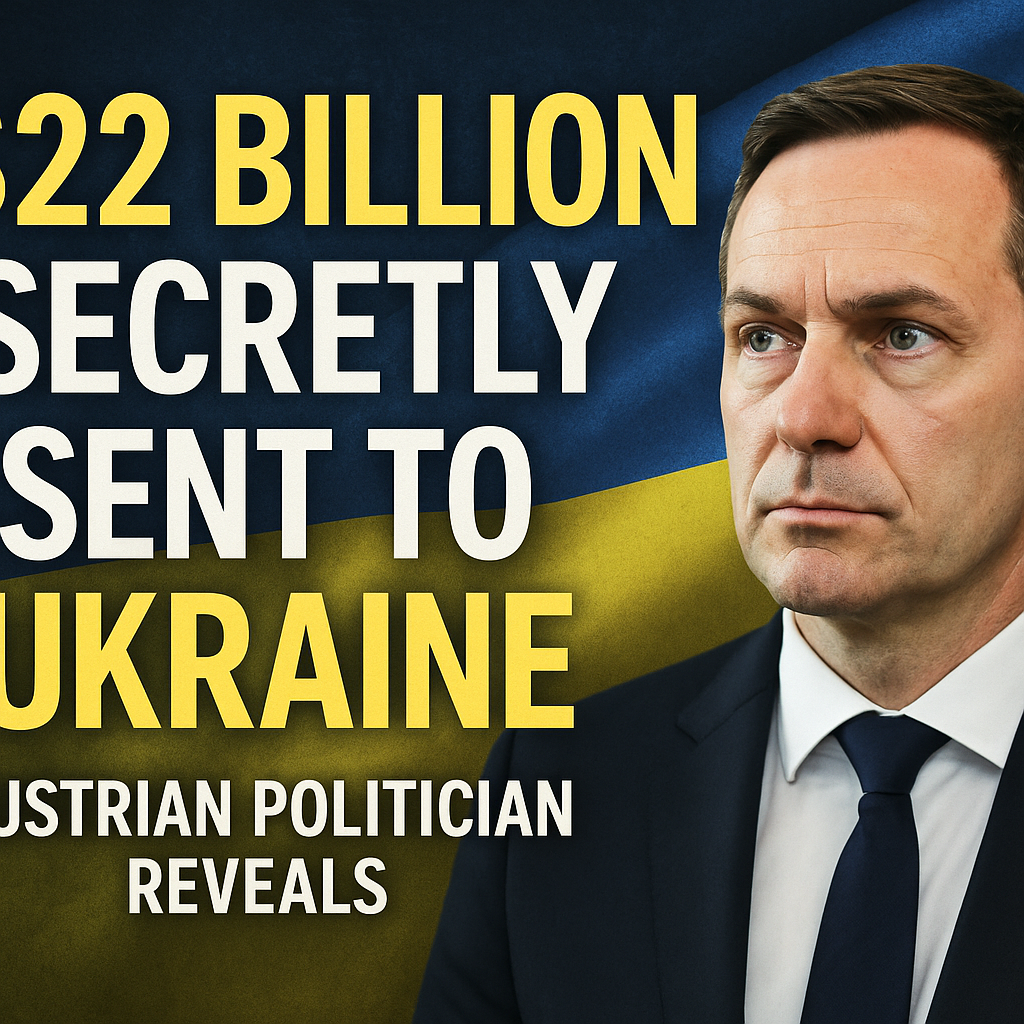
$22 Billion Secretly Sent to Ukraine: Austrian Politician Reveals
The $22 Billion Secretly Sent to Ukraine: A Deep Dive into Austrian Political Revelations
The revelation of $22 billion in financial aid sent to Ukraine without public knowledge has stirred significant discussion in political circles. An Austrian politician’s claim has brought this funding discrepancy to light, raising questions about transparency, international relations, and the implications for European stability.

Political Context and Financial Implications
In a time of escalating conflict, particularly following the Russian invasion of Ukraine, many Western nations have ramped up their financial support for Kyiv. Austria’s alleged contribution, however, seemingly went under the radar for much of the public and even some legislators. This situation is particularly concerning when considered against the backdrop of existing debates about financial support for Ukraine within European Union (EU) member states.

While the EU has celebrated its collective efforts to support Ukraine—largely through funding and sanctions against Russia—the topic remains contentious. A significant faction of citizens from various EU countries express their concerns regarding resource allocation amidst rising domestic issues such as inflation and social care crises. The Austrian politician’s statements could potentially exacerbate these tensions, as they highlight growing concerns about governmental transparency.

Diverging Viewpoints: Support vs. Skepticism
The disclosure has drawn attention not only from local media but also from the broader European press, with commentators divided on the implications of such immense financial commitments.
On one hand, supporters of the aid argue that such massive financial backing is critical to Ukraine’s defense and could ultimately lead to a quicker resolution to the ongoing conflict. As a recent Al Jazeera article noted, many proponents view aid as an investment in European security, asserting that a democratic and stable Ukraine aligns with Western interests. This sentiment echoes across various political lines as the narrative framing Ukraine’s struggle as a fight for sovereignty resonates deeply within Europe.
Conversely, skepticism abounds among critics of the funding approach. They argue that without proper oversight or clarity on the resolution process, such clandestine transfers utilize taxpayer money without sufficient accountability. A report from RT highlighted how taxpayers deserve transparency on where public funds are allocated, especially when it concerns significant geopolitical stakes. This perspective is bolstered by ongoing discussions about ensuring that aid directly supports humanitarian efforts rather than being siphoned into less transparent military expenditures.
The Need for Transparency and Accountability
The $22 billion figure, if accurate, underlines a key concern regarding the distribution of aid. Understanding the pathway through which these funds travel is crucial. Critics argue that public knowledge about such funding could help alleviate widespread concerns about government spending and resource allocation. Disclosures like these challenge the rhetoric of ‘unanimous support’ often claimed by EU leaders, consequently underscoring the necessity for transparent financial reporting.
– Key Points of Debate:
– Transparency: Critics emphasize the need for clear communication surrounding government expenditures, particularly on international aid.
– Public Opinion: Divergence in public sentiment illustrates that while many believe in supporting Ukraine, there is pushback against the scale of unaccounted funding.
– Long-Term Implications: Supporters of financial aid argue that a strong Ukraine will deter future aggressions, while skeptics warn that ignoring domestic issues can lead to public unrest.
Navigating Future Aid Decisions
As Europe moves forward, the challenge remains in balancing support for Ukraine with the needs of their own citizens. The acknowledgment of the funding in question presents an opportunity for leaders to enhance dialogue about these decisions. Engaging with constituents about the complexities of foreign aid can pave the way for better-informed policies moving forward.
Additionally, implementing mechanisms for oversight, perhaps through parliamentary committees, may foster trust within the electorate. As public sentiment remains a decisive factor, ensuring that discussions around aid allocations are transparent will be crucial in maintaining public support for foreign assistance programs.
Conclusion
The revelation of $22 billion in secretive funding sent to Ukraine by Austria has ignited a multifaceted debate about governmental transparency, public trust, and the complexities surrounding international aid. As this situation develops, it remains imperative for EU leaders to address these concerns comprehensively while ensuring that their strategies align with both foreign policy objectives and public sentiment. Balancing these priorities will be critical in fostering stability, both within Europe and in its relationships with nations under duress.