
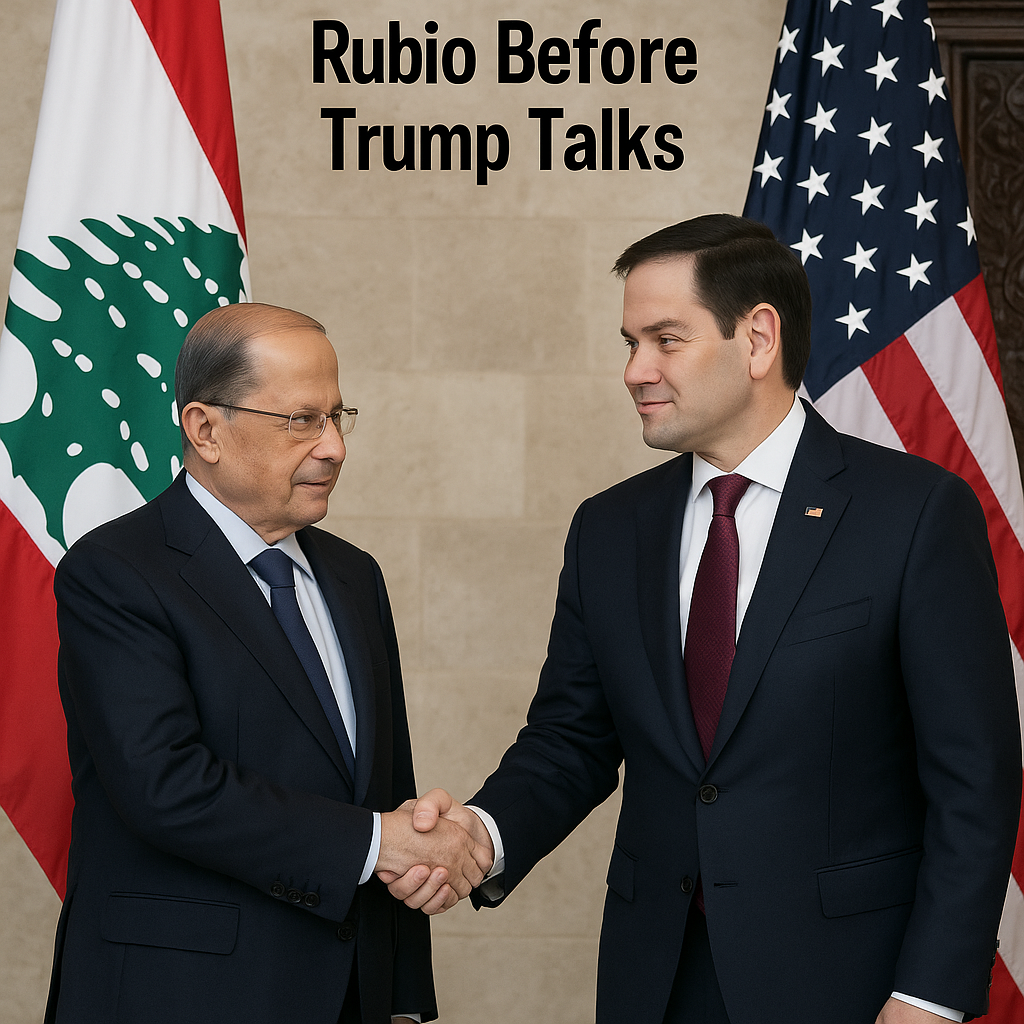
Lebanon’s President Aoun Meets Rubio Before Trump Talks
Lebanon’s Leadership and U.S. Political Engagement
In a notable diplomatic maneuver, Lebanon’s President Joseph Aoun recently met with U.S. Senator Marco Rubio, setting the stage for follow-up talks with former President Donald Trump. This engagement reflects Lebanon’s ongoing quest for political stability amidst a backdrop of economic turmoil and complex regional tensions.

The Context of the Meeting
Lebanon, grappling with one of its most profound economic crises in history, faces mounting challenges from inflation, corruption, and a deteriorating infrastructure that have spurred widespread protests and public discontent. President Aoun’s meeting with Senator Rubio discusses strategic support for Lebanon from the U.S., highlighting the importance of international partnerships in fostering stability.

According to Al Jazeera’s report, the meeting aimed to address Lebanese concerns about security and economic aid, particularly in the context of U.S. foreign policy in the Middle East. Senator Rubio, a prominent voice in Washington, emphasized the U.S. commitment to Lebanon’s sovereignty and the necessity of reforms in both governance and fiscal management.

On the contrary, some media outlets, including RT, express skepticism regarding the efficacy of U.S. involvement in the region. They argue that historical precedents suggest that external aid can sometimes exacerbate local tensions rather than alleviating them. This viewpoint underscores a broader debate about foreign intervention in sovereign nations and the potential implications for stability and governance.
Striking a Balance: Support vs. Skepticism
While Aoun’s government seeks assurances of support, especially in military and humanitarian aid, the challenges of dependency on foreign assistance loom large. Critics argue that reliance on the U.S. could undermine local governance and democratic processes, as local leaders might prioritize external interests over domestic needs. This sentiment, captured in reports from both Al Jazeera and Sky News, questions whether U.S. involvement can genuinely facilitate the necessary reforms in government practices or merely serve as a temporary fix.
The U.S. has historically provided military and financial assistance to Lebanon, often conditioned on progress in reforms; however, such conditions have not always translated into tangible improvements for the Lebanese populace. The historical context of these relationships necessitates a measured view, considering the complexities of each negotiation and agreement.
The Road Ahead: Future Implications
The forthcoming discussions between President Aoun and Trump are bound to attract considerable attention, with many stakeholders eager to decipher the implications for Lebanon’s stability. If the talks yield a commitment to enhance support alongside stringent reform conditions, it could signify a positive shift towards recovery for Lebanon. Conversely, a lack of tangible outcomes may further exacerbate the current political and economic crises, raising concerns about public trust in government leaders.
Furthermore, the reality of Lebanon’s geopolitical landscape complicates its relationships. With neighboring Syria’s ongoing conflict and tensions with Israel, the intersection of local and regional politics remains fraught. As political analysts have pointed out, aligning with U.S. interests may position Lebanon into a more significant role in regional dynamics, potentially inviting both opportunities and vulnerabilities.
In conclusion, while Lebanon seeks guidance and support from prominent figures such as Senator Rubio and former President Trump, the road ahead is fraught with uncertainty. Balancing the need for external support against the realities of local governance and public needs will be critical in shaping Lebanon’s future trajectory. As discussions unfold, the efficacy of U.S. involvement in fostering genuine reform will remain a pivotal question for a nation yearning for stability amidst chaos.















