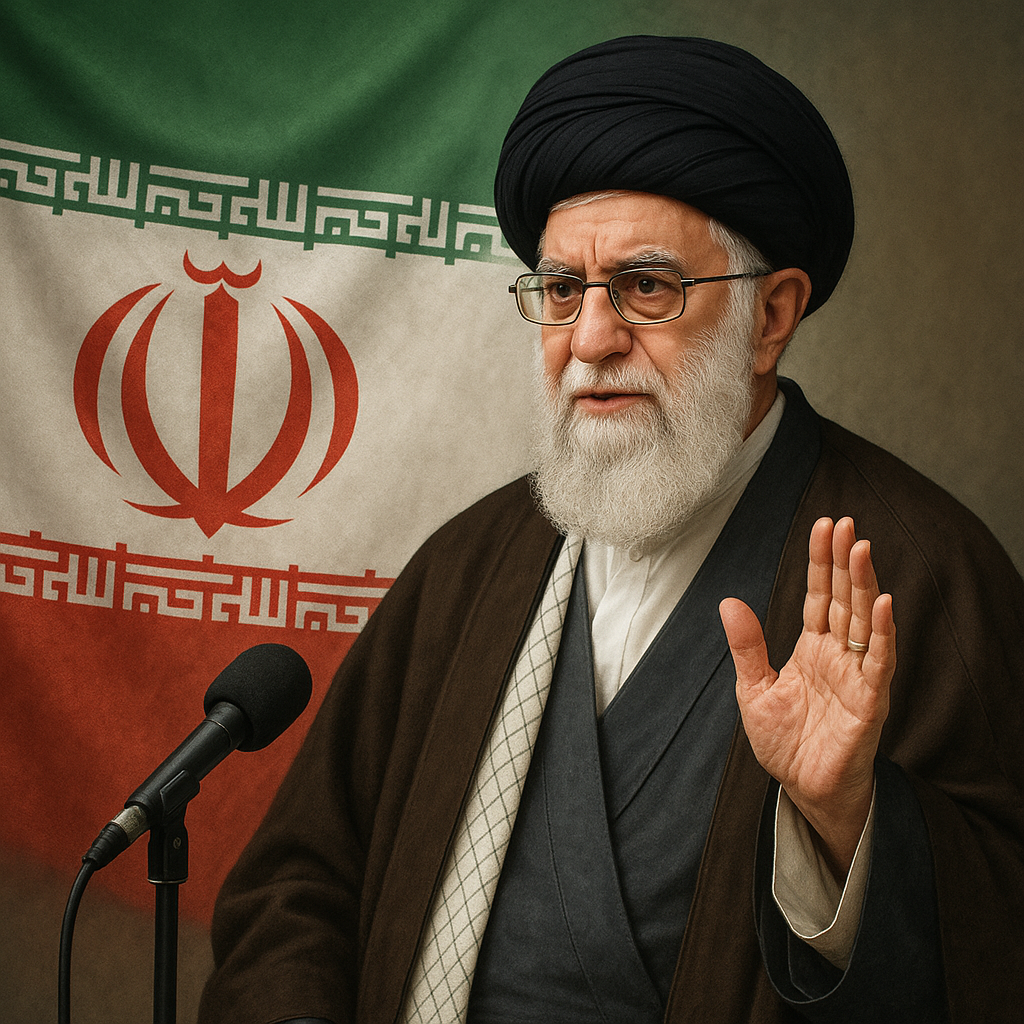
Sacred Unity: Iran’s Leader Urges Calm Amid Political Divides
Sacred Unity: Iran’s Leader Urges Calm Amid Political Divides
In a nation as diverse and politically charged as Iran, the call for sacred unity resonates deeply, particularly in light of recent political tensions and divisions. Ayatollah Ali Khamenei, Iran’s Supreme Leader, recently addressed a gathering of Iranian representatives, emphasizing the need for national cohesion and stability amidst an atmosphere fraught with discord. This call comes at a time when political factions within the country are increasingly polarized, raising questions about the viability of unity in a deeply divided society.

The Context of Political Divides
Iran has historically been characterized by a tapestry of political factions, including reformists, hardliners, and moderates. The discord among these groups has intensified in recent years, particularly following the controversial 2021 presidential elections, which many reformists claimed were marred by suppression. Such events have left a significant portion of the population disillusioned and skeptical about the fate of democracy in Iran.

Khamenei’s recent statements urging calm amid these divisions draw attention to the broader implications of factionalism. He remarked that “the enemy” benefits from internal conflicts that distract the government and populace alike. His assertion highlights a sentiment shared across many political platforms in Iran—that external threats, such as sanctions and military pressures, should unite the country instead of dividing it further.

Diverging Perspectives on Unity and Politics
However, different interpretations of Khamenei’s call for unity exist. Supporters of the Supreme Leader see his message as a necessary stance against western influence, emphasizing that national interests should take precedence over individual political ambitions. For many in the hardline faction, unity equates to loyalty to the current regime and its goals, even amid significant public discontent.
Conversely, critics from the reformist camp argue that such calls for harmony can often serve as a smokescreen for suppressing dissent and curtailing freedoms. They claim that true unity cannot be achieved without addressing the underlying issues of economic discontent, social injustice, and political repression. Their viewpoint is underscored by numerous protests demanding accountability and reform, which they argue represent the genuine desires of the Iranian people.
Recent protests sparked by issues such as economic hardship and social freedoms showcase the complexities of seeking unity in an environment where grievances are deeply rooted. For example, demonstrations regarding women’s rights and personal freedoms have gained momentum, amplifying calls for more substantial democratic reforms. These events illustrate that while unity may be a noble ideal, it is contingent upon the government’s willingness to engage in honest dialogue with its citizens.
The Challenge of Achieving Sacred Unity
Attempting to cultivate an atmosphere of sacred unity within such a politically charged landscape poses significant challenges. Khamenei’s efforts to promote a cohesive narrative are often met with skepticism from both ends of the political spectrum. While some factions embrace his calls for solidarity as aligned with their interests, others view them as attempts to silence dissent and marginalize differing opinions.
Moreover, the cultural and socio-economic disparities among the Iranian populace exacerbate these divisions. Decisions made in the capital often seem disconnected from the everyday reality faced by citizens in rural areas or economically disadvantaged regions. These disparities fuel resentment and contribute to a growing mistrust of political leaders, making it harder for any call for unity to resonate broadly.
In reflecting on Khamenei’s stance, it is crucial to recognize the complexity of societal dynamics at play. Many Iranians desire an inclusive dialogue that acknowledges historical grievances while simultaneously striving for national integrity. The challenge lies in balancing these competing needs without resorting to authoritarian measures that restrict freedoms.
Looking Ahead: The Future of Unity in Iran
As Iran navigates these turbulent political waters, the notion of sacred unity will remain a contentious yet vital theme. The effectiveness of Khamenei’s call may ultimately depend on the government’s ability to respond to the populace’s needs rather than merely rally behind nationalistic rhetoric.
If Iran’s leadership truly seeks to foster an environment of unity, they must address critical social issues, expand political discourse, and create avenues for genuine public participation. By working towards constructive solutions rather than suppressing dissent, they may pave the way for a more harmonious society.
Ultimately, the quest for unity in Iran encapsulates a broader struggle for identity and purpose within a changing political landscape. Whether this quest can transcend deeply rooted divisions remains an open question—one that will shape the future of Iranian society for years to come.