
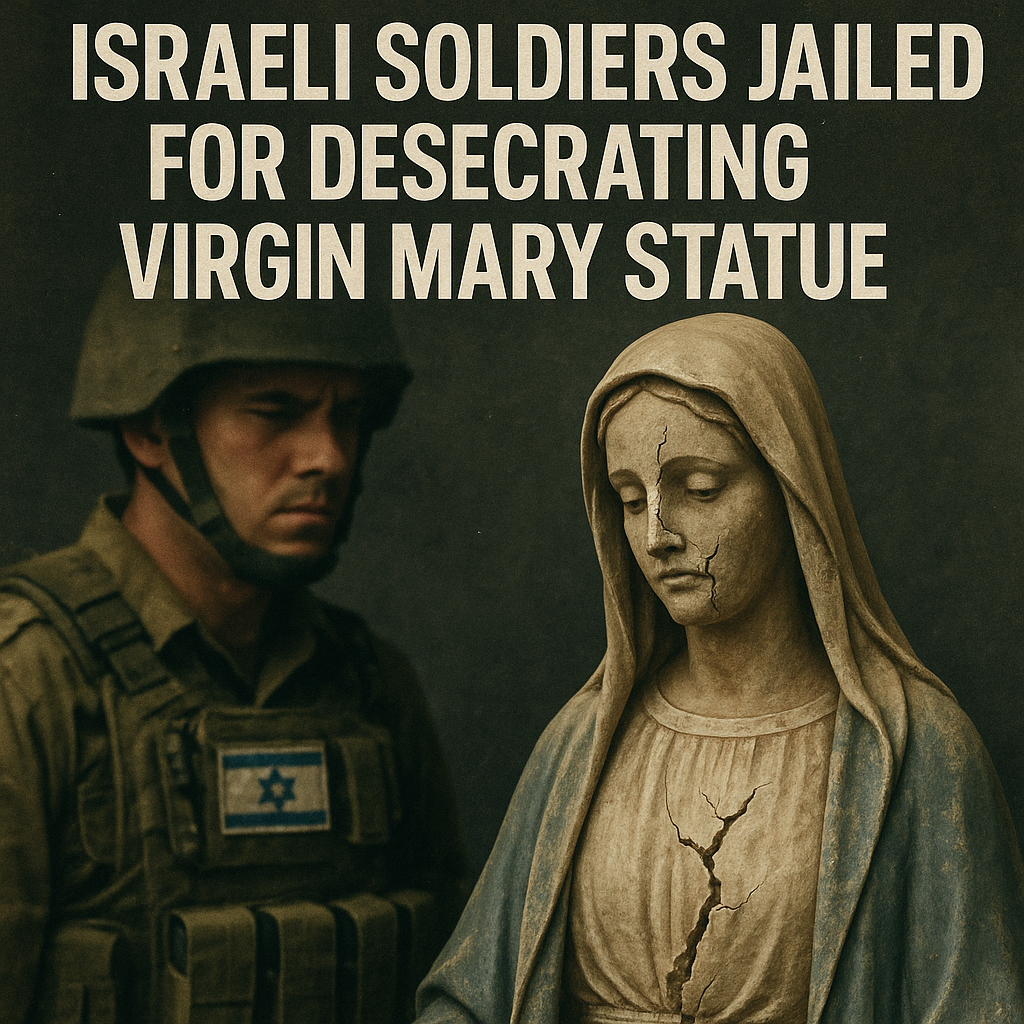
Israeli Soldiers Jailed for Desecrating Virgin Mary Statue
Controversy Over Israeli Soldiers Jailed for Desecrating Virgin Mary Statue
The recent sentencing of Israeli soldiers for the desecration of a Virgin Mary statue has ignited a complex debate surrounding religious respect, military conduct, and the ongoing Israeli-Palestinian tensions. The case underscores the multifaceted nature of socio-political realities in the region and showcases the varying narratives that shape public perception.

The Incident: A Symbol of Tension
According to multiple reports, a group of soldiers from the Israel Defense Forces (IDF) was found guilty of vandalizing a statue of the Virgin Mary located in a Christian church in the village of Jifna, near Ramallah. This incident, which occurred in 2021, involved the soldiers not only damaging the statue but also filming their actions, which later circulated on social media. The IDF’s military court subsequently sentenced these individuals to prison terms ranging from several weeks to multiple months.

This act of desecration has been met with widespread condemnation, especially from Christian communities in the region. Al Jazeera reported protests by local Christian leaders who articulated their deep concern over the disrespect shown towards a sacred religious symbol and the implications it has for Christian-Muslim relations. The incident is viewed as a reflection of broader societal issues, raising questions about the treatment of religious sites in areas that are often fraught with conflict.

The Response: Weighing Perspectives
In the aftermath of the sentencing, the reactions from Israeli society and the international community have been varied. Supporters of the soldiers, particularly those aligned with right-wing groups, often express the view that punishing the soldiers was excessive and that vandalism does not equate to more serious military infractions often overlooked. They argue that the actions of a few should not tarnish the image of the entire military.
Conversely, numerous human rights organizations and leaders from Christian communities assert that accountability is essential for healing and coexistence in the region. They argue that desecrating religious symbols diminishes the dignity of all faiths and is a reminder of the pressing need for fostering respect in a land where all three monotheistic religions hold deep historical significance.
Despite this, as noted by RT, there remains a certain ambivalence within the Israeli population regarding the treatment of religious sites. While many recognize the need for respect, some focus more on the military’s actions during conflict rather than the specific incident. This ambivalence often aligns with the ongoing and deeply entrenched narratives of nationalism and identity that permeate Israeli society.
Broader Implications and the Quest for Peace
The implications of this case are multi-layered and reflect ongoing tensions that extend beyond the soldiers involved. The interaction between military actions and religious sentiments can either drive wedges further between communities or serve as a catalyst for dialogue and reconciliation. The desecration of the Virgin Mary statue serves as a stark reminder of the urgency for fostering greater understanding among diverse religious groups.
The challenge remains: how to bridge the gaps between contrasting views while promoting harmony within such a contested region. Many voices call for educational initiatives that foster mutual respect and understanding among different faith communities. Church leaders advocate for the return of religious tolerance and the safeguarding of holy places, hopeful that acts of vandalism such as this can be transformed into opportunities for healing.
In conclusion, while the sentencing of the Israeli soldiers for their actions sends a signal regarding accountability, it also underscores the need for nuanced understanding in a region rife with complexities. Conversations surrounding incidents like this must include voices from all sides, paving the way for a more inclusive dialogue aimed at respect and coexistence. Through acknowledging the various sentiments at play, we can aspire to a future where the sanctities of all faiths are upheld in equal measure.















