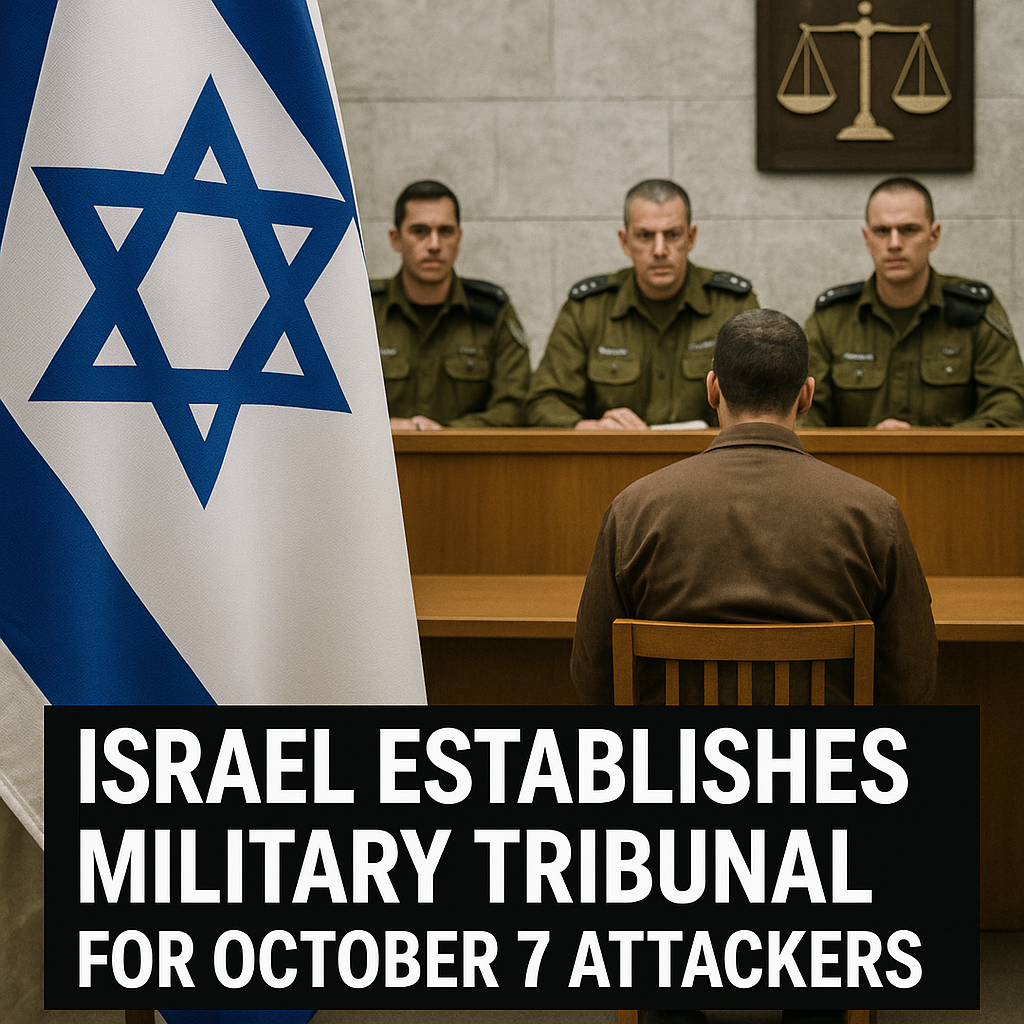
Israel Establishes Military Tribunal for October 7 Attackers
Israel Establishes Military Tribunal for October 7 Attackers
In a significant move, Israel has established a military tribunal specifically designed to address attacks such as those committed on October 7, 2023. This development has sparked a range of responses both domestically and internationally, highlighting the complexities surrounding military justice and human rights within the context of an ongoing conflict.

The Tribunal’s Structure and Functionality
The newly passed law allows military courts to handle cases related to attacks deemed particularly severe, including the recent October 7 assaults. The tribunal can impose harsh penalties, including the death penalty for those found guilty of participation in orchestrating these attacks. Proponents of the law argue that it strengthens national security by providing a swift avenue for justice against those perceived as terrorists.

Supporters of the tribunal emphasize the following points:

– Swift Justice: The tribunal is designed to expedite legal processes, addressing public and governmental concerns regarding the delayed prosecution of perpetrators involved in terror acts.
– Deterrence: By establishing a harsher penalty framework, lawmakers hope to deter future attacks by demonstrating that the consequences will be severe.
However, critics worry that this approach may undermine legal principles and human rights standards. They express concerns regarding:
– Fair Trial Guarantees: Opponents argue that military tribunals may lack the impartiality of civilian courts, raising issues about defendants’ rights to a fair trial.
– Potential for Misuse: There is apprehension that broad definitions of terrorism could lead to wrongful accusations and convictions targeting political opponents or dissenters.
Diverse Reactions to the Military Tribunal
The establishment of this military tribunal has not only initiated debates in Israel but also caught the attention of international organizations and foreign governments. While the Israeli government advocates for the tribunal as a necessary response to increasing security threats, humanitarian organizations and civil rights groups urge caution.
Organizations such as Amnesty International have voiced their concerns, stating that military justice systems have historically facilitated abuses and lack the safeguards present in civilian judicial systems. Their representatives have articulated:
– Risks of Arbitrary Detentions: There exists anxiety that the tribunal could expedite actions against individuals without proper oversight.
– Human Rights Violations: There’s a fear that the implementation of death sentences might contravene international human rights agreements and add to a cycle of violence and retribution.
International reactions vary, with some governments supporting Israel’s right to defend itself, while others call for adherence to human rights norms. The situation has prompted multiple viewpoints, such as those from various humanitarian groups condemning further militarization of the judicial system.
Assessing the Broader Implications
As Israel grapples with an ongoing security crisis, the establishment of this military tribunal raises essential questions about the intersection of national security and the rule of law. The move is seen by many as part of a broader response to recent escalations of violence and the challenges of managing threats from non-state actors.
Moreover, the decision could have significant implications for Israel’s international standing. While Israel maintains that the tribunal is essential for ensuring security, it may face backlash from nations advocating for human rights and the rule of law. In this globalized world, actions taken towards justice and security are closely scrutinized, often influencing diplomatic relations and international perceptions.
While the tribunal aims to address pressing security concerns, balancing these measures with legal and human rights obligations is critical. Failure to do so could not only undermine Israel’s democratic principles but may also exacerbate tensions within the region.
Conclusion
The establishment of a military tribunal in Israel represents a decisive step in addressing the violence stemming from the October 7 attacks. The multifaceted reactions this law has provoked illustrate the deep divisions surrounding issues of justice, security, and human rights. As Israel navigates the challenges posed by its security environment, the long-term effects of this tribunal — including its implications for judicial integrity and international relations — remain to be seen. Maintaining a delicate balance between ensuring national security and protecting fundamental rights will be crucial as Israel moves forward in its efforts to secure justice and peace.