
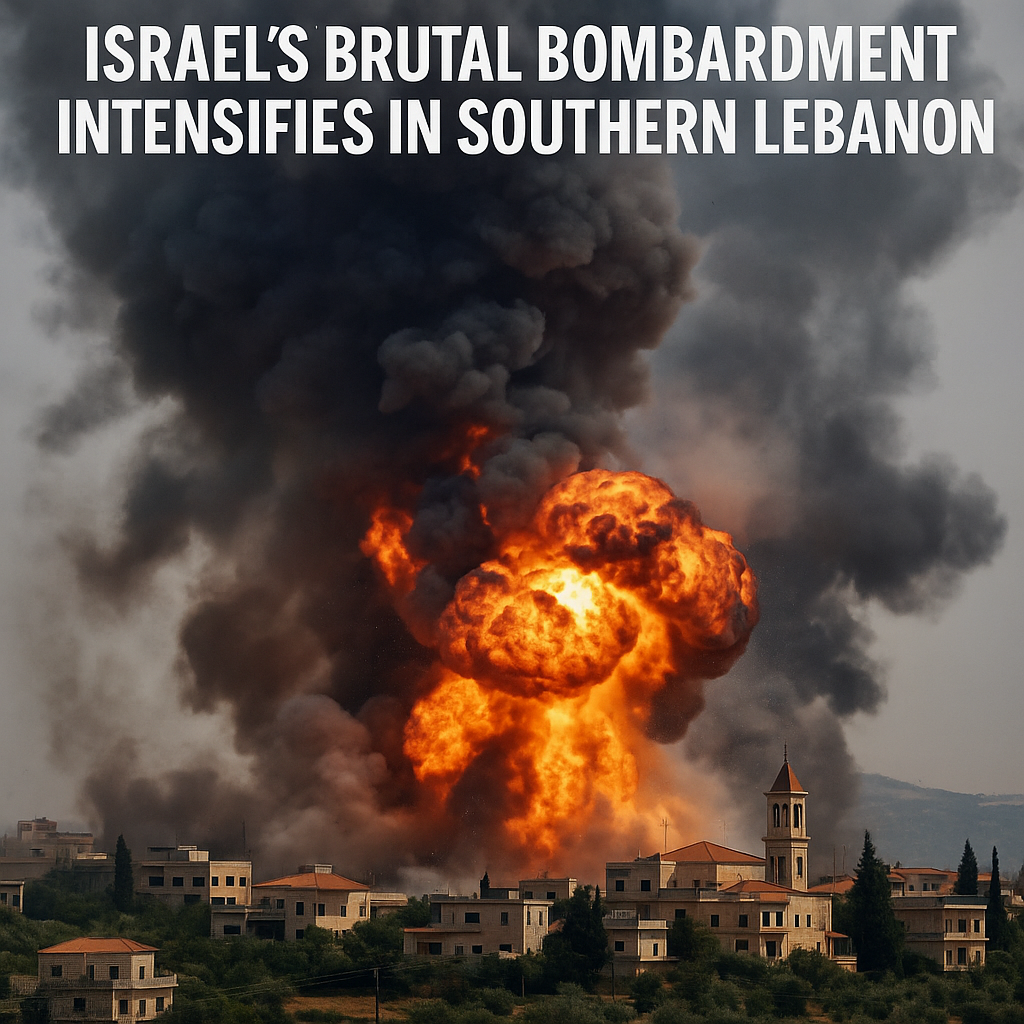
Israel’s Brutal Bombardment Intensifies in Southern Lebanon
Growing Tensions: The Intensification of Israel’s Bombardment in Southern Lebanon
In recent weeks, Israel’s bombardment of Southern Lebanon has escalated, drawing attention to the fragile status quo in the region and intensifying humanitarian concerns for civilians caught in the crossfire. This military action has not only raised alarms about civilian casualties and geopolitical stability but also sparked diverse reactions from international observers and local stakeholders.

The Context of the Conflict
The situation in Southern Lebanon has been exacerbated by a culmination of long-standing territorial disputes and the ongoing conflict with Hezbollah, the Lebanese militant group. Reports indicate that Israel launched heavy artillery and airstrikes in response to rocket fire from Hezbollah, with local sources claiming numerous civilian casualties, including children. According to reports from Al Jazeera, residents have fled their homes amidst fears of further escalation, and humanitarian organizations are voicing urgent appeals for aid.

Conversely, coverage from RT highlights Israel’s perspective, emphasizing that the military operations are deemed necessary for national security. Israeli officials argue that their actions are a response to perceived threats from Hezbollah, who they accuse of using civilian areas to launch attacks. Such narratives underscore the complexity of a situation where each side views its actions as both a form of defense and as a necessary measure of sovereignty.

Humanitarian Impact and International Response
The humanitarian implications of the bombardment are severe. Analysts warn that the increased military activities in Southern Lebanon could exacerbate the already dire conditions for displaced populations from previous conflicts. Reports indicate that many families are experiencing acute shortages of food and medical supplies, with local hospitals overwhelmed by casualties. Humanitarian agencies are struggling to provide relief amid the chaos, emphasizing the urgent need for a ceasefire and safe corridors for aid distribution.
The international community’s response has varied significantly. Some countries and organizations have urged Israel to exercise restraint, calling for negotiations to de-escalate tensions. However, others support Israel’s right to defend itself against sporadic attacks. Sky News reports an uneasy balance where countries like the United States reaffirm commitments to Israel’s security while simultaneously urging dialogues aimed at conflict resolution.
The Role of Regional Dynamics
Regional politics further complicate the situation. Many observers point to growing Iranian influence in Lebanon and its implications for Israel’s security concerns. Hezbollah, supported by Iran, remains a formidable adversary, leading to a cycle of retaliatory actions that reinforce both sides’ narratives of threat and victimhood.
As tensions rise, neighboring countries and international powers like the United States and Russia are monitoring the situation closely, aware that any miscalculation could escalate into a broader conflict involving multiple factions. The potential for wider regional instability looms large, raising questions about the effectiveness of existing diplomatic frameworks to manage these conflicts.
Conclusion: A Path Forward Amidst Uncertainty
The intensifying bombardment by Israel in Southern Lebanon not only raises humanitarian concerns but also reflects the complex interplay of historical grievances, geopolitical interests, and national security imperatives. Both local civilians and international observers find themselves grappling with the uncertainties of an unresolved conflict that has led to increased suffering and instability.
In light of these events, it remains critical for all parties to prioritize dialogue and seek meaningful resolutions. As reports of casualties continue to mount and humanitarian crises deepen, the responsibility of the international community to facilitate peace becomes ever more pressing. The situation in Southern Lebanon underscores the need for a nuanced understanding of the dynamics at work, where every military action reverberates through communities and provokes further cycles of violence.















