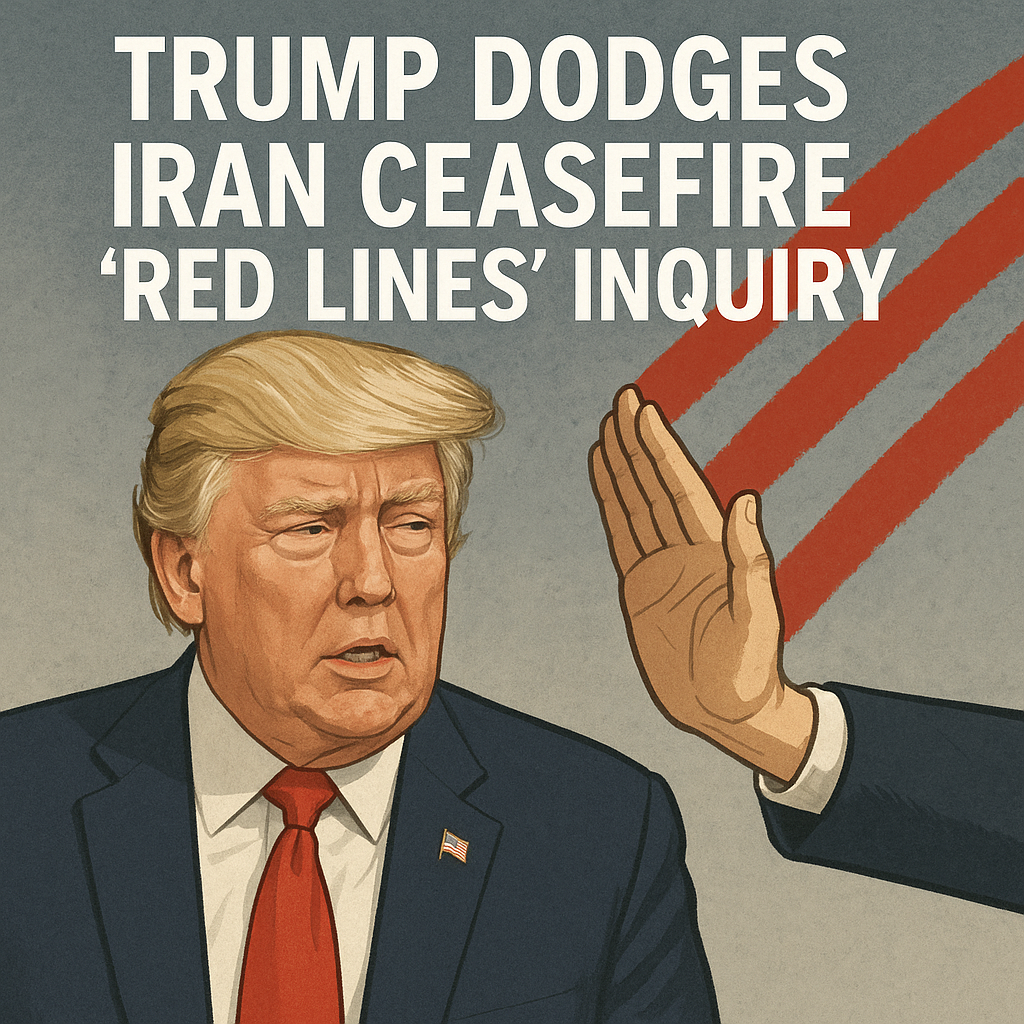
Trump Dodges Iran Ceasefire ‘Red Lines’ Inquiry
Trump and the Iran Ceasefire Inquiry: An Evasive Response
In recent remarks, former President Donald Trump has skillfully dodged questions regarding the United States’ “red lines” in any potential ceasefire negotiations with Iran. This issue has gained prominence as tensions in the region continue to escalate, prompting discussions about what terms the U.S. would consider acceptable for peace.

The Context of the Inquiry
The inquiry comes amidst a backdrop of ongoing unrest in the Middle East, where Iran’s actions, including its nuclear program and support for proxy forces, are under intense scrutiny. As various news outlets report, the potential for a ceasefire presents an opportunity for diplomatic engagement, yet it is fraught with complexities due to longstanding animosities and geopolitical rivalries.

Recent conversations centered around Trump’s non-answer highlighted a strategic approach to the subject. While some analysts view this as a lack of clarity on U.S. policy, others interpret it as a calculated maneuver to maintain his political bases both domestically and internationally. According to an Al Jazeera report, when directly asked about any red lines concerning Iran, Trump claimed that he would not discuss such matters in a public forum, emphasizing national security concerns.

Analyzing Responses: Divergent Viewpoints
Several perspectives have emerged in response to Trump’s evasive remarks. On one hand, proponents of a more aggressive stance against Iran argue that the absence of clear boundaries may embolden Tehran to escalate its activities, believing it can act without repercussions. Trump’s hesitance to articulate the U.S. position could be interpreted as a weakness in U.S. diplomacy.
Conversely, others argue that ambiguity can sometimes serve as a beneficial tool in international relations. By avoiding rigid commitments, Trump may aim to keep Iran guessing, thereby potentially reducing hostile actions. This perspective aligns with viewpoints expressed by analysts from RT, who suggest that a less defined approach could provide the U.S. with tactical leverage.
Implications for Future U.S.-Iran Relations
Trump’s responses signal a cautious approach toward a critical issue that impacts not only U.S.-Iran relations but also broader Middle Eastern stability. The ambiguity surrounding U.S. red lines can have far-reaching consequences.
1. Potential for Diplomacy: Without defined parameters, there exists a window for diplomatic initiatives that could lead to constructive dialogue.
2. Risk of Miscalculation: However, the lack of clear red lines also opens the door for potential miscalculations by Iran or even allied groups in the region, which could exacerbate tensions.
3. Domestic Political Dynamics: Trump’s evasiveness may resonate positively with his base, reinforcing his image as a strong leader who prioritizes national security over open communication, yet it also fuels criticism from opponents who demand transparency in foreign policy.
Ultimately, the debate surrounding Trump’s approach to the Iran ceasefire inquiry reflects broader concerns about U.S. foreign policy in volatile regions. Observers are left pondering the effectiveness of a strategy that embraces ambiguity.
Conclusion
The discussion surrounding Trump’s inconclusive responses to inquiries on Iran’s ceasefire red lines illustrates the complexity of U.S. foreign relations. As the landscape of international politics shifts, it becomes imperative for leaders to strike a balance between strategic ambiguity and the necessity for clear communication. In this intricate environment, one question remains paramount: how will the U.S. navigate its future relationship with Iran, and what implications will these decisions have on global stability? As situations evolve, only time will reveal the outcome of these pivotal momentous deliberations.