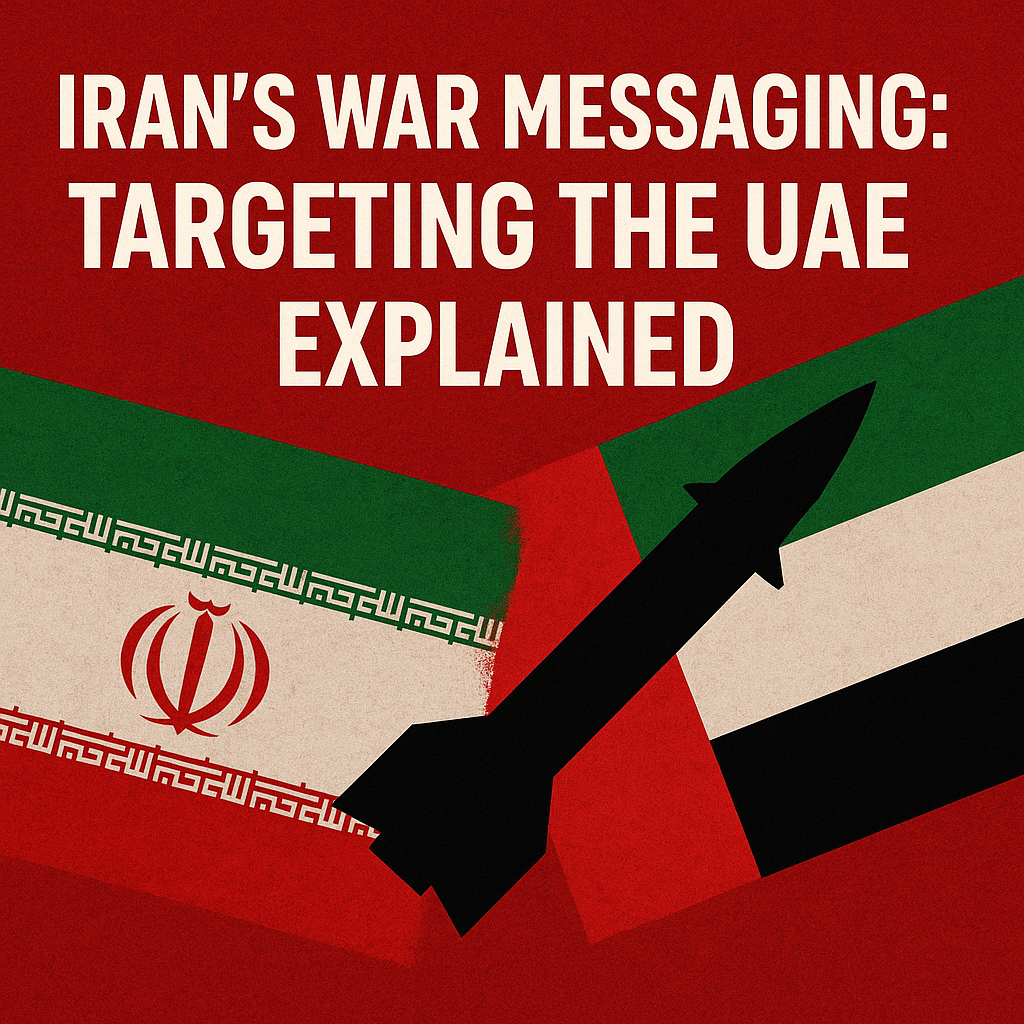
Iran’s War Messaging: Targeting the UAE Explained
Iran’s War Messaging: Targeting the UAE Explained
Iran’s recent war messaging has increasingly focused on the United Arab Emirates (UAE), drawing significant attention from international observers. This shift is rooted in a complex web of regional politics, historical grievances, and current geopolitical developments.

Historical Context and Current Tensions
To understand Iran’s current stance towards the UAE, it’s essential to delve into the historical context. The relationship between the two nations has been marked by rivalry, particularly over territorial disputes like the ownership of the three islands in the Strait of Hormuz: Abu Musa, Greater Tunb, and Lesser Tunb. Iran’s assertions of sovereignty over these islands have long irritated the UAE and been a source of friction.

In addition to historical disputes, contemporary geopolitical dynamics play a crucial role. The UAE’s growing ties with Israel, especially following normalization agreements and military cooperation, have raised concerns in Tehran. Iran perceives these alliances as a direct threat to its influence in the region, prompting a resurgence in aggressive rhetoric aimed at its neighbor.

Recent War Messaging: An Analysis
Iran’s war messaging has manifested in various ways, including military drills, statements from officials, and strategic maneuvers in the Gulf. Analysts note that these actions are designed not only to assert Iran’s military capability but also to send a clear warning to the UAE and its allies.
For instance, a recent military exercise conducted by Iran showcased advanced missile systems, sending a clear signal of its readiness to defend its territorial claims. This demonstration, coupled with statements from Iranian officials emphasizing the need to counter perceived threats from the UAE, marks a significant escalation in rhetoric.
However, while Iranian leaders have ramped up their war messages, there is also a softer diplomatic undertone that cannot be ignored. Some Iranian officials express a willingness to engage in dialogue with the UAE, suggesting that while military readiness is paramount, diplomacy remains an option. This duality complicates the narrative; while Iran’s war messaging indicates a hardened stance, there are also hints of potential reconciliation.
Weighing Different Perspectives
1. Iran’s Strategic Calculations: Some experts argue that Iran’s focus on the UAE is a tactical move to consolidate its power and assert its regional influence. By targeting the UAE, Iran sends a strong message to other Gulf states, reinforcing the perception that it remains a formidable player in the Middle East, despite facing multiple pressures, including sanctions and internal economic struggles.
2. UAE’s Counterstrategy: The UAE, for its part, appears to be bolstering its defenses in response to Iran’s provocations. Increasing military alliances with western powers, particularly the United States, is part of the UAE’s strategy to safeguard its interests and deter Iranian aggression. Recent arms deals and military partnerships highlight its commitment to maintaining security in the region.
3. International Reactions: The international community’s response to Iran’s war messaging has been varied. Some nations express concern over the escalation of tensions, advocating for peaceful negotiations. Others see Iran’s stance as predictable, given its historical posturing within the Gulf. The divergent reactions underscore the multifaceted nature of the issue, with no singular perspective emerging as the definitive interpretation.
The Road Ahead: Uncertainties and Opportunities
As the situation evolves, several uncertainties loom. The extent to which Iran will continue its aggressive messaging towards the UAE remains in question. Diplomatic channels, albeit strained, have not been entirely closed, indicating that opportunities for dialogue exist. The dynamic nature of Middle Eastern politics often leads to unexpected shifts, and both nations must weigh the costs of continued escalation against the benefits of engagement.
Moreover, the geopolitical landscape is evolving with other players, such as the U.S., Russia, and China, increasingly involved in the region. Their policies will undoubtedly influence Iran’s strategy and its interactions with the UAE.
Conclusion
Iran’s targeting of the UAE in its war messaging reflects a complex interplay of historical grievances, current geopolitical challenges, and potential diplomatic openings. As both nations navigate this fraught landscape, the unfolding dynamics will likely shape not only their bilateral relationship but also the broader regional order. The dual nature of Iran’s stance—aggression paired with a willingness to engage—adds a layer of complexity, one that will require keen observation and careful analysis in the coming months.