
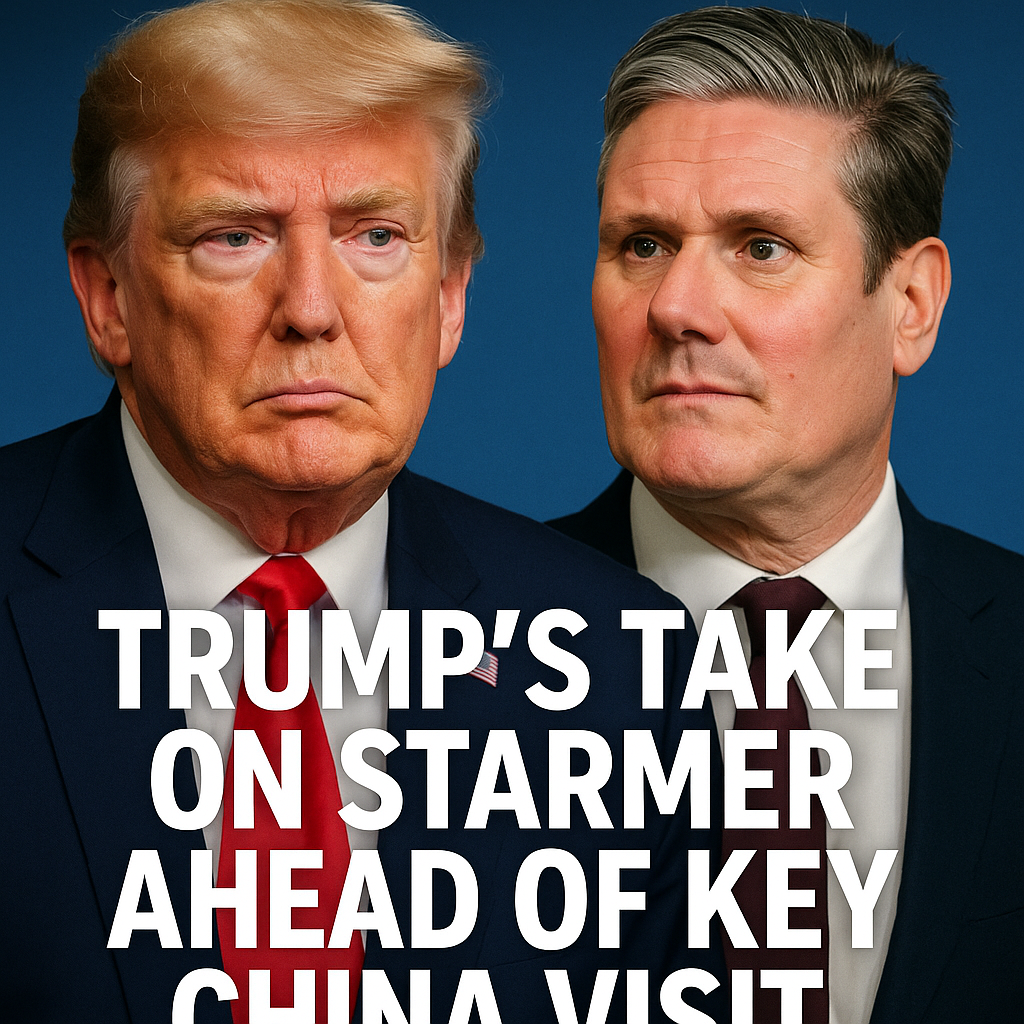
Trump’s Take on Starmer Ahead of Key China Visit
Trump’s Take on Starmer Ahead of Key China Visit
As political tensions continue to rise, Donald Trump has recently voiced his opinions on Keir Starmer, the leader of the UK’s Labour Party, just ahead of a significant diplomatic mission to China. This discourse underscores a broader narrative of transatlantic relations and the interplay of domestic politics with international diplomacy.

The Context of Trump’s Remarks
In a world where geopolitical dynamics are increasingly fraught, Trump’s comments come at a crucial moment. He posited that Starmer’s leadership might weaken the UK’s stance on key global issues, particularly in terms of economic and foreign policy. Trump’s critique reflects his longstanding approach of leveraging national identity and asserting America’s position in the global arena.

While Trump’s remarks primarily aim to sow doubt about Starmer’s capabilities, they’re also emblematic of a broader concern: the potential shift in UK foreign policy under a Labour leadership. Trump has historically linked the strength of alliances to the perceived strength of individual leaders, suggesting that a Labour government might not adopt a confrontational stance towards China, which Trump sees as necessary for American interests.

Divergent Views on Starmer’s Strategic Importance
The discussion isn’t one-dimensional. Starmer himself remains an enigmatic figure in UK politics; while he has often sought to distinguish his party from the legacy of Jeremy Corbyn, many still view him with skepticism. Responding to Trump’s insinuations, Starmer has emphasized the UK’s need for a strong, ethical approach to international relations—especially regarding China. His camp argues that engagement is essential, while maintaining a critical perspective on human rights issues and global economic strategies.
Supporters of Starmer’s approach enlist a broad range of views indicating a necessity for diplomatic engagement, even with adversaries. They assert that understanding and dialogue could lead to more robust international cooperation. Critics, however, fear this could be interpreted as weakness, particularly in an era characterized by aggressive posturing between superpowers.
Uncertainties Ahead of the China Visit
As the UK prepares for its key diplomatic engagement in China, the stakes remain high. There are pressing issues on the agenda, including climate change, trade regulations, and human rights abuses. These topics require a careful balancing act between maintaining a confrontational stance on crucial issues and preserving open channels for dialogue.
Both domestic and international observers will keenly monitor how Starmer navigates these turbulent waters, especially in light of Trump’s view that any leniency could embolden China. The juxtaposition of Trump’s criticism against Starmer’s potential diplomatic strategies highlights the ongoing debate about effective leadership in addressing global challenges.
Analysts are divided on whether Trump’s influence will have any tangible effect on Starmer’s approach or on UK foreign policy. Some argue that Trump’s opinions could resonate with a sector of the UK electorate, especially those skeptical of Labour’s message. Others contend that the UK must delineate its foreign policy independent of American domestic political battles.
The Bigger Picture: UK-US Relations and Global Diplomacy
What emerges from Trump’s commentary is a reflection of the intertwined fates of UK and US politics. The changing leadership in the UK could potentially alter its relationship with the US, especially if a more progressive agenda is pursued by a Labour government. Nonetheless, the bipartisan nature of confronting China’s growing influence may still unite both Democrats and Republicans, suggesting a complex potential for continued collaboration regardless of individual leadership.
While the upcoming visit represents a moment of significance for Starmer, it equally offers insight into how he might position himself, not only against Trump’s narrative but in the broader framework of international diplomacy. As debates on foreign policy strategies unfold, the nuances of political alliances, domestic pressures, and international expectations will undoubtedly shape the outcomes.
In conclusion, Trump’s remarks about Starmer ahead of the pivotal China visit encapsulate not just a clash of individual perspectives, but also a larger conversation about the direction of UK foreign policy in a changing world. Whether this influences public sentiment towards Starmer remains to be seen, but it highlights the critical interplay of leadership, identity, and diplomacy in today’s complex geopolitical landscape.















