
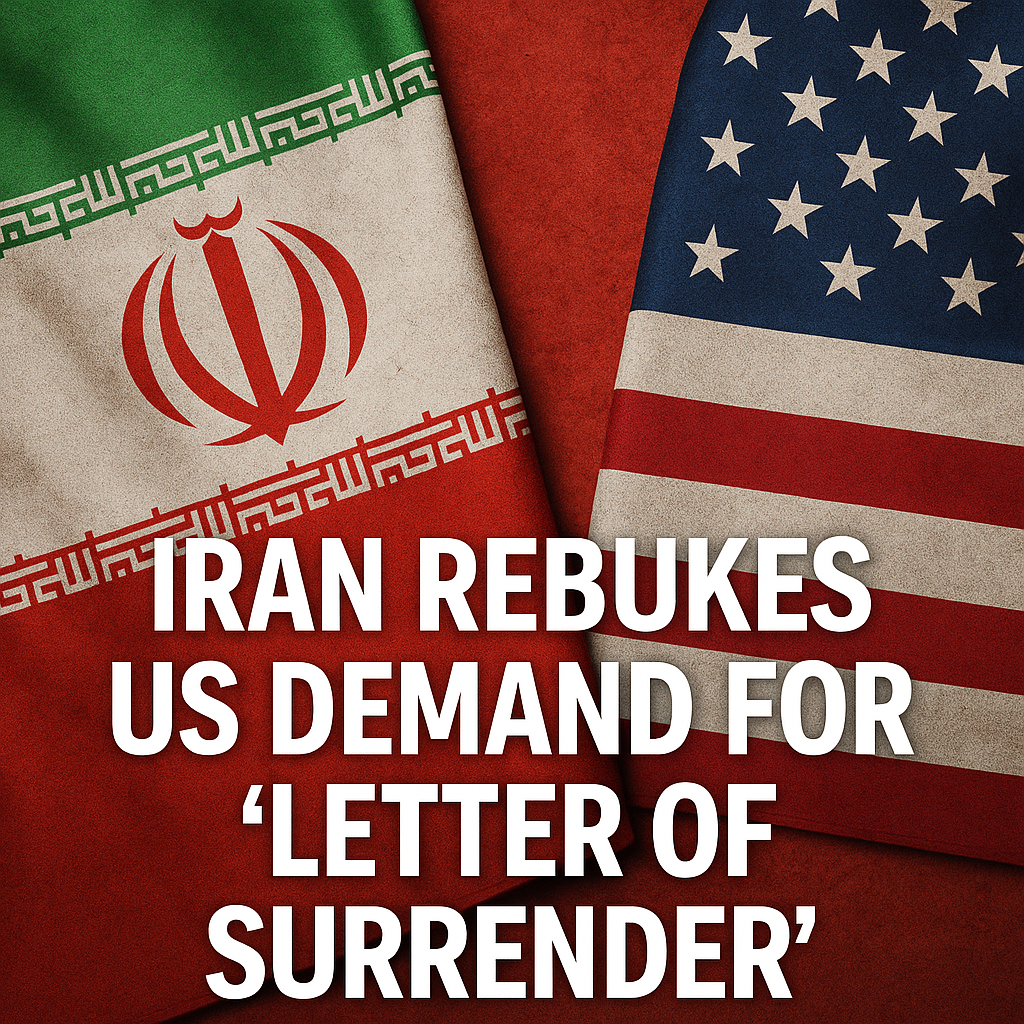
Iran Rebukes US Demand for ‘Letter of Surrender’
Iran Rebukes US Demand for ‘Letter of Surrender’
In recent diplomatic exchanges, tensions have escalated as Iran firmly opposed a US demand for what it termed a “letter of surrender.” This incident underscores the complex geopolitical dynamics at play in the region and highlights the stark differences in how Iran and the US perceive their roles on the global stage.

Context of the Standoff
In the backdrop of this confrontation lies a history of animosity and mistrust between the two nations. The US has long imposed sanctions on Iran, primarily over its nuclear program, which it perceives as a threat to regional stability. Conversely, Iran views the US’s actions as aggressive and an infringement on its sovereignty.

The latest rebuff came in light of growing Iranian resistance to what it characterized as unreasonable demands from Washington. According to reports from various sources, Iran’s Foreign Minister Hossein Amir-Abdollahian stated that such a letter would signify capitulation, which is unacceptable. Iran’s insistence on maintaining its stance not only reflects its commitment to sovereignty but also its broader strategy of engaging regionally while defying external pressures.

Divergent Perspectives on Diplomacy
Various viewpoints exist regarding the implications of this standoff. Analysts from outlets like Al Jazeera argue that the US’s hardline stance may propel Iran towards a closer relationship with Russia and China, who have shown willingness to support Iran in the face of Western opposition. The potential for strategic partnerships with these nations could alter the balance of power in the Middle East, as they stand against perceived American hegemony.
On the other hand, articles from RT highlight the potential repercussions of Iran’s refusal. Experts suggest that while Iran is reinforcing its domestic and international standing by rejecting the demand, it risks further isolation, especially if the US and its allies bolster their efforts to contain Iran’s influence. In this narrative, the call for a surrender letter is emblematic of a larger confrontation over regional influence and resources.
This divergence in perspectives reveals a polarization in broader geopolitical strategies. While some analysts consider the US’s demands a reasonable expectation for accountability, others perceive it as an overreach that undermines diplomatic negotiations. This tension complicates the landscape, where dialogue seems increasingly elusive.
The Complicated Road Ahead
What’s particularly notable is the absence of a unified approach from either side. Analysts recognize that while Iran is vocal in rejecting the US’s demands, there remains a significant internal debate about how far to push back against Western powers. Some voices within Iran advocate for more conciliatory approaches, while others prefer a hardline stance, highlighting the internal complexities within Iranian politics.
Moreover, the international community’s response to Iran’s rejection will play a crucial role in shaping future dynamics. Should sanctions intensify or diplomatic efforts falter, Iran may double down on its resistance, further embedding its defiance against the US. Conversely, a robust and unified international push for diplomatic solutions may induce Iran to reconsider its stances.
As observers continue to monitor these developments, the path forward remains fraught with uncertainty. With no clear consensus emerging regarding the efficacy of either side’s approach, diplomatic relations appear to be at a stalemate, marked by deep-seated mistrust and competing narratives.
In summary, Iran’s rejection of the US’s demand for capitulation reflects a broader struggle for sovereignty and influence amidst a backdrop of historical animosity. The complexities surrounding this issue are amplified by differing perspectives on diplomacy and national interests. As both nations navigate these turbulent waters, the potential for escalation or resolution remains ever present, making the global response to such developments critical in shaping the future of relations between Iran and the US.















