
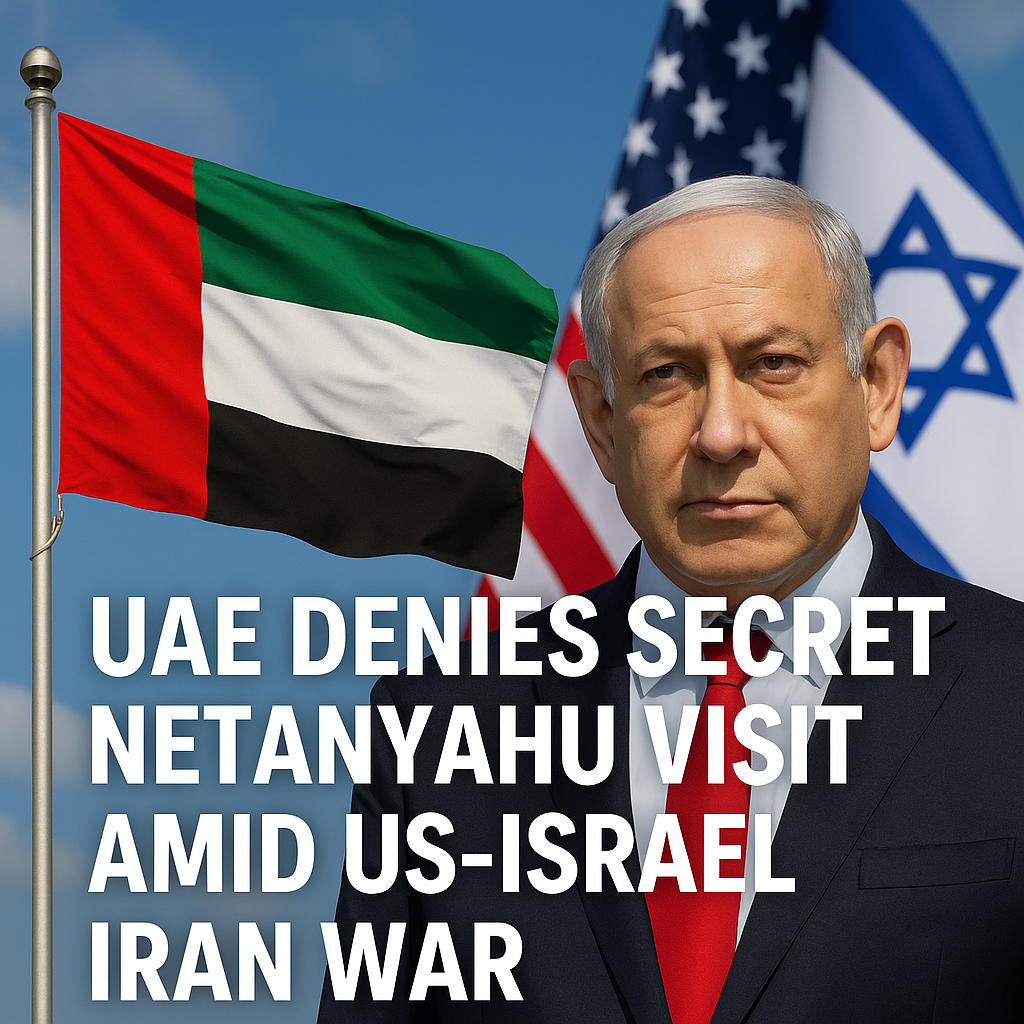
UAE Denies Secret Netanyahu Visit Amid US-Israel Iran War
UAE Denies Secret Netanyahu Visit Amid US-Israel Iran War
In an era where geopolitical tensions often play out in the shadows, the alleged secret visit of Israeli Prime Minister Benjamin Netanyahu to the UAE has raised eyebrows and sparked intense debate. As reports circulated that such clandestine meetings occurred amid escalating tensions surrounding Iran, the UAE firmly denied these claims, marking a significant moment in the complex dynamics of Middle Eastern politics.

The Allegations: What Sparked the Controversy?
The rumors of Netanyahu’s secret visit surfaced in a variety of news reports, claiming that he engaged in crucial discussions regarding Iran’s military ambitions during an undeclared meeting in the UAE. Reports cited unnamed sources and speculated on the implications of such a visit at a time when U.S.-Israel relations regarding military posturing against Iran have been particularly fragile. The UAE’s strategic location and its growing partnerships with both Israel and the United States have made it a focal point for discussions on regional security.

However, officials in the UAE vehemently dismissed these claims, referring to them as “baseless.” They emphasized the importance of maintaining diplomatic channels without such covert interactions, particularly given the delicate nature of the ongoing U.S.-Israel-Iran conflict. The UAE’s stance reflects its desire to portray itself as a stabilizing force in the region, promoting peace and dialogue over clandestine negotiations.

Navigating Diplomatic Waters: Diverse Perspectives
The denial from the UAE has not quelled debates surrounding the validity of the initial reports. On one side, proponents of the idea that Netanyahu made a secret visit argue that the geopolitical landscape has a rich history of unannounced meetings among state leaders, especially when dealing with potential threats like Iran. They suggest that the very nature of diplomacy means it sometimes occurs behind closed doors to ensure candid discussions away from public scrutiny.
Conversely, critics argue that such speculative reports can hinder diplomatic relations and create unnecessary tensions. By labeling the claims as “baseless,” the UAE’s officials aim to project a stance of transparency and integrity, essential for their public and regional image. Furthermore, the assertion that meetings of such significance would take place covertly is seen by some as undermining the UAE’s ongoing efforts to build a diplomatic framework that relies on open communication.
The Broader Context: US-Iran Tensions
To fully understand the ramifications of the alleged secret visit, one must consider the broader context of U.S.-Iran relations. Tensions continue to escalate, fueled by Iran’s nuclear ambitions and corresponding military developments. The U.S. and its allies, including Israel, remain vigilant, with military posturing becoming increasingly apparent.
The ensuing confusion regarding Netanyahu’s alleged visit underscores the acute sensitivities involved. As both Israel and the U.S. wrestle with a nuclear-armed Iran, any purported conversations, even if denied, highlight the complexity and urgency surrounding these discussions. The varied reactions to the claims—ranging from outright denial to speculation of truth—serve to illustrate the intricate web of alliances and animosities which define Middle Eastern geopolitics.
What Happens Next?
As the dust settles on this controversy, the implications for UAE-Israel relations remain to be seen. The UAE, having normalized relations with Israel in 2020 through the Abraham Accords, has sought to navigate a path that balances its burgeoning ties with Israel against its traditional relationships with other Arab states and Iran.
Moving forward, observers will be closely monitoring how this incident influences the diplomatic climate in the region. Will it spur more direct communication between leaders, or will it lead to an escalation of doubts about trust and intent? The answers will depend heavily on the evolving security dynamics, particularly in regard to Iranian policies and actions.
In conclusion, while the UAE has decisively denied claims of a secret Netanyahu visit, the incident highlights the intricate tapestry of international relations in the Middle East. As negotiations continue and tensions simmer, the quest for clarity in an increasingly complex geopolitical landscape remains as crucial as ever.















