
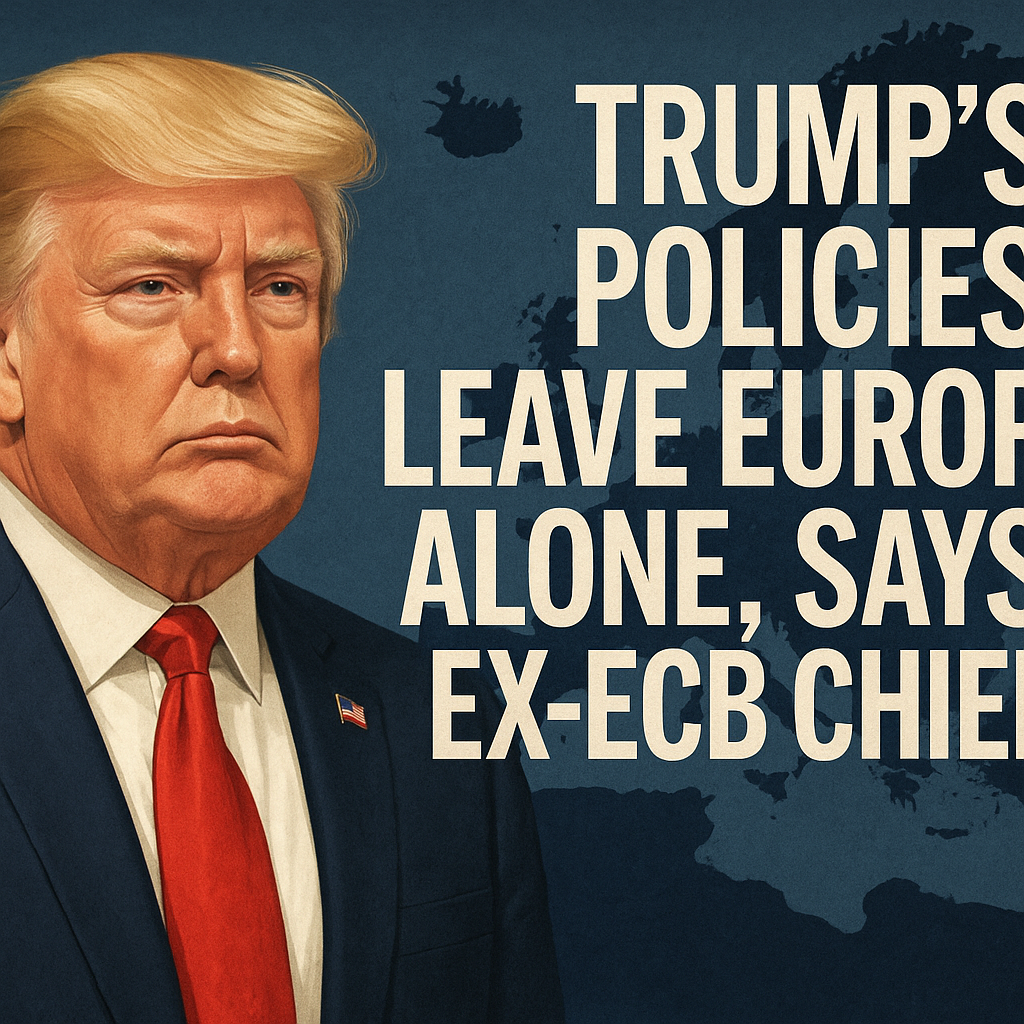
Trump’s Policies Leave Europe Alone, Says Ex-ECB Chief
Trump’s Policies Leave Europe Alone, Says Ex-ECB Chief
In recent discussions about global economic stability, the phrase “Trump’s policies leave Europe alone” has emerged as a significant point of contention, particularly in light of Mario Draghi’s remarks. The former President of the European Central Bank (ECB) has been vocal about the impact of former U.S. President Donald Trump’s policies on not just European economies, but on global governance structures as a whole.

The European Response to Trump’s Isolationism
Trump’s approach to international relations has often been characterized as unilateral, prioritizing American interests over collaborative global agreements. Draghi has pointed out that this stance has left Europe in a precarious position. Many EU leaders have expressed concern over America’s shift from multilateralism to a more isolationist approach, particularly during Trump’s administration.

This shift has raised questions about the future of transatlantic relations, which had long been viewed as a cornerstone of Western global politics. For instance, in trade, Trump’s tariffs and withdrawal from agreements like the Paris Climate Accord signaled a departure from established diplomatic norms. As reported by various sources, such as Al Jazeera, this has prompted European nations to reassess their alliances and strategies.

Economic Implications of Isolationist Policies
The economic ramifications of Trump’s policies are notable. Draghi argues that the lack of a cohesive American strategy has forced Europe to confront its vulnerabilities, particularly in energy dependence and defense spending. For example:
– Energy Security: In the wake of decreased cooperation with the U.S., European nations are exploring alternative energy sources and diversifying their suppliers, especially in light of rising tensions with Russia.
– Defense Spending: The U.S.’s withdrawal from its commitments has led to renewed debates around NATO and European defense spending, with calls for greater self-reliance emerging from several member states.
However, it’s essential to highlight that not all Europeans view Trump’s approach negatively. Some proponents argue that by stepping back, the U.S. has allowed Europe to take on more responsibility, potentially empowering these nations to lead on issues like climate change and trade.
Divergent Perspectives on Global Leadership
The divide in perspectives raises an interesting point: while some analysts believe that Trump’s policies left Europe vulnerable, others assert that this isolation could foster greater independence. For example, Draghi’s critique suggests a need for Europe to unite against external pressures, thereby emphasizing the EU’s capacity for self-governance. Conversely, there are voices in media outlets such as Sky News advocating for a return to a more engaged U.S. leadership to stabilize global markets.
Furthermore, the 2022 Russian invasion of Ukraine has further complicated this landscape. The conflict has highlighted the importance of real-time cooperation, yet the legacy of Trump’s tenure continues to loom over diplomatic discussions. The chaos has made it essential for Europe to bolster its defense capabilities and energy independence, while also calling for renewed forms of partnership with the U.S. that align with contemporary geopolitical realities.
The Uncertain Future of Transatlantic Relations
As Europe grapples with the ramifications of a more isolated U.S., uncertainties persist regarding future diplomatic strategies. Do these evolving dynamics spell an end to the traditional model of U.S.-Europe collaboration, or do they represent an opportunity for redefined partnership structures? The answer remains unclear.
In summary, while Draghi’s remarks highlight the challenges that have emerged from Trump’s policies, they also underscore a pivotal moment for Europe. The continent stands at a crossroads, where it must weigh past dependencies against the pressing need for independence. The future of European economies, and indeed the stability of the Western world order, may very well depend on how well Europe navigates this complex and changing landscape.
In conclusion, Donald Trump’s legacy is still being felt across the Atlantic, fostering a nuanced discussion about America’s role and Europe’s responsibilities in an increasingly multipolar world.















