
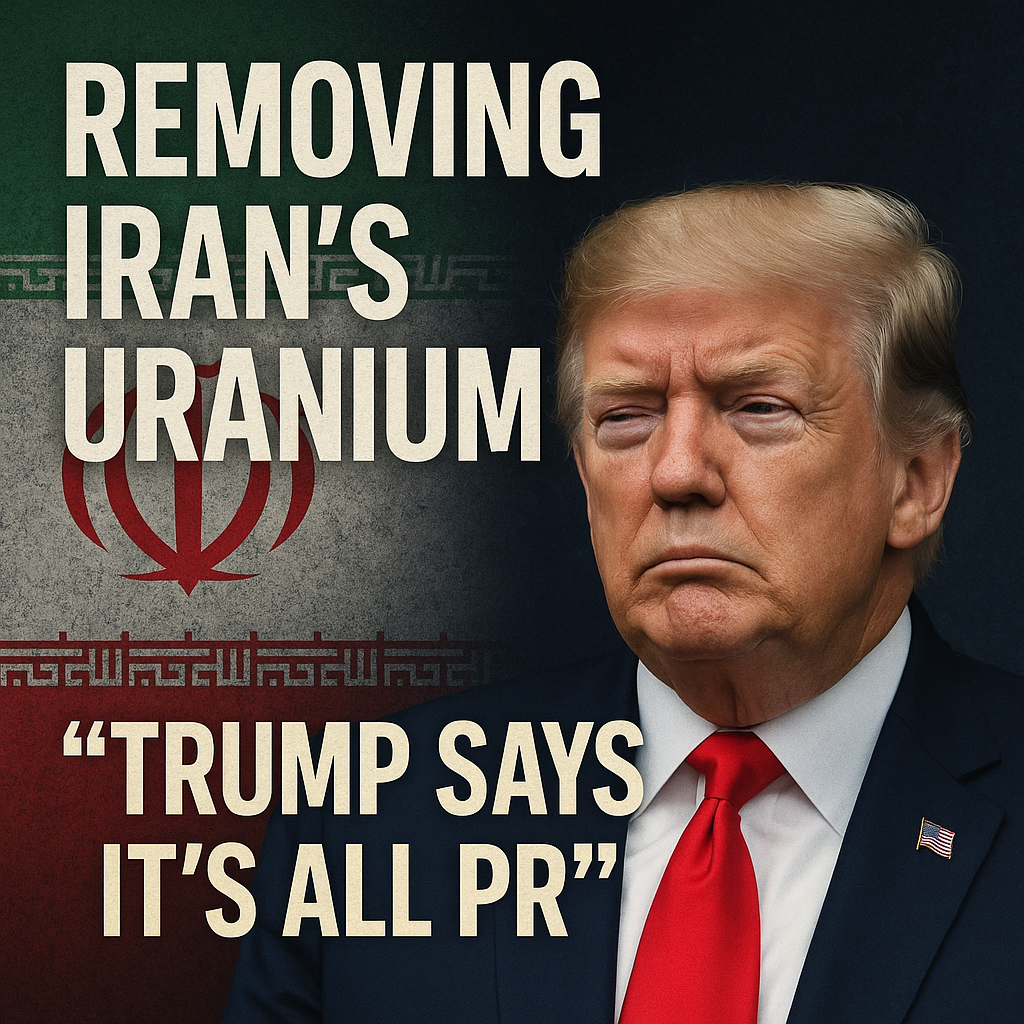
Removing Iran’s Uranium: Trump Says It’s All PR
The Complexities of Iran’s Uranium Program: Trump’s Perspective
The debate surrounding Iran’s uranium enrichment program has taken on renewed vigor, particularly following recent comments by former President Donald Trump who asserts that efforts to remove Iran’s uranium stockpile are primarily a public relations move. This claim adds another layer to an already intricate geopolitical issue that involves national security, international relations, and the delicate nature of diplomacy in the Middle East.

The Political Landscape of Iran’s Uranium Program
Iran’s uranium program has long been the center of international contention. While the 2015 Joint Comprehensive Plan of Action (JCPOA) aimed to curtail Iran’s nuclear capabilities, the U.S. withdrawal from the agreement in 2018 under Trump shifted the focus back to Iran’s enrichment activities, which many argue poses a threat to regional and global security.

In his recent remarks, Trump characterized the discussions surrounding the removal of Iran’s uranium as largely symbolic, intended more for international optics than substantive action. “It’s all PR,” he stated, suggesting that the drive to diminish Iran’s uranium stockpile is more about public image than actual progress in nuclear disarmament. Critics of this stance argue that while public relations plays a role, the implications of Iran’s nuclear capabilities should not be underestimated.

Key Takeaways:
– Trump labels the uranium removal efforts as a PR strategy.
– The JCPOA was aimed at regulating Iran’s nuclear activities, but the U.S. withdrawal complicated these efforts.
Diverging Opinions on Iran’s Nuclear Intentions
Opinions on Iran’s intentions concerning its nuclear program vary widely. Proponents of the hardline approach often cite Iran’s history of withholding information and its aggressive regional behavior. They argue that allowing Iran leeway in uranium enrichment can lead to a significant escalation in nuclear tensions.
On the other hand, a more diplomatic perspective emphasizes negotiation over confrontation. Advocates for a return to the JCPOA believe that engaging with Iran is essential for ensuring transparency and long-term safety. They argue that the hardline tactics advocated by Trump and others may only serve to further alienate Iran, pushing it to accelerate its nuclear ambitions rather than moderating them.
The Strategic Implications of a Fractured Deal
The implications of a fragmented relationship with Iran extend beyond simple rhetoric. Many fear that if Iran feels cornered, it may expedite its nuclear development as a means of national security. Trump’s dismissal of the uranium removal efforts raises concerns about a lost opportunity for meaningful dialogue.
Despite Trump’s assertion that the focus is merely on public relations, the reality on the ground complexly intertwines national interests and international pressure. With ongoing tensions between Iran and Israel, as well as Iran’s alliances with Russia and China, the consequences of ignoring established diplomatic strategies could reverberate beyond the Middle East.
Broader Context: International Responses and Future Considerations
International responses to Trump’s comments have been largely mixed, reflecting the divided global stance on Iran’s nuclear ambitions. European nations, many of which were instrumental in negotiating the JCPOA, remain hopeful for diplomatic resolutions, although skepticism remains high due to Iran’s recent uranium enrichment activities.
The discussions are particularly relevant now, as Iran has increased its stockpile of enriched uranium to levels higher than those permitted under the JCPOA. This escalation further complicates international efforts to reach a consensus on how best to handle Iran’s nuclear program.
Conclusion: Navigating a Complex Geopolitical Landscape
In light of Trump’s comments, it becomes clear that the issue of Iran’s uranium is fraught with complexities. While there are valid arguments on both sides regarding the efficacy of diplomatic negotiations versus hardline stances, what remains crucial is a nuanced understanding of the stakes involved.
Ultimately, the path forward necessitates a careful balance of assertive diplomacy and recognition of the genuine fears surrounding nuclear proliferation. As stakeholders grapple with their approaches to one of today’s most pressing geopolitical dilemmas, the emphasis should remain on dialogue that promotes long-term stability, not merely actions that project a certain image to the international community. In a multifaceted arena such as this, clear communication and earnest efforts to understand each party’s position will be key to achieving a significant, lasting peace.















