
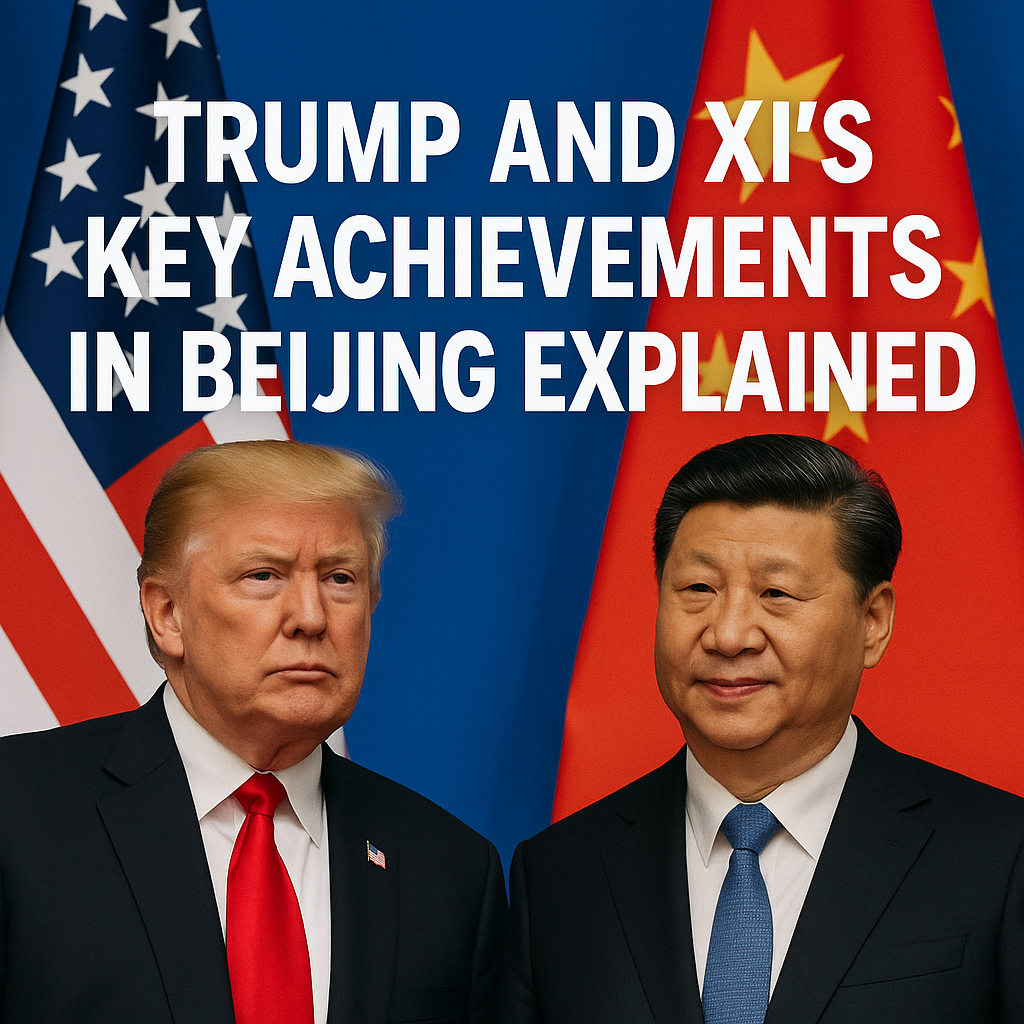
Trump and Xi’s Key Achievements in Beijing Explained
Understanding the Complex Dynamics of Trump and Xi’s Key Achievements in Beijing
The recent summit between Donald Trump and Xi Jinping has sparked conversations about their respective positions in global politics as well as the pivotal agreements reached. This event not only underscores their personal rapport but also reflects broader geopolitical shifts and economic alignments.

Diplomatic Engagements: A Meeting of Minds
Both leaders have faced intense scrutiny over their domestic and international policies, yet their ability to engage diplomatically remains a significant achievement. Trump’s approach has often prioritized unilateral action, while Xi has cultivated an image of a consolidating leader focused on global cooperation—despite his authoritarian governance style.

Discussions held during the summit centered around trade relations, with both parties emphasizing the need to reduce tariffs and stabilize markets. According to reports from various sources, including RT, the groundwork was laid for a new trade agreement aimed at curtailing the ongoing tariffs that have impacted both economies. This comes at a time when the global economy is showing signs of strain, needing collaborative solutions.

Moreover, there was a mutual commitment to address stronger economic ties, which some analysts view as a significant diplomatic breakthrough considering their contentious histories. As both nations navigate a complex web of alliances and rivalries, improvements in bilateral relations may lead to enhanced global economic stability.
Economic Achievements: Duelling Interests
Despite their differing governmental philosophies, Trump and Xi have found common ground through economic agendas, particularly through joint interests in financial markets. As noted by analysts in Sky News, both leaders recognize the potential for robust commercial engagement as a means to bolster domestic support in their respective nations.
Trump’s focus on “America First” policies often clashes with Xi’s vision for a global economy where China plays a pivotal role. This juxtaposition of interests could be perceived as a double-edged sword—one that can yield beneficial agreements or generate further tensions based on misalignment of national priorities.
Critics argue that while summits like these showcase a desire for collaboration, they often do not yield tangible results. Previous accords have fallen prey to the complexities of implementation, leaving many skeptical about the true depth of engagement. Yet, the mere act of sitting down and discussing these issues signifies a level of respect and acknowledgment of each other’s influence.
A notable achievement highlighted during the events is the advancement of cooperative frameworks regarding climate change—a relatively neutral ground where consensus is more attainable. By addressing climate change, Trump and Xi not only signal cooperation in an increasingly urgent matter but also garner international goodwill that can be leveraged on other fronts.
The Road Ahead: Balancing Acts and Uncertainties
While there are indeed achievements to celebrate from the summit, uncertainties loom large over the long-term impacts of these discussions. With domestic pressures mounting in both the U.S. and China, the ability to sustain cooperative engagement will be key. Political analysts point out that both leaders will need to navigate their internal constituencies carefully to maintain the public approval that is so critical to their political survival.
The push and pull of global politics mean that the outcomes of these negotiations could either pave the way for a new phase of cooperation or drift back into the realm of rivalry and confrontation. As Xi seeks to consolidate his control over China’s policies and Trump aims to revitalize his position in American politics, the stakes have never been higher.
In conclusion, while Trump and Xi have made strides toward mutual understanding and economic collaboration, the realities of their respective political landscapes contribute to a landscape that is both promising and fraught with potential pitfalls. The implications of this summit thus resonate far beyond the confines of Beijing, shaping the contours of international relations in the months and years to come.















