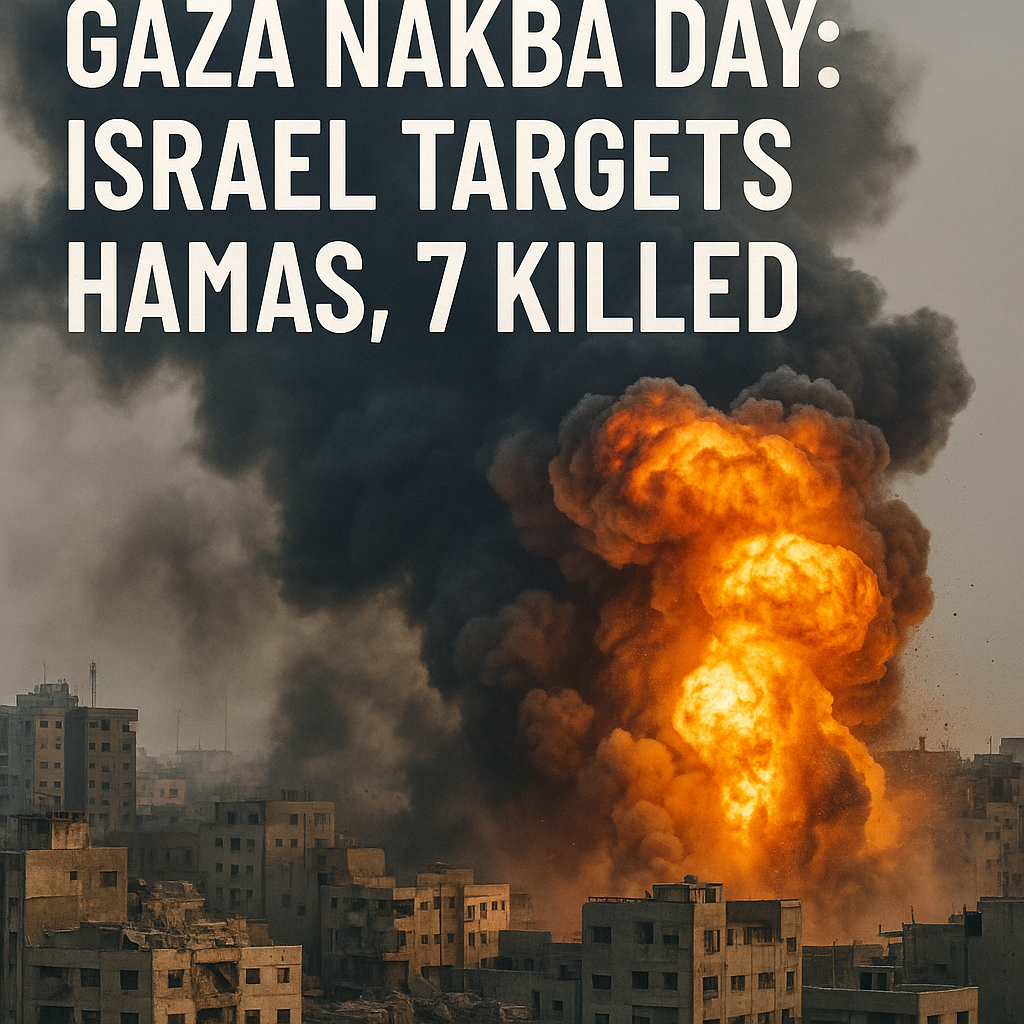
Gaza Nakba Day: Israel Targets Hamas, 7 Killed
Gaza Nakba Day: A Day of Tension and Conflict
Each year, Nakba Day in Gaza serves as a poignant reminder of the ongoing struggles faced by the Palestinian community. This year, events took a violent turn with Israeli airstrikes resulting in the deaths of seven individuals, amid claims of targeting Hamas members.

The Context of Nakba Day
Nakba Day, observed on May 15, commemorates the displacement of Palestinians that occurred during the 1948 Arab-Israeli War. This day resonates deeply within Palestinian society, symbolizing loss and resilience. Over the years, it has become a platform for expressing grievances regarding ongoing occupation and violence, with many taking to the streets to protest.

The Israeli government has characterized its military actions as necessary for maintaining security, particularly against Hamas, which it considers a terrorist organization. The latest airstrikes reportedly aimed at specific individuals associated with Hamas, as stated by Israeli Defense Forces (IDF). Yet, this military engagement has drawn stringent condemnation from various international observers, who emphasize the civilian costs of such operations.

The Casualties and Their Implications
According to reports from Al Jazeera, the Israeli strikes resulted in seven fatalities, with health officials indicating that among the dead were non-combatants. This tragic loss of life has raised concerns about the proportionality of Israel’s military response, particularly on a day charged with historical significance for the Palestinian populace.
Critics argue that civilian casualties exacerbate an already volatile situation, feeding into a cycle of violence that hampers any real progress toward peace. The Palestinian Health Ministry reported a growing number of injuries, further aggravating the humanitarian situation in Gaza, which is already strained by blockades and ongoing conflict.
Conversely, supporters of Israel’s actions maintain that the target was legitimate based on intelligence regarding Hamas operations. They argue that such military actions are essential for deterring potential threats to Israeli citizens, particularly with Hamas’s history of launching attacks. The dichotomy of viewpoints reflects the complex layers that underpin the Israeli-Palestinian conflict.
International Reactions and Future Prospects
International responses to the events of Nakba Day have varied. Human rights organizations have criticized Israel for its actions, urging for accountability, while some nations have reiterated their support for Israel’s right to defend itself against perceived threats. The United Nations has frequently called for a cessation of violence and a focus on dialogue to address the root causes of the conflict, yet tangible progress remains elusive.
As tensions escalate, questions arise regarding potential future repercussions. The infliction of civilian casualties may lead to increased unrest among Palestinian communities, prompting further Israeli military responses. Additionally, the events could strain diplomatic relations, particularly if perceptions of injustice become widespread among the international community.
In contrast, some analysts posit that these actions could galvanize a renewed push for peace negotiations, albeit under difficult circumstances. The continued focus on military solutions rather than diplomatic ones often diminishes hope for a two-state solution, which many see as essential for lasting peace.
Conclusion
As Nakba Day once again highlights the historical and ongoing challenges faced by Palestinians, the cycle of violence seems entrenched. The deaths resulting from recent airstrikes underscore the humanitarian crisis prevalent in Gaza. While the response from Israel’s government is framed as a security measure, the consequential loss of life has profound implications that cannot be ignored. Moving forward, a balanced, fair, and diplomatic approach is essential to address the core issues that have perpetuated this long-standing conflict.