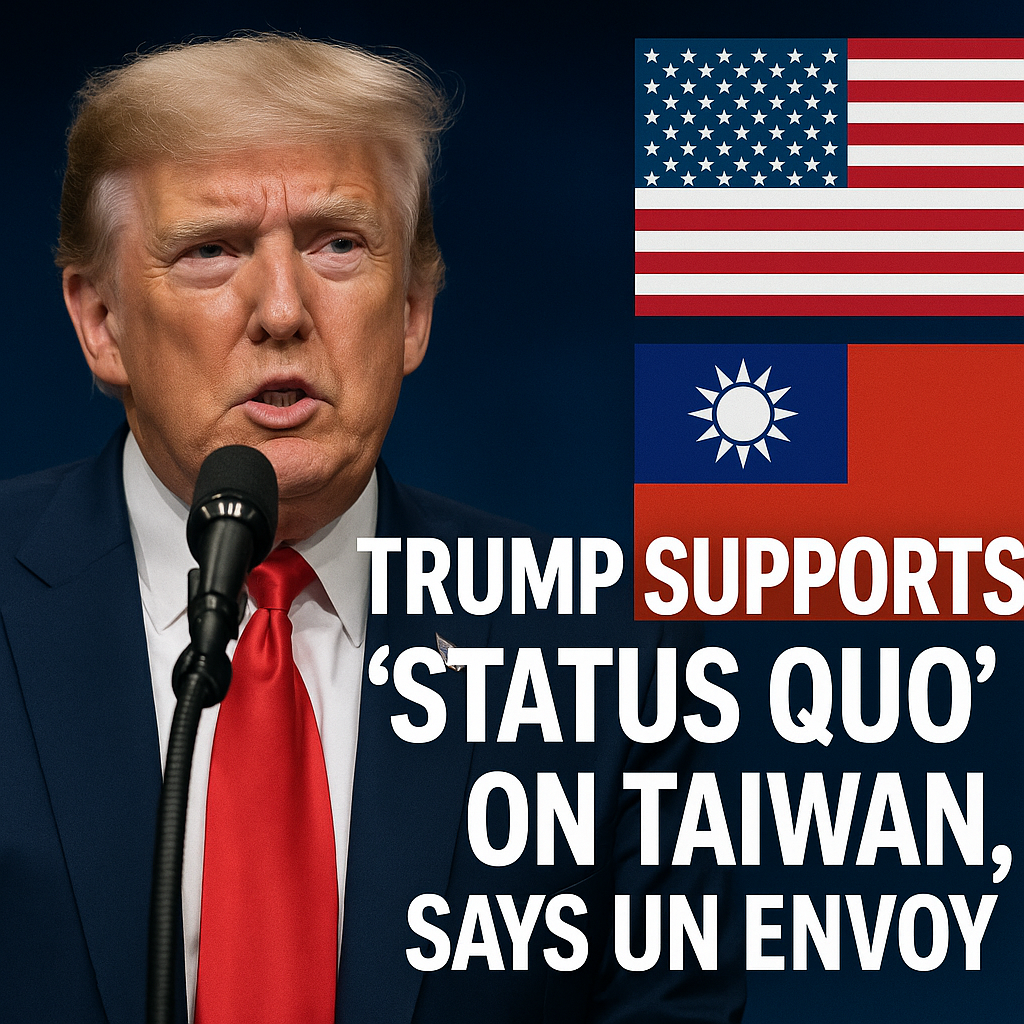
Trump Supports ‘Status Quo’ on Taiwan, Says UN Envoy
Trump’s Position on Taiwan: Supporting the Status Quo
In the complex geopolitical landscape of East Asia, Donald Trump’s recent endorsement of maintaining the “status quo” concerning Taiwan has sparked various reactions among political analysts and international observers. While some view his stance as a pragmatic approach to a sensitive issue, others are concerned about the potential implications for U.S.-China relations.

Understanding the Context of Trump’s Comments
Trump’s assertion came during an interview with the United Nations envoy, where he articulated a preference for maintaining the existing dynamics between Taiwan and mainland China. This position aligns with a broader strategy often advocated by previous U.S. administrations, which emphasizes neither formally recognizing Taiwan’s independence nor endorsing aggressive actions from either side.

Several sources indicate that Trump’s comments aim to balance U.S. involvement in safeguarding Taiwan against China’s increasing assertiveness while also avoiding provocation that could escalate tensions. As reported by RT, Trump remarked, “We need to keep everything as it is,” suggesting that any shift in policy regarding Taiwan could lead to unpredictable consequences on the global stage.

Diverging Perspectives on the Status Quo
Reactions to Trump’s position vary significantly. On one hand, proponents of the status quo argue that it serves as a stabilizing factor in a region increasingly threatened by military posturing. When applauded by traditional allies in East Asia, this perspective emphasizes diplomatic relations and trade relations without veering into overt hostility.
Conversely, critics warn that maintaining the status quo could embolden China in its ambitions regarding Taiwan. For instance, analysts from Al Jazeera have raised concerns over China’s continued military exercises around Taiwan, interpreting them as signals of potential future aggression. They argue that by not taking a firmer stance against such provocations, the U.S. risks conceding to China’s expanding influence.
The Complexity of International Relations
Navigating the Taiwan Strait acknowledges the historical and emotional underpinnings tied to the region’s politics. The status quo has long been perceived as a fragile peace, maintained through careful international diplomacy and deterrence. Yet, the current geopolitical climate is anything but stable.
Both U.S. supporters and critics of the status quo share valid concerns. Supporters advocate for an approach that allows Taiwan to thrive economically and politically without inciting an outright military conflict. Critics, however, fear that a complacent stance may inadvertently signal to Beijing that it can intensify its claims without facing substantial opposition.
The reality is that the dynamics of East Asia encompass not just Taiwan and China but also the interests of nations like Japan and South Korea, each with their historical grievances and security concerns. Consequently, a middle ground approach, such as that proposed by Trump, seeks to placate multiple stakeholders, but also risks dissatisfaction from those who favor either stronger support for Taiwan’s sovereignty or a firmer posture against China.
Conclusion: Striking a Balance
Trump’s support for the status quo on Taiwan reflects a multifaceted debate within U.S. foreign policy. This balancing act illustrates the delicate interplay of maintaining peace while managing the intricate relationships with regional players. As tensions persist, it remains to be seen whether his perspective will foster stability or intensify the risks posed by competing national interests.
In an era defined by rapid shifts in global power dynamics, policymakers must weigh the benefits of diplomatic engagement against the potential costs of inaction. The implications of Trump’s stance could reverberate through international relations in ways that are difficult to predict, underscoring the importance of a nuanced and informed approach to these critical issues.