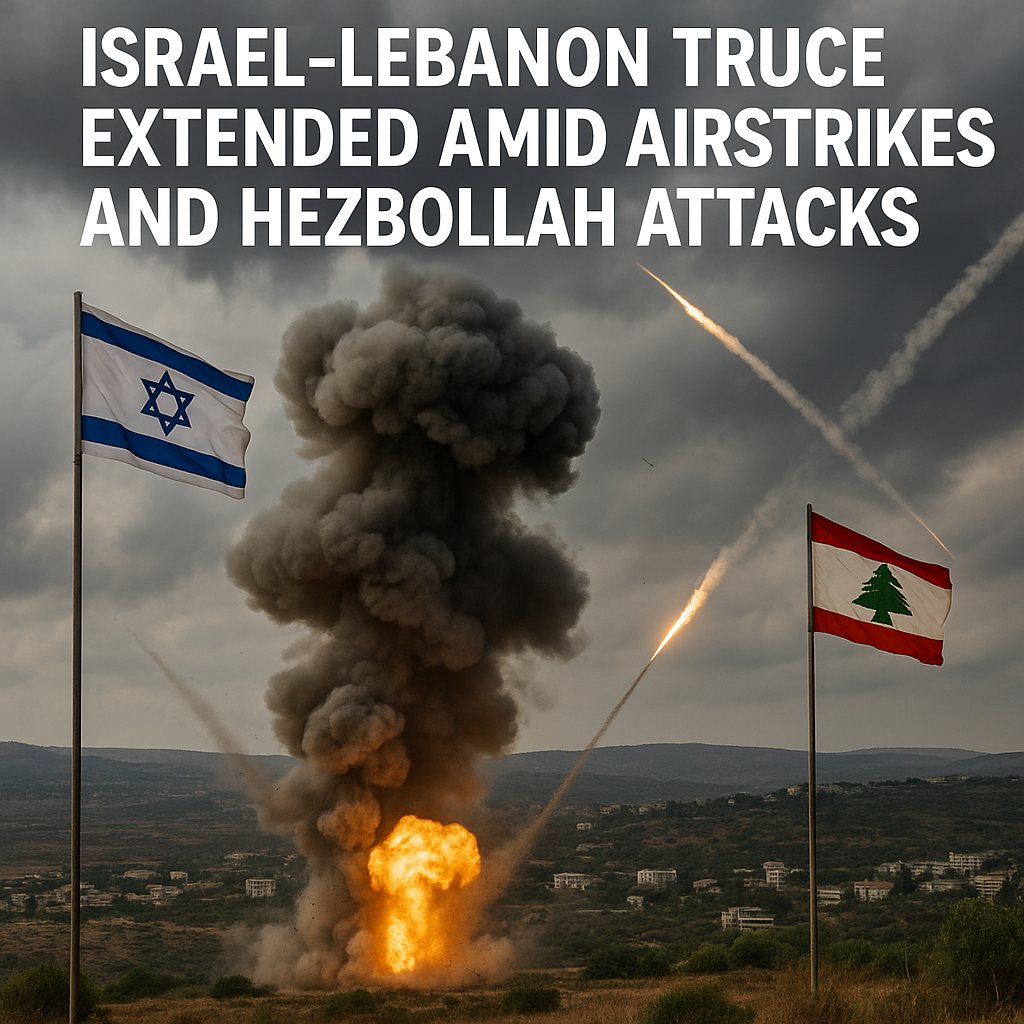
Israel-Lebanon Truce Extended Amid Airstrikes and Hezbollah Attacks
Israel-Lebanon Truce Extended Amid Airstrikes and Hezbollah Attacks
The recent extension of the truce between Israel and Lebanon comes against a backdrop of escalating tensions, characterized by ongoing airstrikes and militant assaults from Hezbollah. This delicate situation underscores the complexities in Middle Eastern politics, where peace and conflict often coexist in unpredictable ways.

The Context of the Truce
The fragile ceasefire, which has been renewed, followed a series of violent exchanges between Israeli forces and Hezbollah, the Lebanese militant group. These exchanges included significant aerial bombardments from Israel in response to missile strikes attributed to Hezbollah. The truce allows a momentary pause for both sides, aimed at curbing hostilities that have roots entrenched in longstanding territorial disputes, political strife, and deep-seated animosities.

Reports indicate that both sides have shown a cautious willingness to honor the truce, though both remain wary. Analysts suggest that the extension of this ceasefire is seen both as an opportunity for diplomatic channels and as a necessary tactical respite given the profound ramifications of all-out conflict in the region. The potential for further violence, particularly given the volatility surrounding disputes over territory and influence, remains high.

Diverging Perspectives on the Ground
From one perspective, the truce is being hailed as a critical step forward. Some diplomats and regional analysts argue that it opens the door for negotiations that might address deeper issues, such as border demarcation and the thorny question of refugees. A spokesperson from the Lebanese government expressed optimism, emphasizing the need for sustained dialogue, especially considering the humanitarian implications for civilians caught in the crossfire.
Conversely, not all viewpoints are optimistic. Skeptics feel that the truce, while beneficial in the short term, does not address the underlying grievances fueling the conflict. The Israeli government, particularly in the wake of Hezbollah’s recent missile attacks, remains on high alert and is prepared for any violations of the ceasefire. They view the truce as a temporary lull rather than a genuine step towards lasting peace. “This ceasefire should not be mistaken for a long-term solution,” said a senior Israeli defense official. “Hezbollah’s aggression poses an ongoing threat that we must remain vigilant against.”
The Humanitarian Impact
The ongoing airstrikes and military skirmishes have had severe humanitarian consequences, exacerbating the situation for civilians in both countries. Reports suggest that many families have been displaced, with access to basic needs like food, healthcare, and shelter compromised. Humanitarian organizations have called for an immediate end to hostilities, emphasizing that innocent lives should not be used as pawns in geopolitical chess.
As the truce continues, observers highlight the importance of international support and intervention. The roles of countries such as Iran and the United States bring additional layers to the regional conflict, complicating the prospects for a durable peace. Iran has historically backed Hezbollah, leading to concerns that external influences could reignite tensions if not carefully managed.
The Path Ahead
Looking forward, the necessity for dialogue and reconciliation cannot be understated. Analysts emphasize that for a sustainable resolution, both sides need to engage in earnest discussions about their differences—be it territorial claims or security arrangements. The current respite afforded by the truce offers a unique opportunity for such engagement.
However, as history has shown, ceasefires can be fragile and easily faltered. The mutual distrust that prevails between Israel and Hezbollah, along with the broader geopolitical dynamics at play, complicate any efforts towards lasting peace. For now, the extension of the truce may serve as a temporary battlefield reprieve, yet the looming question remains: will it pave the way for genuine dialogue, or will it merely delay an inevitable return to conflict?
In conclusion, the Israel-Lebanon truce reflects the complexities inherent within the region, where hope for peace often pivots on fragile negotiations and the willingness of both sides to engage meaningfully. The situation remains fluid, with countless uncertainties yet to be addressed as we navigate the future of this pivotal regional conflict.