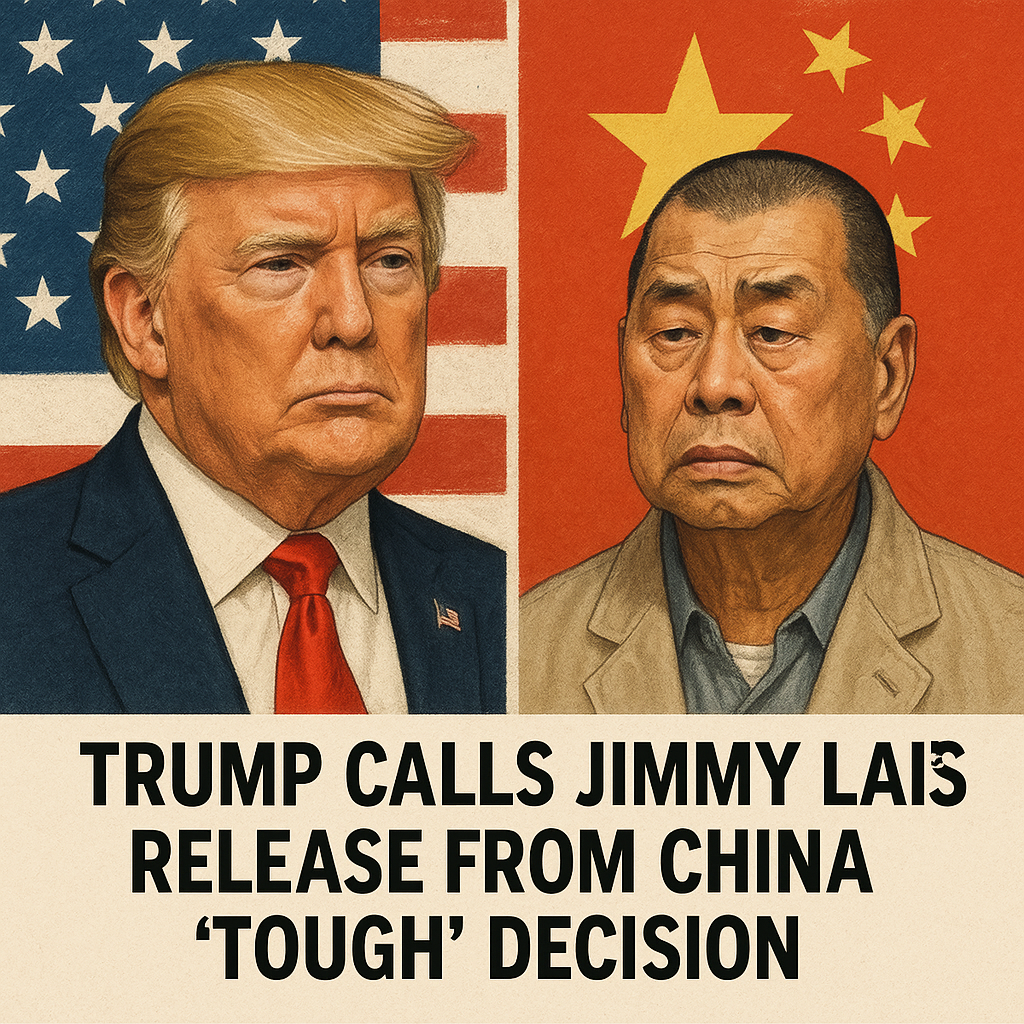
Trump Calls Jimmy Lai’s Release from China ‘Tough’ Decision
Trump Calls Jimmy Lai’s Release from China ‘Tough’ Decision
In recent news, former President Donald Trump characterized the prospect of releasing Jimmy Lai, a prominent Hong Kong pro-democracy activist jailed in China, as a “tough decision.” This statement has ignited discussions about the complexities of international diplomacy, human rights considerations, and the strategic implications involved in dealing with China.

The Context of Jimmy Lai’s Imprisonment
Jimmy Lai, the founder of the Apple Daily newspaper, has been a significant figure in the pro-democracy movement in Hong Kong. His arrest under China’s sweeping National Security Law has drawn international condemnation, highlighting the erosion of civil liberties in the region. Lai’s case is emblematic of the broader struggle for democracy in Hong Kong, and many activists view his potential release as a litmus test of China’s willingness to engage with global calls for human rights.

Lai was sentenced to over 14 months in prison for his involvement in anti-government protests, making him a target for the authorities that consider him a threat to national security. Critics of the Chinese government argue that his imprisonment is the state’s attempt to silence dissent and instill fear among those advocating for democracy.

Trump’s Stand on China and Human Rights
Trump’s comments come amid ongoing debates about U.S. foreign policy toward China, especially regarding human rights issues. His statement reflects a complex interplay of geopolitics and moral obligations. On one hand, Trump acknowledges the tough nature of the decision: potentially risking diplomatic relations with China by advocating for human rights. On the other hand, he positions human rights as a crucial issue that should not be overlooked, despite the potential costs.
Different viewpoints arise around the implications of such a decision. For some, the release of Lai could signal a softening stance from Beijing toward dissenting voices, a sign of potential compromise in the U.S.-China relationship. This perspective emphasizes the importance of acting on humanitarian grounds, viewing Lai’s release as a necessary step to uphold universal values.
Conversely, others view Trump’s comments with skepticism. They assert that the call for Lai’s release may be more about political optics than genuine concern for human rights. Critics argue that the former president has often prioritized transactional relationships and economic interests with China over moral imperatives. This nuanced debate underscores the fissures in U.S. foreign policy, where economic concerns frequently overshadow issues of human rights.
Assessing the International Response
Internationally, Lai’s imprisonment and the implications of his potential release have drawn attention from various human rights organizations and governments. For instance, organizations like Amnesty International have amplified calls for his immediate release, stressing that his detention is politically motivated.
The response from various governments varies significantly. Some Western nations have openly criticized China’s actions, while others have opted for a more cautious approach, wary of jeopardizing their economic ties with Beijing. This dichotomy raises questions about the effectiveness of diplomatic pressure on China concerning human rights.
While the conversation primarily revolves around the moral imperative for releasing Lai, there remain complex tactical considerations. Countries balancing trade interests with human rights advocacy often find themselves entangled in diplomatic challenges, as economic dependencies can limit the effectiveness of their appeals.
Future Implications
The evolving situation surrounding Jimmy Lai and Trump’s remarks could have lasting implications for both U.S.-China relations and the broader Hong Kong pro-democracy movement. If Lai is released, it might embolden other activists and signal that international pressure can lead to meaningful changes. On the other hand, if the status quo continues, it could further entrench the belief that human rights advocates are easily silenced and sidelined.
The situation is fluid and reflects the intricate nature of international relations, where decisions are rarely black and white. As the global community navigates the challenges of advocating for human rights within a framework of complex political realities, Trump’s characterization of Lai’s release as a “tough decision” encapsulates the multifaceted dilemmas that leaders face in the current geopolitical landscape.
In conclusion, while the push for Jimmy Lai’s release represents a moral stance, understanding the broader context of U.S.-China relations is critical. It remains to be seen how this ongoing saga will unfold, and whether the international community can successfully advocate for human rights in a world increasingly characterized by political and economic complexities.