
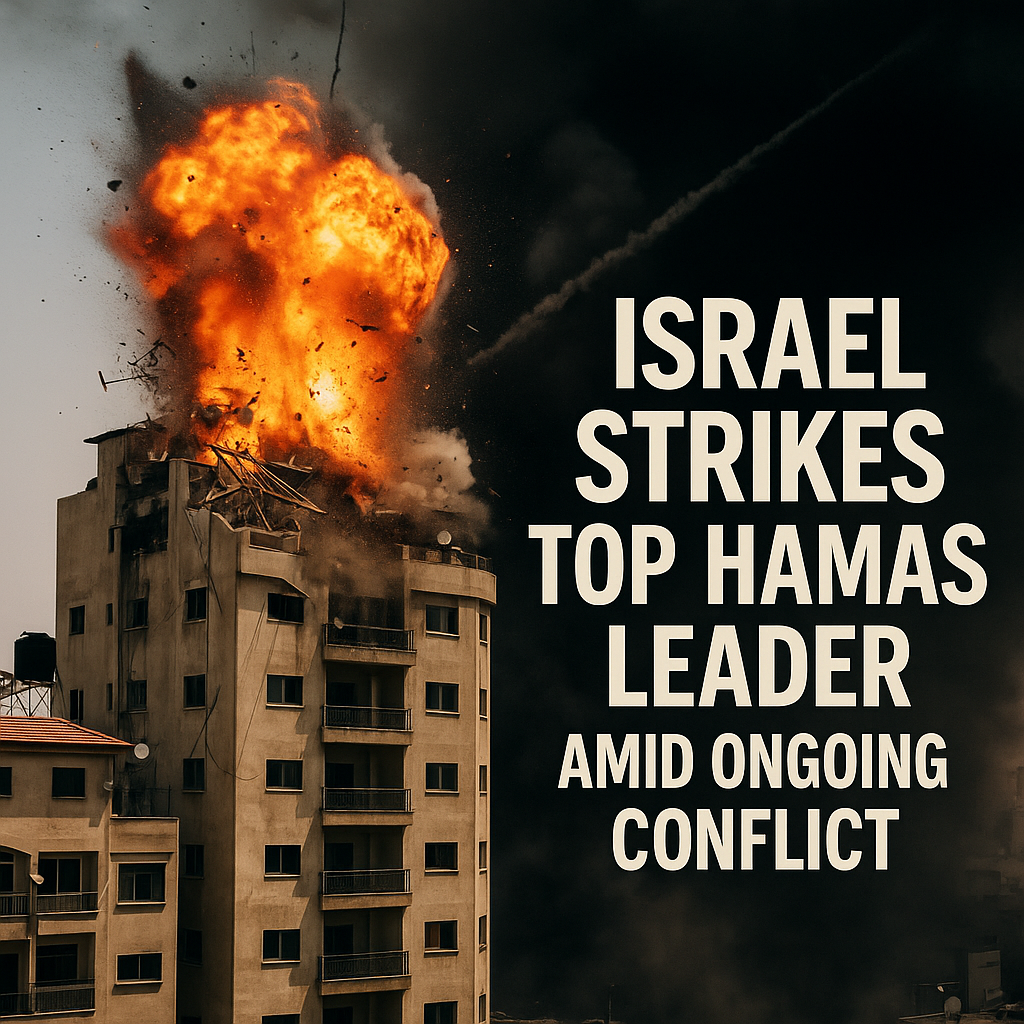
Israel Strikes Top Hamas Leader Amid Ongoing Conflict
In the ongoing conflict in the Middle East, recent developments have intensified tensions as Israel targeted a top Hamas leader in an airstrike. This operation highlights the persistent cycle of violence that has characterized the region, raising questions about the effectiveness and consequences of such military actions.

The Context of Ongoing Conflict
The strike reportedly aimed at one of Hamas’s senior military figures, reflecting Israel’s broader strategy to weaken militant operations in Gaza. The Israeli Defense Forces (IDF) asserted that the target was involved in orchestrating attacks against Israeli citizens, thus justifying their action as a necessary security measure. According to Israel’s narrative, eliminating key figures within Hamas is essential to safeguard its population from ongoing threats.

However, perspectives from various sources suggest that the ramifications of such military objectives are far-reaching and often counterproductive. Al Jazeera reported that the airstrike not only resulted in the targeted leader’s death but also led to significant civilian casualties. These incidents exacerbate the humanitarian crisis in Gaza, drawing international condemnation and raising accusations of disproportionate use of force by Israel.

Diverging Perspectives on Military Intervention
To better understand the implications of this military action, it’s crucial to explore opposing viewpoints:
Support for Israel’s Strategy
Proponents of Israel’s approach argue that decisive actions against Hamas are vital for national security. Supporters assert that past military campaigns have led to temporary reductions in rocket fire from Gaza, contributing to periods of relative calm. They posit that without a stringent military response, Hamas would continue to threaten Israel’s sovereignty and the safety of its citizens.
Moreover, some analysts emphasize that targeting high-ranking military officials disrupts the organizational structure of Hamas, potentially leading to more significant long-term security for Israel. This narrative often includes the notion that military operations can serve as a deterrent against future attacks.
Criticism and Calls for Diplomacy
Conversely, others argue that such strikes deepen the cycle of violence and ultimately harm Israel’s long-term interests. Critics point out that the loss of life among civilians—many of whom are innocent bystanders—fuels anti-Israel sentiment and strengthens Hamas’s narrative of resistance. The death of prominent leaders does not guarantee the weakening of the group but often rallies more support for its cause among the Palestinian population.
Furthermore, experts highlight that military solutions alone cannot resolve the underlying political issues of the Israeli-Palestinian conflict. Continuous violence deters any prospects for diplomatic negotiations, leading to a situation where peace remains elusive. Calls for renewed dialogue and a focus on comprehensive peace strategies are echoed by various global leaders and analysts, emphasizing that lasting security can only be achieved through mutual understanding and cooperation.
The Humanitarian Consequences
The aftermath of the recent strikes raises pressing humanitarian concerns. Sky News coverage underscores the dismal conditions in Gaza, where healthcare systems, already strained, are further overwhelmed by casualties from the renewed airstrikes. Blockades and restrictions on movement have created dire shortages of medical supplies and basic necessities. Humanitarian organizations warn that further military actions could plunge the region deeper into crisis.
Aid groups and international observers insist that any military action must be balanced with efforts to alleviate the humanitarian situation. The cyclic nature of violence suggests a need for long-term planning that prioritizes rebuilding trust and infrastructure, rather than purely reactive military measures.
Conclusion: A Path Forward?
As Israel continues its military operations against Hamas, the implications of these actions extend beyond immediate security concerns. Both the Israeli population and Palestinians in Gaza bear the brunt of this ongoing conflict, often finding themselves in a cycle of violence with little hope for resolution. Striking a delicate balance between security and humanitarian needs is essential for fostering any semblance of peace in the region.
Promoting dialogue and collaboration may offer a more sustainable solution that addresses the root causes of conflict. The interplay of military action and diplomatic efforts will ultimately determine the possibility of peace and stability in the troubled landscape of Israel and Palestine. The road ahead remains fraught with challenges, but understanding the perspectives involved is key to navigating this complex situation.















