
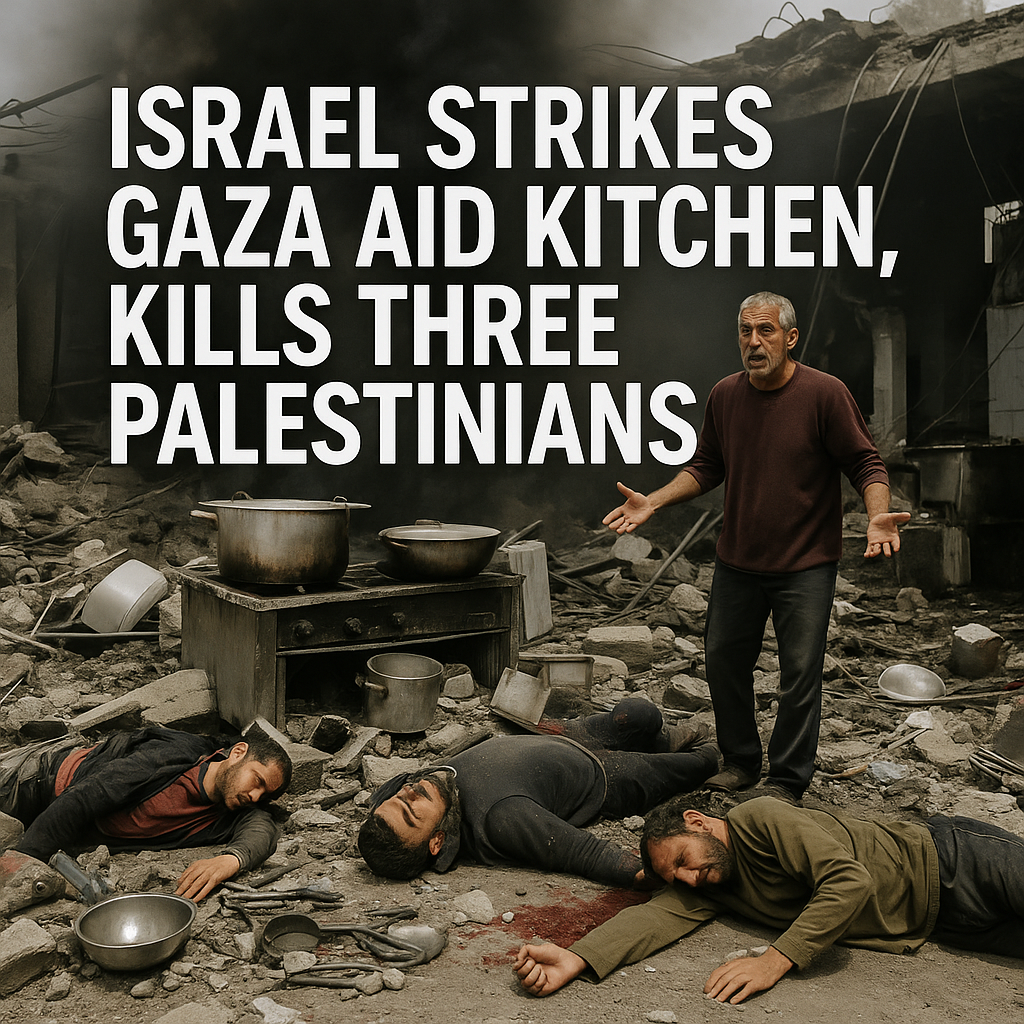
Israel Strikes Gaza Aid Kitchen, Kills Three Palestinians
The escalation of violence in the conflict between Israel and Hamas has come to the forefront once more with the recent tragic strike on an aid kitchen in Gaza, resulting in the deaths of three Palestinians. This incident has sparked outrage and discussions about the humanitarian implications of military actions in densely populated areas.

The Context of Gaza’s Humanitarian Crisis
Gaza, a small coastal enclave, has faced devastating humanitarian challenges, exacerbated by prolonged conflict and blockades. According to reports from Al Jazeera, the airstrike targeted a facility that was meant to provide food aid to those in need. Observers noted that such attacks on humanitarian resources not only add to the loss of life but also hinder efforts to alleviate the severe conditions faced by civilians in the region.

A statement from a spokesperson for the Israeli Defense Forces indicated that the strike was executed as part of a broader military operation aimed at Hamas, which Israel designates as a terrorist organization. The IDF stated that the intent was to target military assets, suggesting that the kitchen was being utilized for more than its intended humanitarian purpose. However, critics argue that such justifications overlook the devastating impact on innocent civilians and violate principles of international humanitarian law.

Mixed Reactions to the Strike
Reactions to the airstrike have been deeply polarized, highlighting the complexity of the situation. Human rights organizations quickly condemned the strike, citing it as yet another example of the disregard for civilian life during military operations. The UN has called for an immediate investigation into the circumstances surrounding the attack, emphasizing the prevalent need for accountability in conflicts that affect innocent lives.
Conversely, supporters of Israel’s military actions argue that the government has the right to defend itself against threats posed by Hamas, which frequently operates within civilian areas. Supporters assert that the conflict is multifaceted, with the necessity of addressing both security concerns and humanitarian needs. This perspective tends to emphasize the dual responsibility of both parties to protect civilians, questioning whether Hamas contributes to the endemic violence by positioning its operations in close quarters with non-combatants.
A Humanitarian Perspective on Conflict
At the heart of the issue lies a fundamental humanitarian dilemma: how to ensure safety and support for civilians amid ongoing military engagement. The destruction of infrastructure critical for humanitarian assistance further complicates this reality. As the death toll rises and resources diminish, the strain on health services, food supply, and basic needs intensifies, raising questions about the international community’s role in both supporting and resolving these humanitarian crises.
Several humanitarian groups have stressed the importance of distinguishing between combatants and non-combatants in times of conflict. They advocate for the protection of humanitarian spaces, particularly in volatile areas such as Gaza, where civilians bear the brunt of military operations.
The Path Forward: Balancing Security and Humanity
In light of recent events, it is vital for both Israel and Hamas to reconsider their strategies and their commitments to international humanitarian law. The conflict is unlikely to resolve with airstrikes alone; a balanced approach that prioritizes dialogue and negotiation is essential. As international observers continue to advocate for peace, the urgent need for a ceasefire and humanitarian access becomes more pronounced.
The recent strike on an aid kitchen serves as a tragic reminder of the human cost of ongoing violence in the region. While security concerns for Israel cannot be dismissed, the necessity of protecting civilian lives must take precedence. A collaborative approach involving both humanitarian efforts and strides towards de-escalation may pave the way for a more sustainable resolution to a conflict that has endured for decades.
Ultimately, as the global community watches, the priority should remain clear: addressing the humanitarian crises and ensuring the protection of those most vulnerable amid the conflicts. In pursuing peace, both sides must recognize that every life lost deepens the cycle of violence and despair, urging a reassessment of tactics and a commitment to healing rather than harming.















