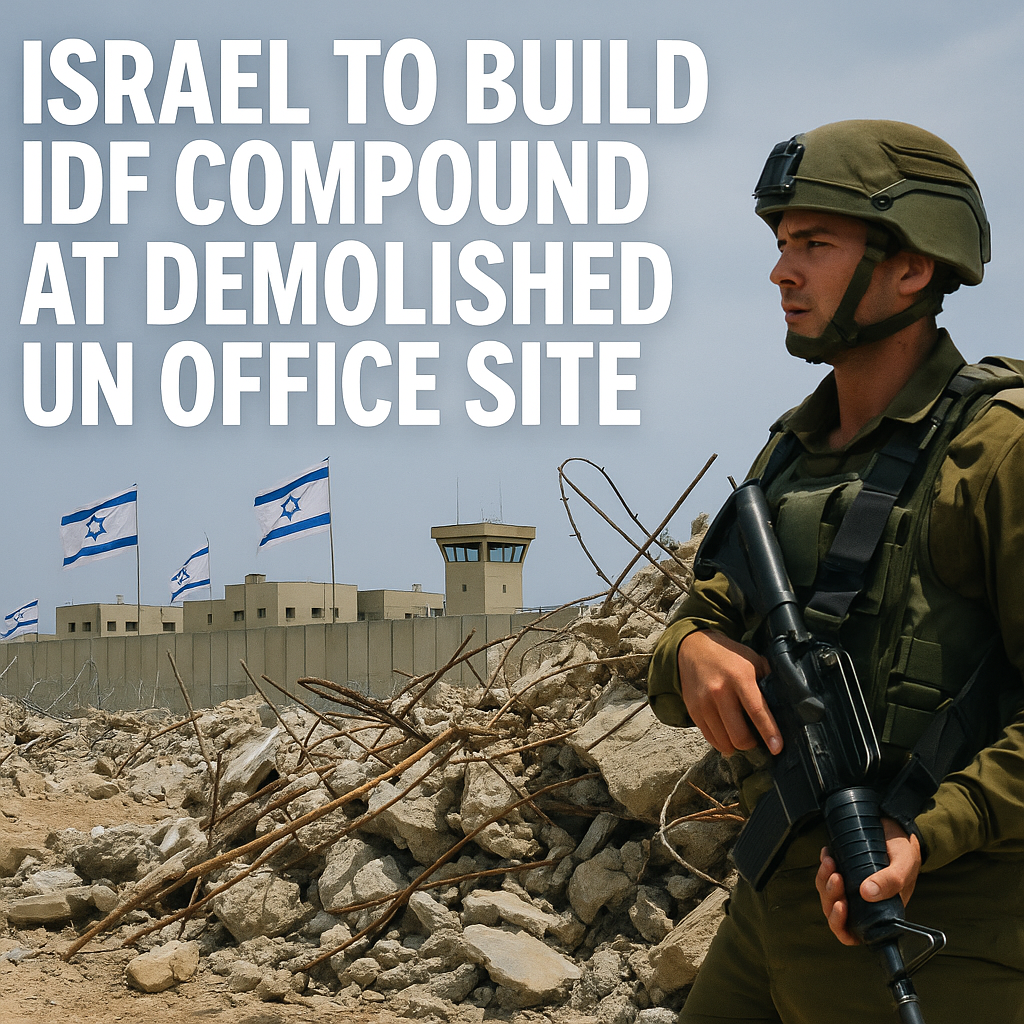
Israel to Build IDF Compound at Demolished UN Office Site
Israel’s decision to build an IDF compound at the site of a demolished UN office has sparked intense debates both locally and internationally. This move raises significant questions about security, sovereignty, and the future of UN operations in the region.

Historical Context and Recent Developments
The site in question previously hosted a United Nations Relief and Works Agency (UNRWA) office that was demolished amid escalating tensions and allegations concerning the misuse of UN facilities for military purposes. Israel’s assertion is that the construction of a new military installation is vital for national security, particularly against the backdrop of ongoing conflicts with Hamas and other militant groups. The planned IDF compound is set to enhance the military’s operational capabilities in a region that has historically been fraught with strife.

However, critics are quick to highlight the implications this construction has for peace efforts in the region. According to Al Jazeera, the decision has ignited backlash from various factions, including Palestinian leaders and international watchdogs. They argue that this unilateral action undermines the already precarious balance aimed at achieving peace and enhancing military presence in sensitive areas is not conducive to fostering dialogue.

Diverging Perspectives: Supporters and Opponents of the IDF Compound
Supporters of the plan cite the ongoing security threats that Israel faces, claiming that the establishment of military installations can help deter attacks and provide a stronger defense mechanism against escalation. Proponents, including some Israeli citizens, believe that bolstering military presence in strategic locations is crucial for safeguarding the nation.
Conversely, opponents argue that this expansion of military infrastructure signifies a departure from diplomacy and could be seen as an affront to the international community. Various human rights organizations have condemned the action, viewing it as a direct violation of international norms and an exacerbation of tensions in an already volatile region. Reports from RT highlight statements from Palestinian authorities condemning the move, claiming it undermines their quest for statehood and peace negotiations.
Implications for Future UN Operations and Regional Stability
The involvement of the UN in Israeli-Palestinian territories has always been contentious. With the construction of the IDF compound, there are growing fears that it may lead to a further deterioration of UN operations in the area. As the UN that has acted as a neutral party faces increased military encroachment, its ability to mediate or act effectively could be severely compromised. This sentiment was echoed in reports around the global geopolitical landscape, suggesting that international assurances regarding peacekeeping and humanitarian efforts could wane.
Moreover, there is a distinct concern regarding the message conveyed to both local populations and the international community. Many observers are apprehensive that this move could further entrench divisions and diminish the chances of reconciliation. As articulated in Sky News, the construction of the compound may also trigger additional protests, a likely escalation in violence, and international condemnation.
Navigating a Complex Landscape
The prospect of building a military compound on a site previously associated with UN humanitarian efforts has unveiled a multifaceted issue. While security is a legitimate concern for Israel, the implications for peace talks and regional stability cannot be overlooked. The polarized reactions to this development underline the necessity for a nuanced understanding of the complexities involved in the Israeli-Palestinian conflict.
As this situation unfolds, the world watches closely. Both Israeli and Palestinian leaders must consider the long-term ramifications of their actions. Partnerships, international laws, and the efficacy of governing bodies are all caught in the crosshairs of ongoing conflict and negotiation stands.
In conclusion, Israel’s plan to construct an IDF compound at the site of the demolished UN office exemplifies the intricate balance of security, humanitarian needs, and geopolitical dynamics in an area long marred by conflict. As arguments for and against the decision continue to unfold, the path toward peace remains fraught with challenges, requiring all parties to tread carefully amidst a landscape ripe with historical grievances and present-day realities.