
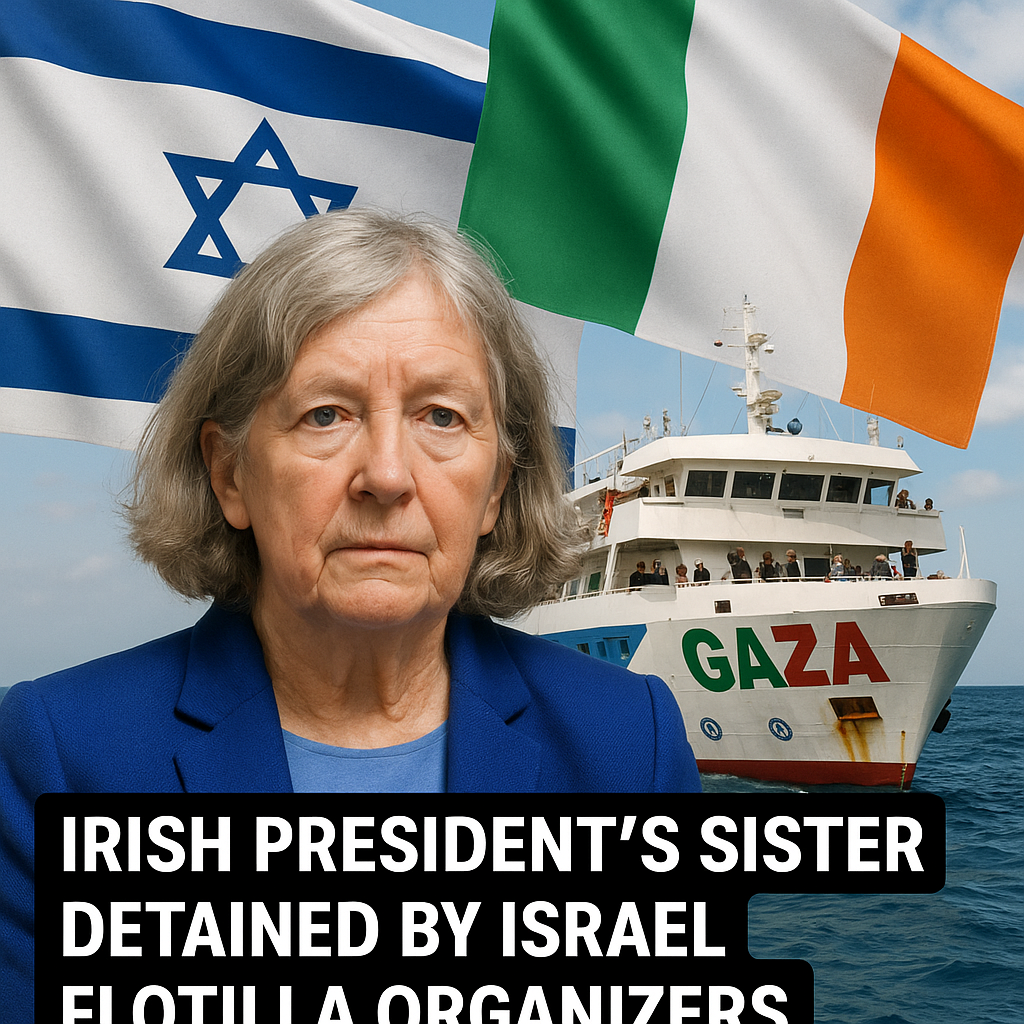
Irish President’s Sister Detained by Israel Flotilla Organizers
Detention of Irish President’s Sister by Israel Flotilla Organizers
The recent detention of the sister of the Irish President, a participant in a Gaza-bound aid flotilla, has ignited discussions about international humanitarian efforts and the ongoing geopolitical tensions in the region. This incident raises complex questions about the freedom of individuals seeking to provide aid and how governmental actions intersect with broader diplomatic issues.

Context and Implications of the Incident
According to reports, the Irish President’s sister, who has been an advocate for Palestinian rights, was detained by organizers of the flotilla, who are working to deliver humanitarian aid to Gaza. This action has prompted a wave of critical responses, reflecting a mixture of support for her mission and concerns over the organizational strategies employed by the flotilla’s leaders.

The organizers claimed that the detention was necessary due to security concerns and potential risks involved in their mission. Critically, this reflects a broader pattern where humanitarian efforts can become tangled with political and strategic considerations. As one observer noted, “The intention to deliver aid should not overshadow the responsibilities of ensuring safety for all involved.”

Divergent Perspectives on Aid and Diplomacy
From one perspective, supporters argue that individuals like the Irish President’s sister exemplify a commitment to humanitarian causes that transcends national borders. They highlight the moral obligation to assist those in need despite government policies or restrictive circumstances. Supporters often reference past instances where grassroots movements have successfully galvanized international attention and aid.
Conversely, critics assert that engaging in such flotilla missions without adequate preparation or dialogue can exacerbate tension and hinder diplomatic solutions. In this view, the risk of confrontation not only distracts from the initial humanitarian goals but also places innocent participants in harm’s way. This sentiment resonates with those who advocate for a more dialogues-based approach to resolving the Israeli-Palestinian conflict, arguing that sustainable change is more likely achieved through negotiations rather than confrontations at sea.
The Role of International Reactions
International reactions to the detention have been mixed, underscoring the nuanced positions various governments and organizations hold regarding the Israeli-Palestinian situation. Some human rights advocates have condemned the flotilla’s organizers for detaining a participant, emphasizing that it stifles voices advocating for peace and humanitarian aid. Others warn that such actions could further politicize the aid efforts, potentially alienating those who may support humanitarian missions.
Israel’s own stance on the flotillas has typically been one of defense, citing security concerns as the primary rationale for their actions against attempts to breach maritime blockades. This led to a significant diplomatic fallout in past incidents and continues to shape its interactions with international actors.
Challenges Ahead
As the situation evolves, it remains crucial to navigate the complexities of humanitarian efforts amidst entrenched political disputes. The incident involving the Irish President’s sister serves as a poignant reminder of the myriad factors influencing humanitarian missions, including organizational strategies, participant safety, and the diplomatic ramifications of such actions.
In conclusion, while the desire to provide aid in conflict zones like Gaza is noble, it is imperative that such efforts are carefully calibrated to avoid exacerbating existing tensions. Open communication, respect for security considerations, and diplomatic engagement may offer more sustainable pathways towards aiding those in need without entangling humanitarian efforts in political strife.















