
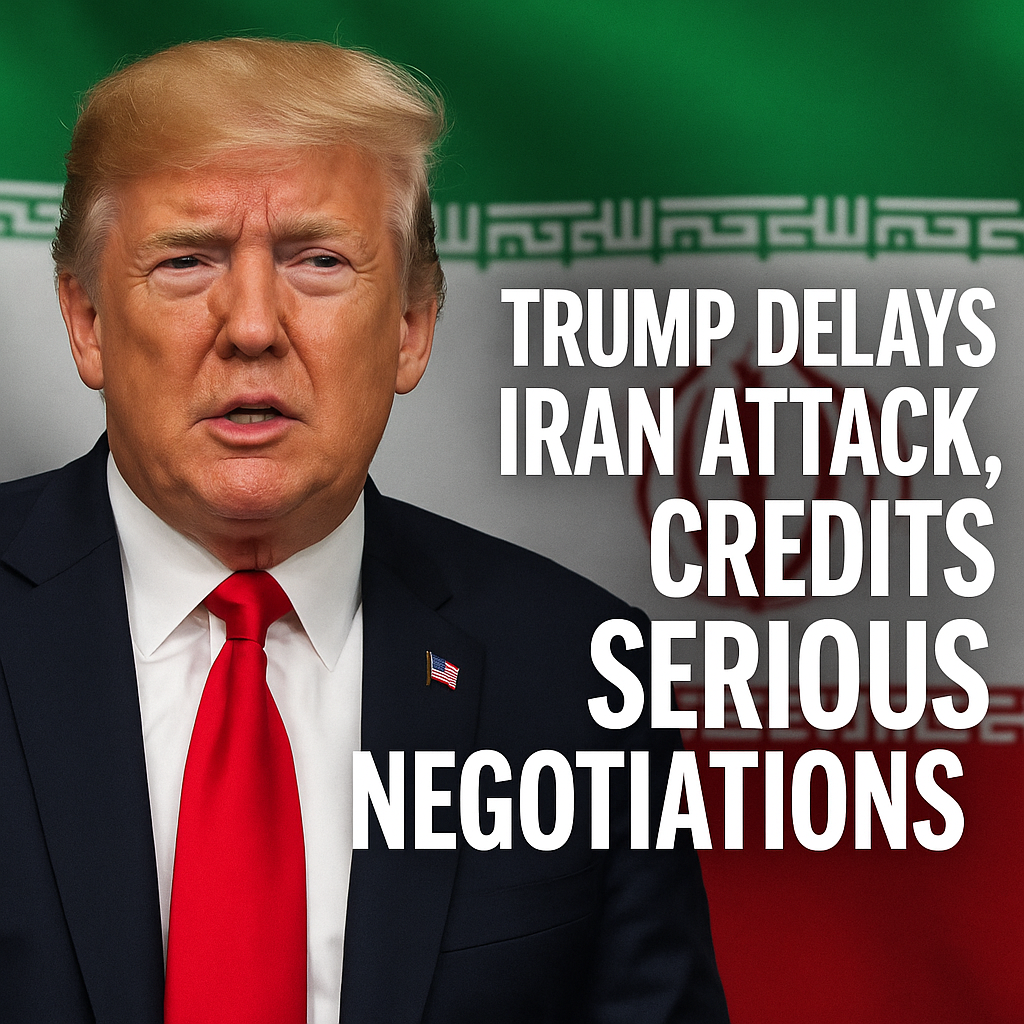
Trump Delays Iran Attack, Credits Serious Negotiations
In recent developments, former President Donald Trump announced a delay in military action against Iran, attributing this decision to the impact of serious negotiations. The geopolitical stakes surrounding Iran continue to shift, as various global powers remain engaged in discussions that could prevent escalation in the region.

Understanding the Context of the Delay
The unique relationship between the United States and Iran has been fraught with tension for decades. Recent rhetoric suggested an imminent attack on Iranian targets, prompting concerns about the potential for wide-ranging conflict. However, Trump’s announcement comes at a time when diplomatic channels seem to have opened, highlighting ongoing discussions that some reports suggest may lead to de-escalation rather than confrontation.

Recent insights from Al Jazeera detail how negotiations predominantly focus on Iran’s nuclear program and its regional activities, which have drawn criticism from the U.S. and its allies. Despite the complexities involved, Trump’s delay indicates a willingness to pursue diplomatic avenues, which could signify a significant turn in U.S. foreign policy.

The Angle of Negotiations
From a strategic standpoint, Trump’s statement echoes sentiments found in various media reports, suggesting that prolonged discussions have had a tangible impact. As noted by Sky News, these negotiations involve not only U.S. officials but also intermediaries from European nations, which adds layers of complexity to the talks.
While Trump’s approach may be seen as a pragmatic response to rising tensions, critics argue that this reliance on negotiation could also be perceived as a lack of decisiveness. Those arguing against heightened military action contend that diplomacy remains the optimal route to avert war. A balance must be struck, and the merits of both approaches—the assertiveness that military action often conveys and the patience required for serious negotiations—continue to be hotly debated.
Diverging Perspectives on Stability
Responses to Trump’s announcement vary widely, with some pundits expressing cautious optimism about the potential for a peaceful resolution. RT News highlights that various nations have responded favorably to the delays, emphasizing that an immediate attack could have dire consequences, not only for U.S.-Iran relations but for broader regional stability.
Conversely, there remains skepticism about Iran’s intentions in these discussions. Critics argue that Iran has leveraged negotiation periods to strengthen its regional foothold. This skepticism is rooted in historical contexts, where past agreements have not yielded the expected outcomes. Observers stress that while dialogue is essential, it must be approached with caution and backed by tangible commitments from all parties involved.
The Consequences of Inaction
The delays sparked by Trump’s announcement also lead to consideration of what happens if negotiations fail. Without a credible military threat looming, the impetus may shift towards more aggressive posturing from Iran, which could complicate efforts toward stability. Both sides must recognize that the balance they strike in negotiations will influence the potential for long-term peace in the region.
Moreover, as the U.S. political landscape continues to evolve with the upcoming elections, Trump’s decisions may be influenced as much by domestic pressures as by foreign ones. Some analysts suggest that military engagement might bolster Trump’s support among certain voter demographics, complicating the overall narrative of his delay.
Final Thoughts
In summary, Trump’s decision to delay an attack on Iran, attributing it to serious negotiations, reveals a complex interplay between diplomacy and military readiness. While there are segments of optimism surrounding this shift, the persistent uncertainties highlight the deep-rooted challenges in U.S.-Iran relations. As negotiations unfold, stakeholders must remain vigilant, carefully navigating these discussions to strike a balance that favors peace over conflict. The coming weeks may define the course not only of U.S.-Iran dynamics but also of broader international relations involving multiple global powers.















