
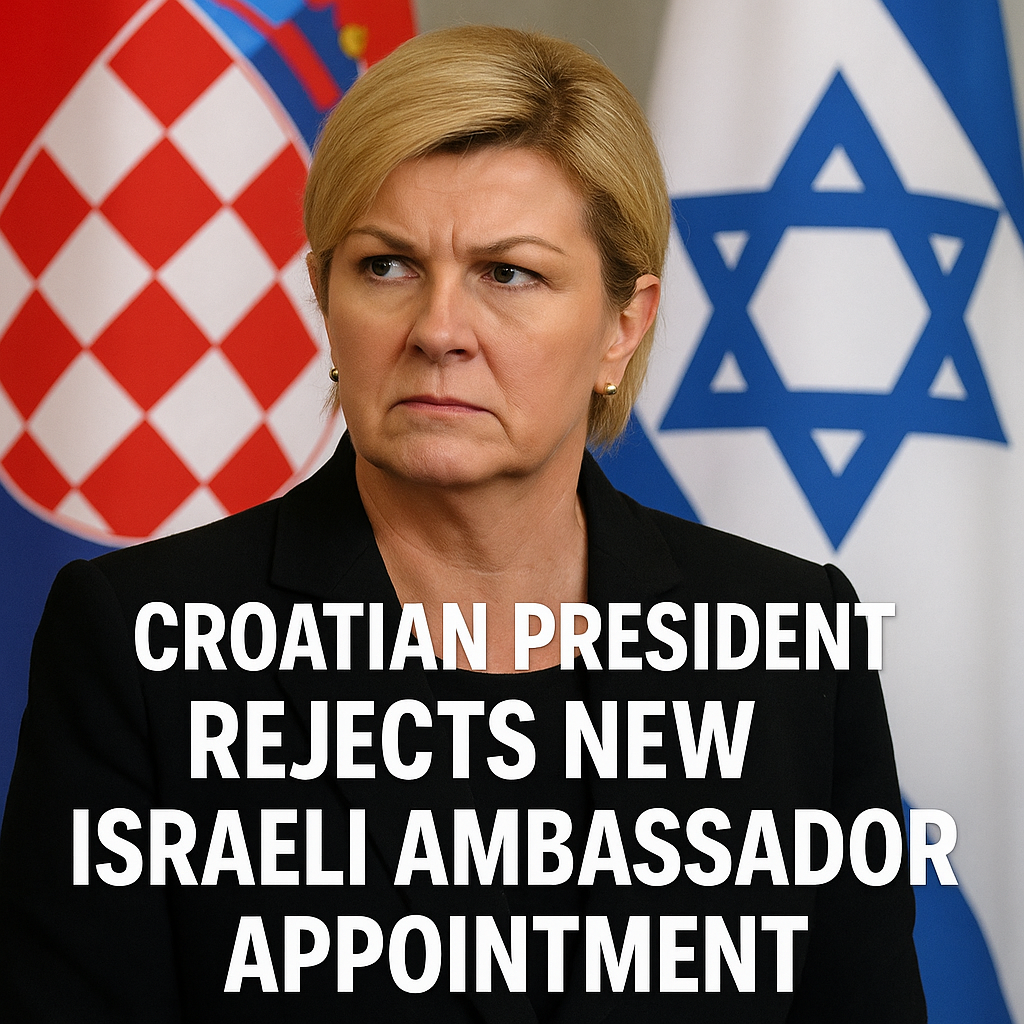
Croatian President Rejects New Israeli Ambassador Appointment
In a surprising political move, the Croatian President has rejected the appointment of Israel’s new Ambassador, a decision that has stirred significant diplomatic dialogue and reactions across the globe. This decision signals deeper complexities in international relations and raises questions regarding Croatia’s stance on contentious geopolitical issues.

Context of the Rejection
The appointment of the new Israeli Ambassador to Croatia was intended to strengthen bilateral ties between the two nations, which have historically maintained a cordial relationship. However, Croatian President Zoran Milanović’s rejection stems from concerns over the Israeli government’s policies, particularly its handling of the Palestinian situation. Milanović has voiced skepticism about the impact of Israeli governance on peace and stability in the region, emphasizing a more critical perspective of Israel’s recent actions.

According to sources from Al Jazeera, President Milanović’s stance is rooted in a broader narrative where many European leaders are increasingly taking on a more assertive position regarding Israeli policies. This aligns with discussions within the European Union about reassessing diplomatic engagements with nations whose policies clash with EU values.

Diverging Perspectives on the Decision
Supporters of Milanović’s rejection argue that it reflects a necessary moral stance against ongoing conflicts and humanitarian crises. They view the decision as not merely political but as an ethical obligation to stand against what they perceive as aggressive policies towards Palestinians. Many advocate for a re-evaluation of diplomatic appointees that represent nations whose actions may conflict with international human rights norms.
Conversely, critics argue that the rejection could lead to diplomatic backlash. Some commentators from RT highlight concerns that Croatia’s decision might isolate it within diplomatic circles, potentially damaging constructive relationships with both Israel and its allies. These critics assert that such actions may not yield the desired effects on Israeli policies but instead push Croatia further from playing a mediating role in the region.
The Broader Implications for Croatian Foreign Policy
The ramifications of this rejection extend beyond just the appointment of an ambassador; they can influence Croatia’s foreign policy trajectory. As a member of the European Union, Croatia has often aligned its diplomatic strategies with broader EU policies. However, this decision indicates a potential pivot towards a more independent foreign policy that may not always align with traditional alliances.
This situation could also encourage similar actions from other European leaders who may feel empowered to speak out against diplomatic appointments perceived as endorsing controversial policies. However, consensus among EU nations remains tenuous, and any shift in collective policy may face significant hurdles due to differing national interests.
Conclusion: A Diplomatic Balancing Act
Croatian President Zoran Milanović’s rejection of the new Israeli ambassador highlights the intricate and often contentious web of international diplomacy. As nations navigate their commitments to human rights and international relations, each decision can resonate far beyond its immediate context. The ongoing dialogues around this issue reflect broader global sentiments regarding peace, governance, and accountability.
Whether this decision will serve as a catalyst for greater scrutiny on state appointments within Europe remains uncertain. What is clear is that as the complexities of international relations evolve, so too will the strategies nations employ to navigate their positions on the global stage. The reaction of both Croatia and Israel to this diplomatic impasse will be crucial in shaping their future interactions and broader geopolitical dynamics.















