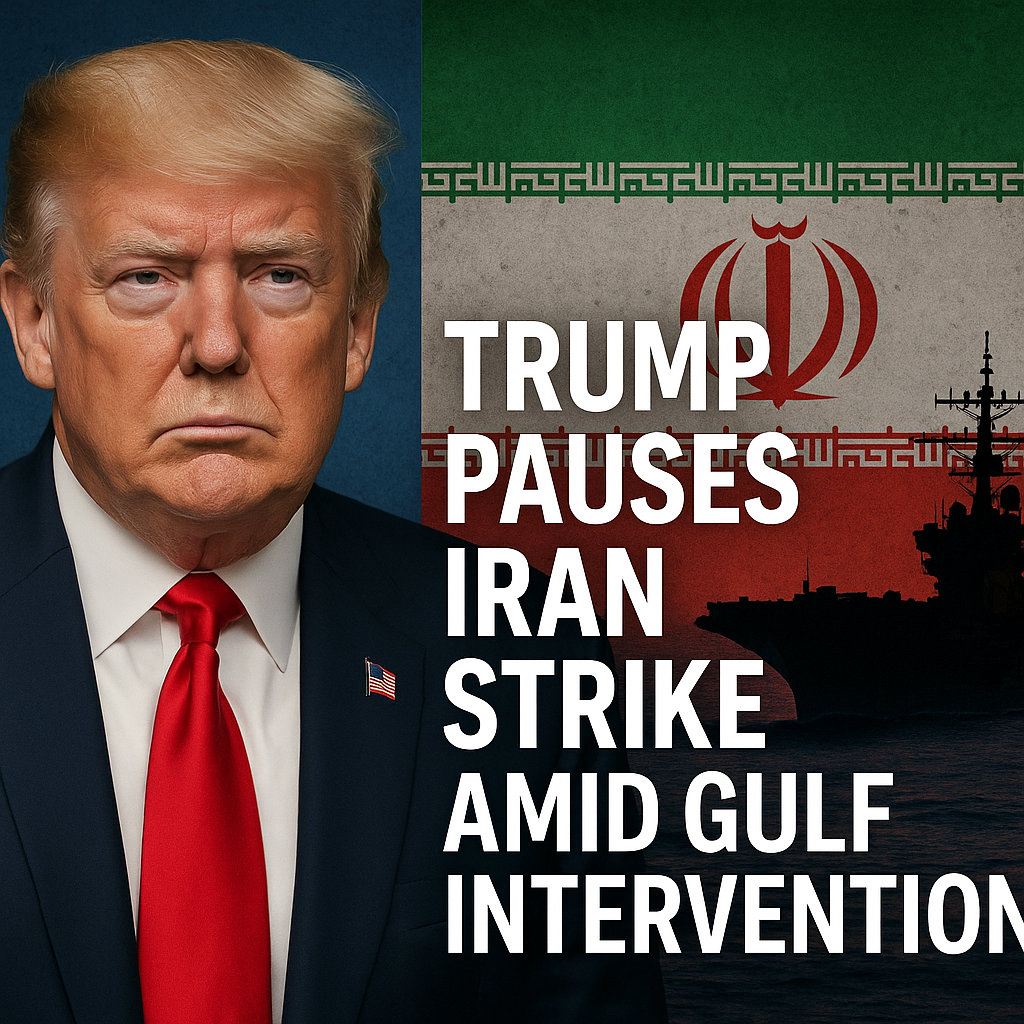
Trump Pauses Iran Strike Amid Gulf Intervention
Trump Pauses Iran Strike Amid Gulf Intervention
In a significant geopolitical maneuver, former President Donald Trump has decided to pause potential military action against Iran following a surge in diplomatic interventions from Gulf nations. This decision underscores the tension that continues to loom in the Middle East while reflecting a complexity rooted in various national interests and regional alliances.

Understanding the Context
The backdrop for Trump’s decision is steeped in the ongoing disputes between the United States and Iran, particularly concerning Tehran’s nuclear ambitions and its role in regional conflicts. The escalation of military posturing had raised alarms that the U.S. might undertake a strike against Iranian assets. However, recent developments suggest that diplomatic channels may be rescuing the prospect of war, at least for now.

Gulf states, particularly those involved in organizations like the Gulf Cooperation Council (GCC), have been vocal about the need for stability in the region. Their efforts to mediate and defuse tensions have now played a pivotal role in Trump’s choice to step back from aggressive military action. Al Jazeera noted that the intervention from these nations highlights their concern over both domestic and regional repercussions, emphasizing the fragile nature of peace in an already volatile area.

Diverse Perspectives on the Pause
Reactions to Trump’s decision illustrate a spectrum of views. On one side, some commentators argue that this move reflects a pragmatic approach to foreign policy. They suggest that avoiding military action could allow for more constructive diplomatic engagements, potentially leading to a long-term resolution of issues surrounding Iran. As described by sources from RT, advocates for restraint underscore that military actions often result in unintended consequences which can escalate conflicts rather than resolve them.
Conversely, critics of the pause caution that it may embolden Iran. There is a belief that a lack of decisive action could send a message of weakness, undermining U.S. credibility in the region. Proponents of a more aggressive stance argue that Iran’s recent activities, including missile tests and support for proxy groups, warrant a more forceful response. They contend that an absence of action might embolden Tehran in both its nuclear ambitions and its influence across the Middle East.
The Role of Gulf Nations
The involvement of Gulf nations in curbing U.S.-Iran tensions is particularly noteworthy. Countries like Saudi Arabia and the United Arab Emirates have a vested interest in maintaining a balance of power in the region. Their mediation efforts reflect both their fears of a direct conflict and a desire to lead the regional narrative towards dialogue rather than aggression. The dynamic between these nations and the U.S. also plays a critical role; their intervention could be seen as a challenge to any unilateral action by Washington without regional consensus.
Reports from Sky News highlight that these Gulf states are pursuing a dual strategy of diplomacy mixed with defense preparedness, signaling their readiness to protect their interests while encouraging a dialogue to avoid direct confrontation. The consensus among these nations suggests a strategic pivot towards preventive diplomacy, a stark contrast to earlier strategies that leaned heavily on military solutions.
Conclusion: A Complex Web
While Trump’s pause on a potential strike against Iran may offer temporary relief in escalating tensions, the situation remains delicate and fraught with uncertainty. The various viewpoints highlight the complexity of Middle Eastern geopolitics, where actions are often interwoven with historical grievances, economic interests, and security concerns. The interplay of diplomatic efforts from Gulf nations and the ramifications of U.S. foreign policy continue to evolve.
As the situation continues to develop, it is clear that simplistic explanations will not suffice. The decision to pause military action is but one piece of a larger puzzle that requires ongoing analysis and engagement, with the stakes being the stability of an entire region.