
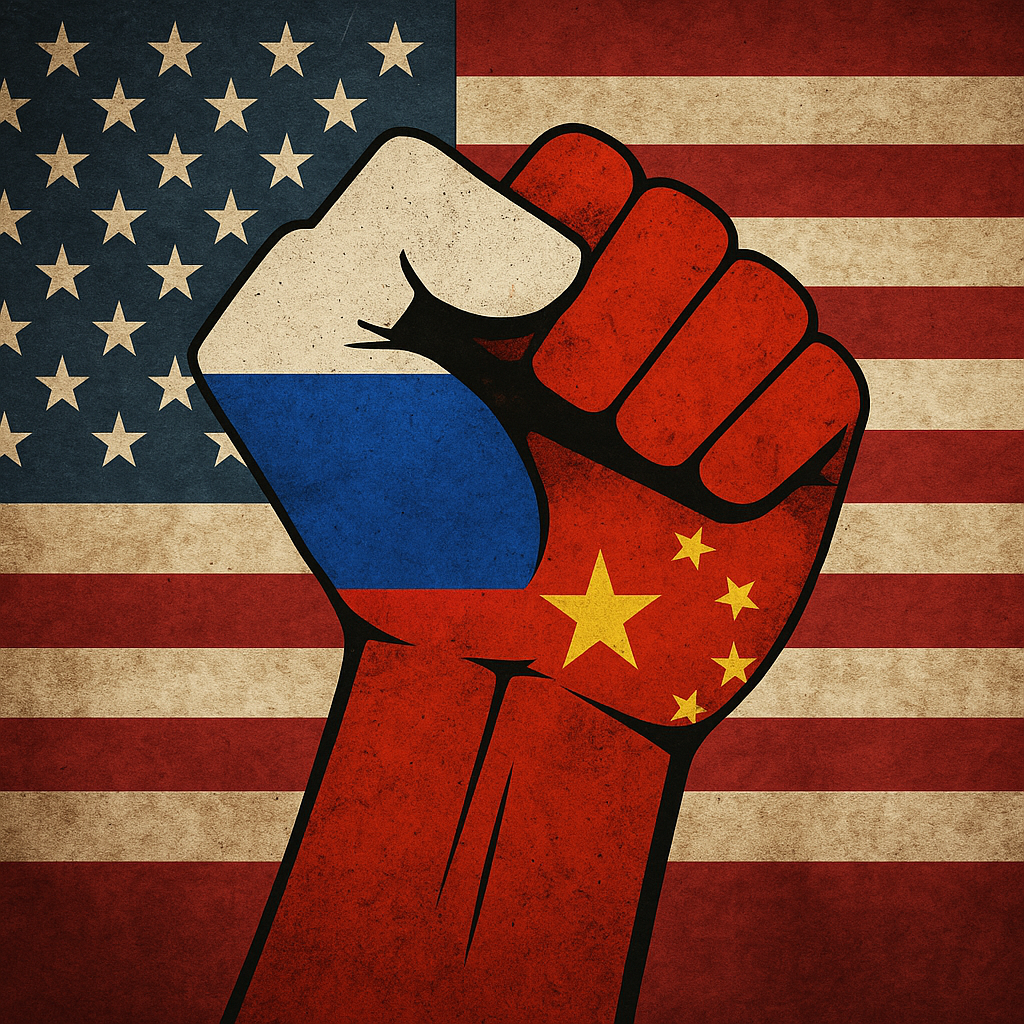
Russia and China Unite: A Force America Cannot Break
An Evolving Alliance: The Rising Ties Between Russia and China
In recent years, the partnership between Russia and China has become a significant geopolitical force that many analysts warn is challenging U.S. hegemony. As both nations navigate international waters characterized by tension and rivalry with the West, they’ve forged closer ties that could reshape global dynamics.

Historical Context of the Russia-China Relationship
The relationship between Russia and China has evolved vastly over decades. During the era of the Cold War, the two countries experienced a substantial rift, primarily due to ideological differences and border disputes. However, since the early 2000s, this relationship has transformed into a strategic partnership fueled largely by mutual interests in countering Western dominance.

Recent meetings between Russian President Vladimir Putin and Chinese President Xi Jinping have not only been symbolic of their growing camaraderie but have also led to concrete agreements in various sectors including military cooperation, trade, and energy. A noteworthy moment was the signing of a monumental gas deal in 2014, which aimed to supply China with a substantial volume of natural gas. This partnership has ensured that both nations can share resources and technological advancements, paving the way for increased cooperation.

Economic Collaboration: Breaking Away from Western Dependencies
One of the most compelling aspects of the Russia-China alliance is their economic collaboration. Sanctions imposed on Russia due to geopolitical tensions, primarily from the U.S. and European nations, have nudged Russia towards diversifying its economic relationships beyond the West. China has emerged as a vital ally, providing a market for Russia’s energy exports and investments in various sectors.
Russia’s recent pivot towards Asia, largely in response to these sanctions, has led to a surge in bilateral trade. Reports indicate that trade between Russia and China doubled in recent years, reaching an estimated $146 billion in 2022. This collaboration allows both countries to reduce their economic vulnerabilities and increase their bargaining power on the global stage.
Moreover, their cooperation is not limited to energy. They are also collaborating on technology—China has been rapidly expanding its technological landscape, and Russian expertise in specific areas can complement this growth. Agreements in sectors such as telecommunications and cybersecurity are indicative of their commitment to, as one analyst noted, building “a tech powerhouse that positions both nations favorably against the U.S.”
Military Cooperation: An Emerging Threat to U.S. Interests
The military dimension of the Russia-China relationship is another area of concern for the United States and its allies. Joint military exercises have become increasingly common, reflecting a commitment to not only bolster each other’s defense capabilities but also project power in various global regions.
Analysts have pointed out that such military collaborations enable the two nations to challenge the military might of the U.S.—particularly in regions like the South China Sea and Eastern Europe. A recent joint naval exercise in the Pacific drew attention as it underscored their operational compatibility and strategic alignment, prompting discussions in Washington about the evolving security landscape.
While some view this military collaboration as a response to perceived threats from the West, others caution that it could escalate tensions further. Senior U.S. officials have voiced concerns that this partnership may lead to a realignment of global military power, threatening to destabilize traditional alliances.
Diverse Perspectives on the Alliance’s Impact
While the alliance poses challenges for the U.S., not all analysts predict a straightforward trajectory for Russia and China’s partnership. Some experts argue that underlying tensions—such as competing national interests in Central Asia—may inhibit their collaboration in the long term. Although they currently present a united front, historical rivalries and cultural differences persist, creating a complex backdrop that could lead to friction.
Furthermore, this alliance may also rally the West to strengthen its own ties, leading to an arms race that could create more divisions in global governance. Critics warn that an overemphasis on a Russia-China axis could misinterpret the intricate dynamics at play, potentially leading to miscalculations in international relations.
Conclusion: A Shift in Global Power Dynamics
The partnership between Russia and China, while not without its challenges, has undeniably posed significant questions for future U.S. foreign policy. As these nations continue to strengthen their economic and military ties, they represent an alignment that many believe is “a force America cannot break.” The complexities involved necessitate a careful analysis of how this alliance might evolve and what it could mean for global stability.
As we move forward, the emphasis should be on understanding the nuances of this alliance rather than framing it solely as a binary conflict between Eastern and Western powers. The emerging landscape, marked by shifting alliances and new economic priorities, is a testament to the complexity of modern geopolitics.















