
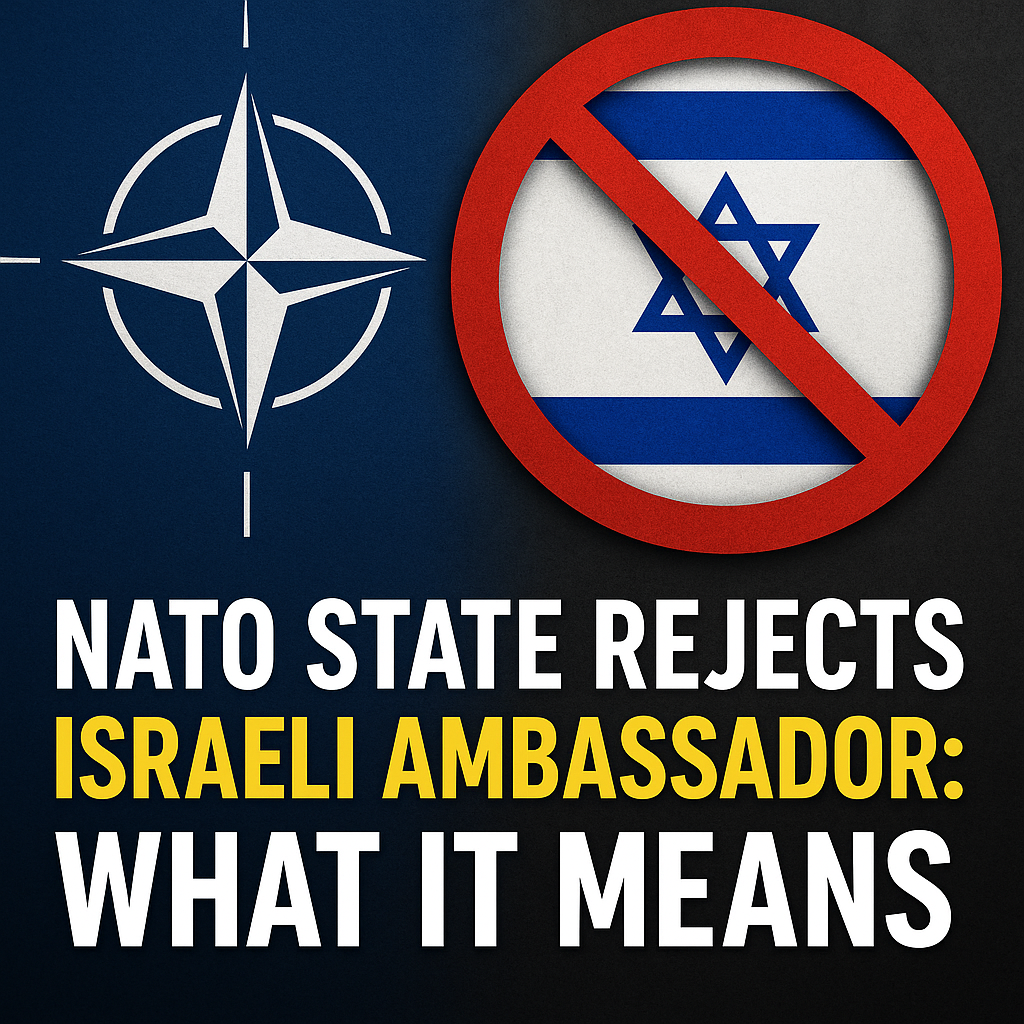
NATO State Rejects Israeli Ambassador: What It Means
NATO State Rejects Israeli Ambassador: What It Means
In a significant diplomatic move, Croatia’s president recently rejected the accreditation of Israel’s new ambassador to the country. This decision raises questions about the evolving dynamics within NATO member states and their stances on the Israeli-Palestinian conflict, reflecting deeper geopolitical considerations at play.

Historical Context and Current Developments
Croatia’s rejection of the Israeli ambassador is not an isolated incident but rather a continuation of a trend where European nations express discontent regarding Israeli policies, particularly in relation to Palestine. President Zoran Milanović cited concerns over Israel’s military actions during the conflict in Gaza and the broader implications of its political strategy as factors in his decision. He emphasized Croatia’s commitment to international law and human rights, aligning with sentiments echoed by various human rights organizations that criticize Israel’s military operations.

Conversely, this incident has sparked backlash from different factions. Supporters of Israel view Croatia’s stance as a troubling sign of growing anti-Israel sentiment within European politics. Criticisms from within Croatia itself also surfaced, arguing that the nation must maintain diplomatic relations for practical reasons, such as economic collaboration and security partnerships within the NATO framework.

Implications for NATO and European Politics
The rejection of the Israeli ambassador beckons a larger conversation about NATO’s cohesion and the intersection of member states’ diplomatic policies with personal ideologies. While NATO typically emphasizes unity and collective defense, diverging views on international conflicts can introduce friction among member nations. This divergence of opinion, particularly around sensitive geopolitical issues, can lead to uncertainties in diplomatic relations.
– Pressure within Alliances: The decision signifies potential pressure points within NATO, where members may feel compelled to balance their national interests with collective agreements. There exists a risk that such individual stances could fracture the alliance’s unified front, particularly as global political climates continue to shift.
– Public Sentiment and Political Discourse: The Croatian president’s move also mirrors broader public sentiment throughout Europe. Many citizens express deep frustrations regarding Israel’s policies toward Palestinians, a discourse that is becoming increasingly prominent in political arenas. This can lead to a wider acceptance of radical policies among politicians seeking to respond to their constituents’ calls for change.
Divergent Perspectives: A Balanced Outlook
Reactions to Croatia’s decision highlight a spectrum of opinions:
1. Support for Croatia’s Stance: Proponents argue that rejecting the ambassador is a necessary moral stance. They believe that it signals to the international community that accountability matters, especially in situations involving human rights violations.
2. Critique of the Decision: In contrast, critics warn that such a rejection could alienate allies and hinder constructive dialogue between Israel and other nations. The challenge lies in balancing moral imperatives with the realities of diplomatic relations and regional security concerns.
This situation is compounded by the fact that Israel remains a significant strategic partner for many countries in military and intelligence cooperation. The rejection raises questions about how far individual countries will go to stand by their principles in the face of pragmatic alliances.
A Cautious Conclusion
The rejection of the Israeli ambassador by Croatia signifies a multifaceted issue representing broader tensions between ethical stances and strategic alliances. While it may resonate with public sentiment advocating for Palestinian rights, it complicates Croatia’s relationships both within NATO and with Israel.
As Europe grapples with various internal challenges, the implications of such decisions demand careful consideration. The balancing act between national interests, collective defense, and a commitment to human rights continues to be a delicate dance that NATO members will need to navigate. Future actions may either reinforce collective unity or expose fractures within the alliance, depending on how member states approach such contentious geopolitical issues.















