
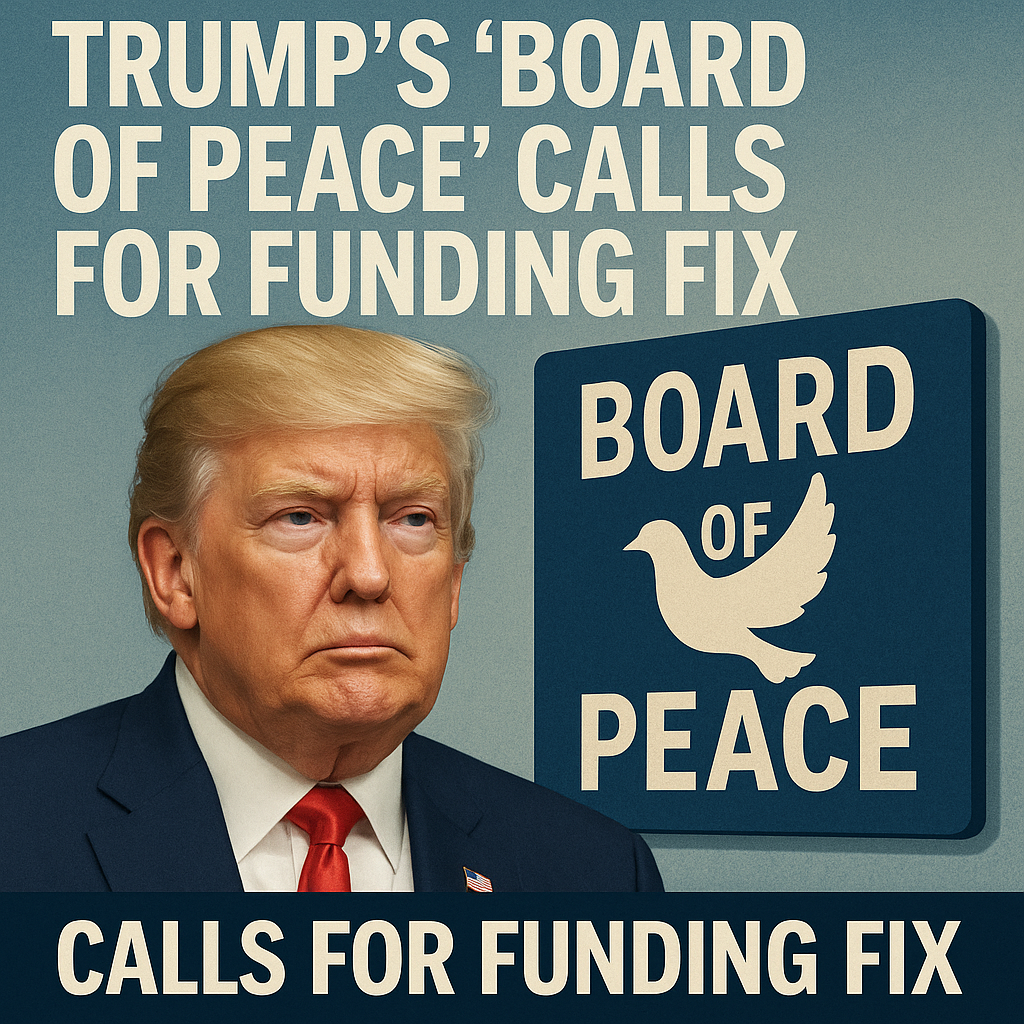
Trump’s Board of Peace Calls for Funding Fix
In a recent development that has sparked debate across various political spectrums, former President Donald Trump’s Board of Peace has made a call to address urgent gaps in funding. This initiative aims to bolster efforts in promoting peace and stability in various regions affected by conflict. The necessity for an increased budget allocation highlights the ongoing challenges facing peace initiatives worldwide.

The Funding Gap: A Critical Concern
The Board of Peace, established under Trump’s administration, emphasizes the pressing need for an infusion of resources to maintain and expand its projects. Reports suggest that the current funding insufficiently meets the demands of ongoing endeavors, including conflict resolution programs and humanitarian aid. According to a statement released by the board, “Without immediate financial support, our ability to foster lasting peace will be severely hindered.”

Diverse opinions have emerged surrounding this call for funding. Supporters argue that the board’s push is crucial for sustaining vital peace-building efforts, especially in regions plagued by violence and instability. They contend that effective funding is the backbone of any successful peace initiative, and without it, opportunities for dialogue and resolution may be lost.

Conversely, critics raise concerns about the efficacy of the board’s existing programs. They question whether the proposed allocation will yield tangible results or merely serve as a band-aid for deeper systemic issues. Some analysts argue that the board must first demonstrate a clear strategy and proven outcomes before additional resources can be justified. This perspective underlines a significant tension in the broader discourse on international aid and funding: can more money alone solve entrenched problems?
Different Perspectives on Peace Funding
Various outlets have reported on the issue, reflecting a myriad of perspectives. Al Jazeera highlighted the global implications of Trump’s Board of Peace’s funding call, suggesting that many stakeholders in conflict-affected regions may welcome increased U.S. engagement through financial support. The outlet pointed out that successful peace frameworks in places like Colombia and the Balkans often relied heavily on sustained funding, leading to significant reductions in violence and enhanced stability.
In contrast, RT News provided a critical viewpoint, noting that the effectiveness of U.S.-led peace initiatives has been historically mixed. The network underscored that many of these programs often grapple with accusations of prioritizing strategic interests over genuine humanitarian needs. This sentiment echoes a broader skepticism regarding the motivations behind foreign aid, with some arguing that peace funding can sometimes serve as a vehicle for geopolitical maneuvering rather than a sincere effort to foster peace.
Addressing the Uncertainties
What remains clear is the complexity surrounding the theme of funding for peace initiatives. While there is consensus on the need for adequate resources, significant uncertainties persist regarding the most effective methods to ensure that such funding leads to concrete benefits. Key questions linger: What mechanisms will be implemented to evaluate the success of newly funded projects? How will the Board of Peace ensure accountability in the disbursement of funds?
Moreover, as discussions progress, stakeholders must consider not only the allocation of funds but also the inclusivity of the processes involved. Engaging local communities in both the planning and implementation stages could provide a more grounded approach to peace initiatives. Many experts argue that grassroots involvement is critical for the sustainable success of any peace program, as these communities often possess invaluable knowledge of local dynamics and conflicts.
Conclusion: The Path Forward
In conclusion, Trump’s Board of Peace has rightly identified a critical need for enhanced funding to support peace initiatives. However, the path forward will require careful consideration of not just how much funding is needed, but more importantly, how that funding is utilized. Ensuring that the processes are transparent, accountable, and engaging of local voices could lead to more effective outcomes. As we observe the unfolding discussions, it is essential to approach this multifaceted issue with an open mind and a commitment to genuine dialogue. Only then can we hope to build lasting peace that benefits all parties involved.















