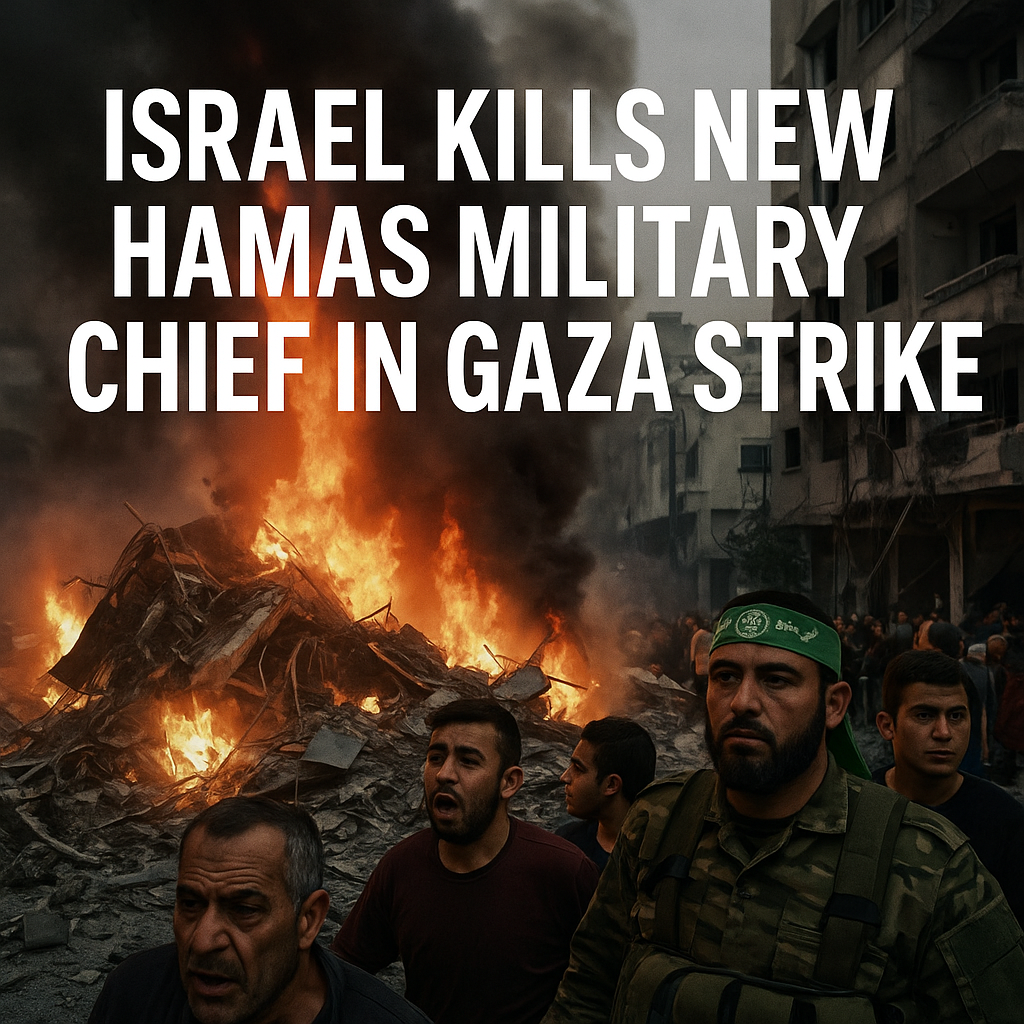
Israel Kills New Hamas Military Chief in Gaza Strike
Escalating Tensions: Israel’s Strike on Hamas Leadership
In a significant escalation of the ongoing conflict, Israel has reportedly killed the newly appointed Hamas military chief in a targeted air strike in Gaza. This development has implications not only for the fragile ceasefire often brokered between Israel and Hamas but also for the broader geopolitical landscape in the region.

The Context of the Strike
The air strike, which took place amid ongoing tensions following a series of violent exchanges between Israel and Palestinian groups, marked a crucial moment in the conflict. Israeli Prime Minister Benjamin Netanyahu justified the attack, stating that eliminating Hamas military leadership is a vital step in ensuring the security of Israeli citizens and preventing future attacks. Israeli officials claimed that the leadership of Hamas has been responsible for orchestrating attacks on Israeli territory, emphasizing the need to dismantle their military infrastructure.

Conversely, Hamas condemned the airstrike as a war crime. They vowed that such actions would only serve to intensify resistance against Israel, portraying the attack as evidence of Israel’s disregard for Palestinian lives. The narrative from Hamas reflects a broader sentiment among many Palestinians, who view these strikes not merely as military actions but as acts of aggression that perpetuate the cycle of violence and suffering in the region.

Varied Perspectives on the Implications
Responses to the air strike have been mixed, illustrating the complexity of the situation. On one hand, analysts argue that targeting Hamas’s military chiefs could disrupt the group’s operational capabilities in the short term. According to experts interviewed by Sky News, leadership decapitation strategies can create temporary chaos within militant organizations, potentially offering a window for diplomatic solutions.
On the other hand, critics warn that such actions can lead to retaliatory measures, thus worsening the humanitarian situation in Gaza. Al Jazeera highlighted how previous targeted strikes have often incited further violence, triggering rocket attacks from Gaza into Israel, which in turn leads to more military responses. The cycle appears to perpetuate an environment where civilian casualties and destruction become frequent outcomes.
As Israel continues to assert that its military actions are in self-defense, various international observers raise concerns about the humanitarian implications of these operations. With Gaza already facing significant challenges due to blockades and limited resources, the consequences of further military engagement could intensify the suffering of ordinary Palestinians.
Navigating the Challenges Ahead
While military strategies may provide short-term solutions, experts underline the importance of long-term peace negotiations. The recent incident has underscored the urgent need for dialogue between the conflicting parties, as military strikes alone are unlikely to resolve the deeper issues at the heart of the Israeli-Palestinian conflict. Addressing factors such as territorial rights, historical grievances, and the humanitarian plight of Gaza’s residents will be crucial in moving towards durable peace.
The international community also has a critical role to play in mediating these disputes and fostering an environment conducive to negotiation. However, the varied reactions from countries and international organizations suggest a lack of consensus on how best to approach the ongoing crisis. While some nations unequivocally support Israel’s right to defend itself, others call for international oversight and accountability regarding civilian casualties in conflict zones.
Conclusion: A Tenuous Path Forward
The killing of Hamas’s military chief represents more than a tactical military decision; it is a flashpoint in an ongoing conflict fraught with emotional, historical, and social complexities. As both sides prepare for potential retaliation, the cycle of violence risks further entrenching divisions and suffering on both sides.
Ultimately, finding a resolution to the Israeli-Palestinian conflict will require a comprehensive approach that prioritizes dialogue, humanitarian concerns, and fair negotiations. As history illustrates, military solutions alone tend to exacerbate the tensions, while fostering understanding and cooperation could pave a path to a more peaceful future. The world watches closely as events unfold, reflecting on whether this episode will become yet another chapter in this long and painful saga.