
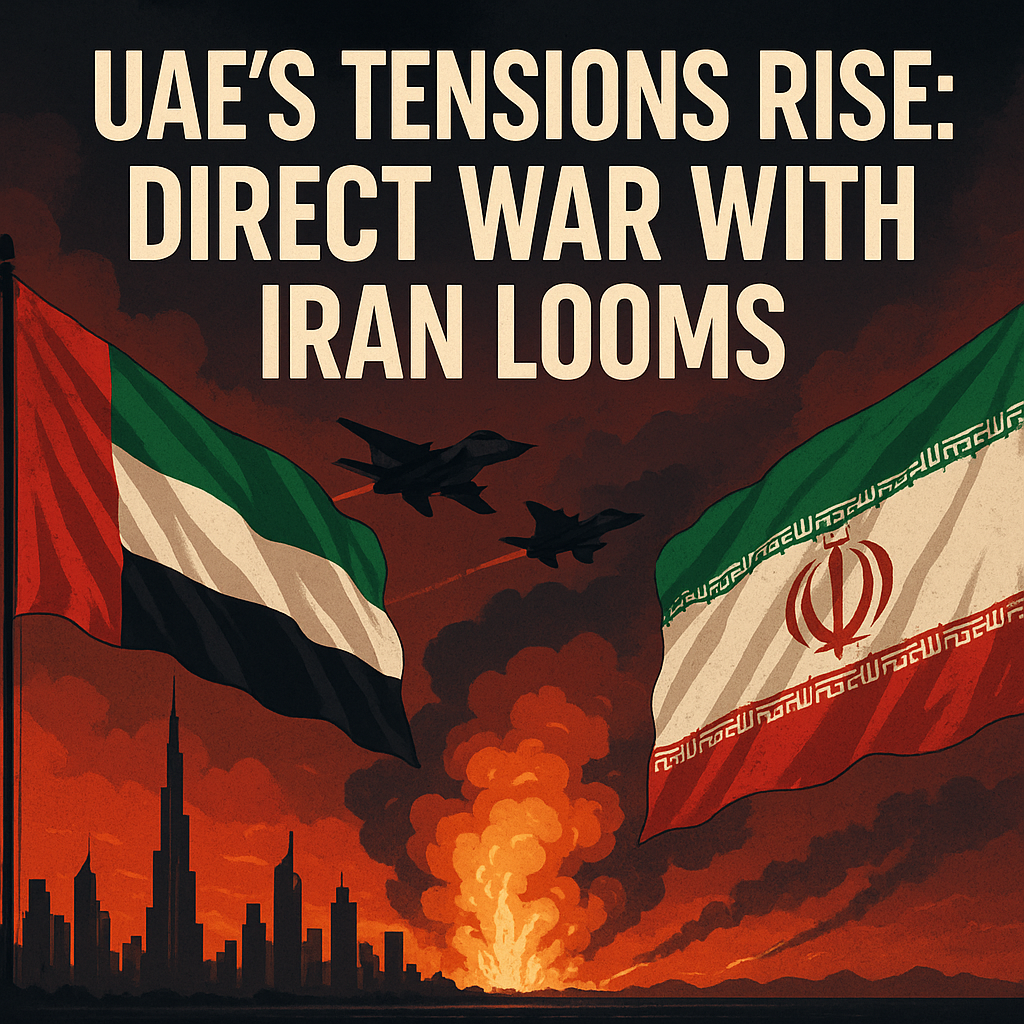
UAE’s Tensions Rise: Direct War with Iran Looms
Rising Tensions in the UAE: The Threat of Direct Conflict with Iran
As tensions escalate in the Middle East, the situation between the UAE and Iran has drawn increasing attention, with fears of a direct war looming. Recent developments highlight a complex interplay of geopolitical interests, alliances, and regional security concerns that complicate any potential resolution.

The Growing Alarm in the Gulf
The UAE’s concerns primarily stem from its strategic partnerships with the United States and Israel, both of whom perceive Iran as a significant threat. According to reports from RT, the UAE has bolstered its defense strategies amidst rising fears of Iranian aggression in the region. This comes in the wake of a renewed focus on military readiness, where the UAE has engaged in joint exercises with U.S. and Israeli forces, signaling a commitment to counter any potential threats from Tehran.

Iran, on its part, has reacted defensively to these moves. The Iranian government has characterized the UAE’s alliances with the U.S. and Israel as provocative, exacerbating the already tenuous security dynamics. Al Jazeera reports that Iran views these military collaborations as a direct threat, and there is an ever-present possibility of miscalculations leading to open conflict.

Diverse Perspectives on the Escalating Situation
While Western sources often emphasize the UAE’s preemptive moves as a necessary step towards security, Iranian perspectives focus on the strategic encirclement by foreign powers. This stark contrast reflects deeper issues, including historical grievances and national sovereignty concerns.
1. US Support and Military Alliances: The UAE’s response to perceived Iranian threats has included seeking advanced weaponry and defense systems from the U.S. The UAE’s involvement in the Abraham Accords and partnership with Israel further solidifies a united front against Iran, as noted in reports from various outlets. This alliance is framed not only as a preventative security measure but also as a broader strategy to reshape the regional balance of power.
2. Iran’s Regional Strategy: Conversely, Iranian officials emphasize their role in regional diplomacy and stability, asserting that their actions are defensive and rooted in protecting their sovereignty. Iranian leaders have consistently warned against the encroachment of foreign military forces in their vicinity, citing historical foreign interventions that have previously caused turmoil in the region.
The Risk of Miscalculation
The specter of miscalculation remains a significant concern, as military actions could spiral out of control. Analysts warn that any aggressive move by one party could provoke a swift and possibly disproportionate response from the other, leading to an unpredictable escalation of hostilities. As stated by experts in various security forums, both sides need to tread carefully to avoid inadvertent conflict.
– Potential Flashpoints: Key areas of concern include the Strait of Hormuz, through which a significant portion of the world’s oil supply passes. Any conflict in this crucial maritime corridor would not only impact regional security but could also have dire consequences for global energy markets.
– Diplomatic Channels: Despite rising tensions, there is a faint glimmer of hope in the form of diplomatic talks. Both Iran and the UAE have engaged in back-channel communications in the past, highlighting a mutual, albeit cautious, understanding of the necessity for dialogue. The need for strategic communication to de-escalate tensions may ultimately become crucial in avoiding direct conflict.
Conclusion: A Complex Web of Interests
The potential for a direct war between the UAE and Iran hangs precariously in the balance, influenced by a myriad of factors, including international alliances, historical grievances, and regional power dynamics. As the UAE enhances its military readiness with support from Western allies, and Iran asserts its sovereignty, both sides navigate a complex web of interests that underscores the necessity for caution.
With the situation continually evolving, the international community remains watchful, recognizing that effective diplomacy is essential to prevent miscalculations that could trigger a wider conflict. Amid rising fears, the hope for a peaceful resolution persists, highlighting the intricate relationship between regional security and global stability.















