
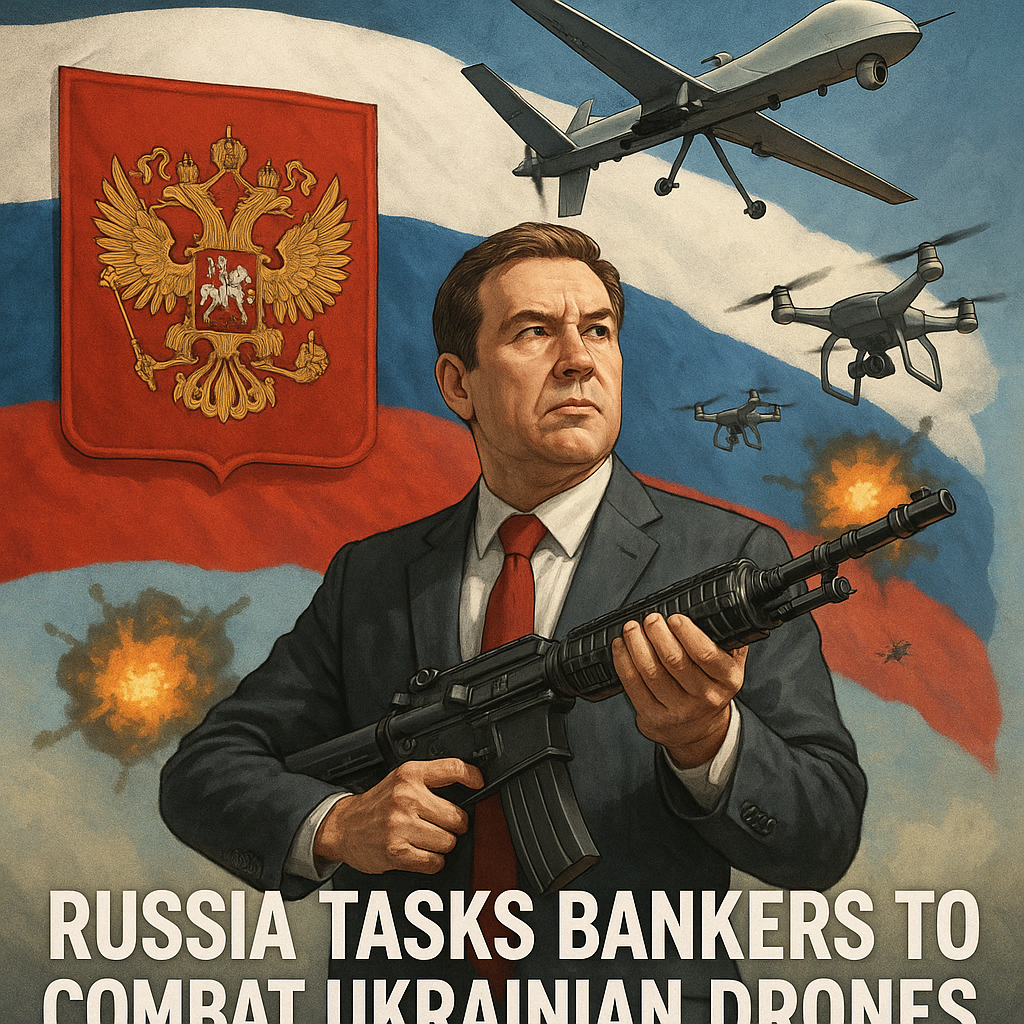
Russia Tasks Bankers to Combat Ukrainian Drones
Russia Tasks Bankers to Combat Ukrainian Drones
In a striking development amid the ongoing conflict, Russia has decided to employ its bankers in efforts to combat Ukrainian drones. This unconventional strategy reflects a broader trend of civilian mobilization in wartime and raises questions about the changing nature of warfare and national defense.

The New Front: Civilian Involvement in Defense
Russia’s initiative to involve bankers in military operations symbolizes an adaptation to the realities of modern warfare, particularly in the context of drone technology. Reports indicate that these bankers will be tasked not just with financial management, but also with employing tools to counteract drone threats. The Russian government aims to leverage their expertise in coordination, logistic support, and potentially, operational tactics.

This approach has garnered mixed reactions. On one hand, analysts note that traditional military structures may be overwhelmed by the complexities introduced by unmanned aerial vehicles (UAVs). As military budgets and resources tighten, engaging civilians—from bankers to engineers—may offer innovative solutions that conventional military personnel may not provide. As noted by one military analyst, “The involvement of non-combat professionals could bring a fresh perspective to urgent and evolving threats.”

Conversely, critics argue that mobilizing bankers for military roles blurs the lines between civilian and military responsibilities, potentially leading to mismanagement and inefficiency. One commentator emphasizes that “The reliance on non-military personnel might create a chaotic environment, where decisions hinge more on financial acumen than tactical expertise.” This perspective reflects a concern about the potential dilution of responsibility and specialization that typically characterizes military operations.
Global Responses and Implications
The implications of Russia’s decision extend beyond its borders. Both Ukraine and its Western allies are closely monitoring this development, interpreting it as a sign of desperation or a shift in tactics. Analysts point out that if Russia succeeds in integrating civilian capabilities into their defense methods, it could set a precedent for other nations facing similar drone threats.
Reports from various news sources suggest that Ukraine is already ramping up its drone capabilities in response to Russian actions. The conflict has seen a significant uptick in drone usage by both sides, making aerial dominance crucial in battlefield success. A military strategist commented, “Engaging bankers shows that Russia perceives drones as a significant threat, prompting them to explore every avenue for counteraction.”
Furthermore, the broader implications for international security cannot be overlooked. The engagement of civilian resources in combat scenarios raises ethical considerations. Are we witnessing a new norm where civilians are directly involved in warfare, blurring the lines of engagement? As one expert cautioningly remarked, “The trends we see in Ukraine may pave the way for civilian engagement strategies in future conflicts, which could be dangerous if not properly regulated.”
The Complexity of Modern Warfare
As governments worldwide grapple with the reality of drone warfare, many may look to Russia’s example with apprehension. The use of non-military personnel in defense roles elicits a range of reactions—from hopeful innovation to fearful precedent. A comprehensive understanding of the complexities involved in modern warfare reveals that the strategies adopted by combatants are as varied as the technologies employed.
While the World Economic Forum notes that innovation often emerges from necessity, there is also a historical precedent for hasty decisions resulting from crisis that backfire due to lack of proper safeguards and oversight. Thus, as armed conflicts become increasingly multifaceted, nations must tread carefully in balancing novel strategies with ethical obligations.
Conclusion: A New Era of Conflict
Russia’s directive to involve bankers in combating Ukrainian drones underscores an ongoing shift in military paradigms. As elements of national defense intertwine with civilian sectors, the question persists: Is this the future of warfare, or merely a reflection of desperation? The situation remains fluid, punctuated by uncertainty and rapid technological advancements. Ultimately, the unfolding narrative will depend on how well nations adapt to these changes while striving to maintain the foundational tenets of ethical warfare.















