
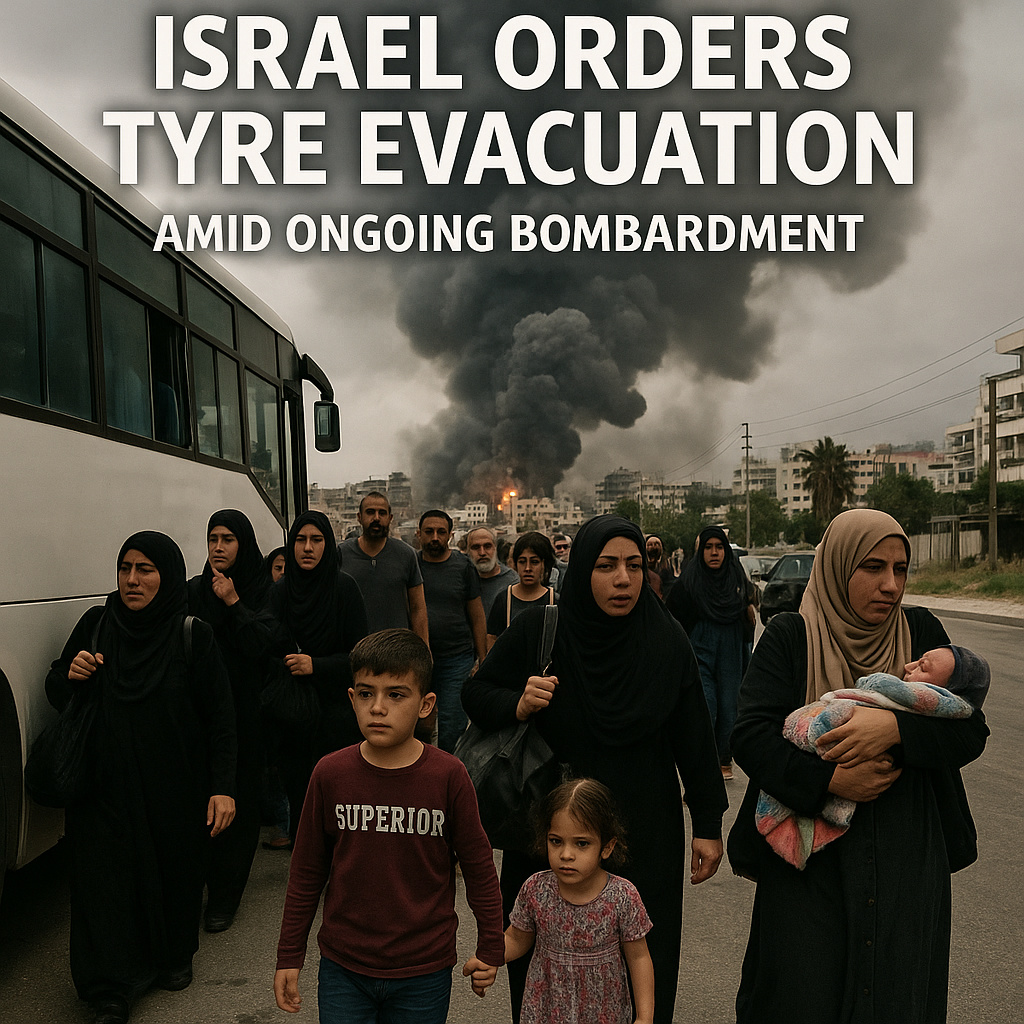
Israel Orders Tyre Evacuation Amid Ongoing Bombardment
Israel Orders Tyre Evacuation Amid Ongoing Bombardment
In recent days, Israel has issued a directive for the evacuation of Tyre, a significant city in southern Lebanon, as its military operations continue to escalate. These developments occur against the backdrop of heightened tensions in the region, raising concerns about humanitarian conditions and the complex dynamics of international politics.

The Context of Evacuation Orders
The decision to order civilian evacuations from Tyre comes after weeks of relentless military actions in southern Lebanon and across the border with Gaza. According to reports from Al Jazeera, Israeli forces have intensified their bombardment in response to ongoing hostilities, including rocket fire from militant groups operating in Lebanon. This military strategy reflects Israel’s broader objective to diminish perceived threats while attempting to safeguard its northern border.

The evacuation notice, which was issued via social media and other channels, has significant implications for the almost 200,000 residents of Tyre. Humanitarian organizations are deeply concerned about the conditions that the evacuations may create, as many families already face the dire consequences of displacement. The United Nations has called on both sides to prioritize civilian safety, emphasizing the urgent need for humanitarian assistance.

Diverse Viewpoints on Military Actions
The rationale behind Israel’s military response is layered in complexity. On one hand, Israeli officials argue that their operations are necessary to prevent further attacks and ensure national security. They assert that these actions are crucial in dismantling the military capabilities of groups like Hezbollah, which has historically posed a threat to Israeli sovereignty.
Contrastingly, critics of Israel’s military approach, including several human rights organizations, argue that the bombardment disproportionately affects civilians and breaches international law. Reports from RT highlight increased casualties among non-combatants, raising ethical questions surrounding the legitimacy of military tactics employed during times of conflict. The Israeli government’s insistence on striking military targets has been met with skepticism from human rights advocates, who emphasize the collateral damage inflicted on innocent lives.
Humanitarian crises often reveal the fragility of civilian life during wartime, and Tyre is no exception. Many residents are caught in a precarious situation, having to make desperate choices while fearing for their safety. As noted by Sky News, families are relocating to safer areas, yet resources are scarce, and the infrastructure for supporting evacuees is under tremendous strain.
The Humanitarian Perspective
The humanitarian impact of the evictions from Tyre raises urgent questions about the responsibilities of all parties involved. Medical facilities, schools, and basic services are being overwhelmed, complicating relief efforts. Organizations such as the International Red Cross have been vocal about the need for immediate aid to be provided to affected populations, calling for a ceasefire that would allow for the safe passage of humanitarian supplies.
As the situation continues to evolve, the challenge lies in balancing military strategy with the need to protect civilian lives. Critics argue that the West’s historical support for Israeli military operations complicates the pursuit of a peaceful resolution. Meanwhile, advocates for peace stress that a substantive dialogue with local and regional stakeholders is essential for a lasting solution.
In conclusion, the evacuation order for Tyre exemplifies the tragic human cost of ongoing military conflict in the region. With the situation still unfolding, it remains critical to examine the multiple narratives at play and pursue avenues that protect civilians while addressing security concerns. As international observers watch closely, the hope is that diplomatic efforts will eventually lead to de-escalation and a renewed focus on humanitarian needs.















