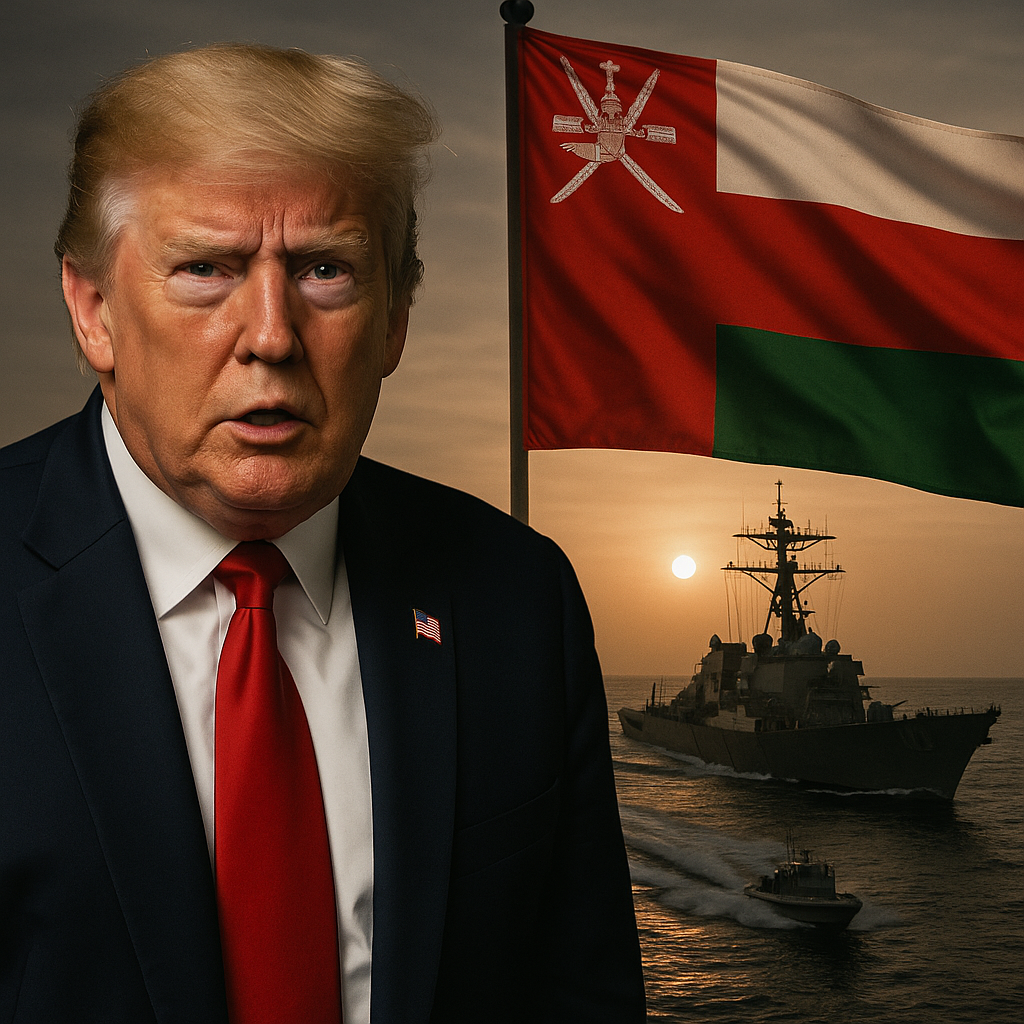
Trump Threatens Oman Over Strait of Hormuz Crisis
Growing Tensions in the Strait of Hormuz
Recent developments concerning the Strait of Hormuz have raised international eyebrows, particularly with statements emerging from former President Donald Trump that some observers have interpreted as threats towards Oman. Given the geopolitical importance of this narrow waterway, through which a significant portion of the world’s oil supply transits, any escalation in rhetoric can have far-reaching implications.

Trump’s Rhetoric and Its Implications
In an apparent shift in strategy, Donald Trump implied that military action against Oman could be on the table if the ongoing impasse over the Strait of Hormuz continues to threaten maritime security and oil supply chains. This has sparked debate among analysts and policymakers alike. Trump’s comments may be seen as a way to exert pressure not just on Oman but also on regional players who have a vested interest in maintaining stability in the region.

The former president’s statements have drawn mixed reactions. On one hand, some experts argue that strong rhetoric can be a useful tool in international diplomacy. It sends a message of resolve that could discourage adversaries from taking aggressive actions in the Gulf. For instance, an analyst from Al Jazeera noted, “A clear stance on Oman could potentially prevent further miscalculations by Iran, especially given its history of provocative actions in the region.”

Conversely, critics highlight the potential for misinterpretation and escalation. A source from RT raised the concern that such threats could spiral out of control, especially in an area already fraught with tension. As one commentator stated, “Trump’s bellicosity could provoke a reaction not just from Oman but from other countries in the region, leading to a situation neither side desires.”
The Geopolitical Landscape
The Strait of Hormuz is critically important due to its function as a chokepoint for petroleum exports. Approximately 20% of the world’s oil passes through these waters, making any instability there a cause for significant worry among global markets. The implications are not lost on financial analysts, who point to the potential for rising oil prices should tensions escalate.
Both Oman and Iran have stakes in the security of this vital region. Oman has historically pursued a neutral foreign policy, which might be jeopardized by Trump’s threats. Oman’s strategic proximity to the Strait of Hormuz often positions it as a mediator between conflicting parties, especially between the United States and Iran. Analysts suggest that Oman may respond to increasing U.S. aggression with caution, avoiding taking a hard stand against Iran, which could be detrimental to their own national interests.
Meanwhile, the Iranian response to U.S. posturing could further complicate the issue. Iranian leaders have previously stated that they would protect their interests in the region, and any perceived threat to a neighboring ally could evoke a robust response. Experts warn that mishandling diplomatic channels could lead to unexpected military engagements, with risks that extend far beyond the immediate area.
International Reactions and Responses
International reaction to Trump’s remarks has also emerged, with countries like the United Kingdom and other European nations expressing concern over any potential military action in the region. British officials have reiterated the necessity of diplomatic dialogue among the involved parties, suggesting that solutions should come through negotiation rather than threats.
However, the United Nations has struggled to intervene effectively in such matters historically, often bogged down by geopolitical rivalries. News outlets, including Sky News, emphasize that while military might might be on the table, the broader international community is leaning towards a more diplomatic approach to de-escalating the situation.
Conclusion: Navigating a Complex Crisis
The situation concerning Trump’s threats against Oman over the Strait of Hormuz is emblematic of a larger, complex web of international relations, where military power and diplomacy often intertwine. While Trump’s rhetoric may be intended to project strength, it also carries risks that could destabilize not just Oman but the entire region. The stakes are high; thus, a careful balance must be struck between assertiveness and diplomacy.
As the situation develops, the international community watches closely. It remains uncertain how Oman will navigate its delicate position, and whether diplomatic channels can be opened before a military confrontation becomes a reality. The geopolitical landscape in the Gulf is fraught, and the future requires more nuanced dialogue if lasting peace is to be achieved.