
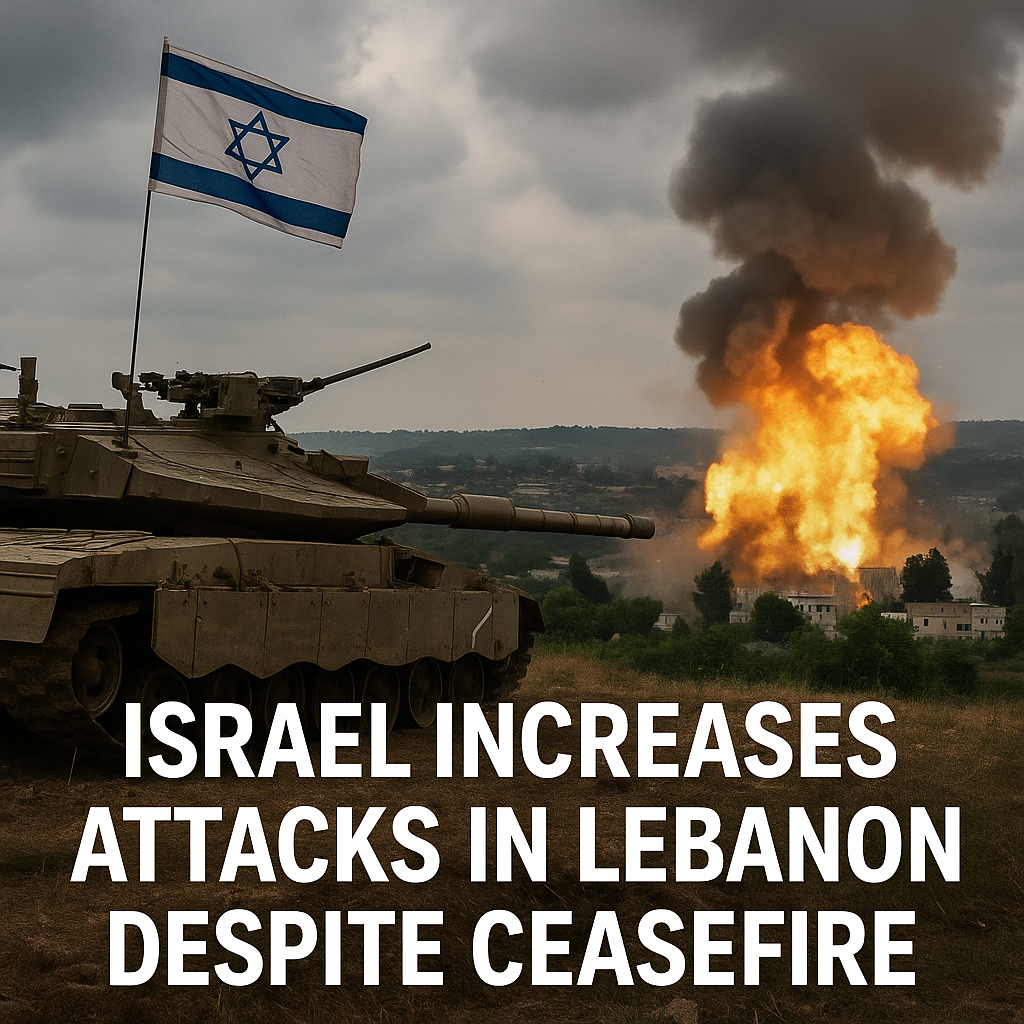
Israel Increases Attacks in Lebanon Despite Ceasefire
Israel Increases Attacks in Lebanon Despite Ceasefire
In recent weeks, Israel has escalated its military operations in Lebanon, a move particularly surprising given the ongoing ceasefire that was meant to maintain peace in the region. This uptick in violence raises critical questions about the stability of the ceasefire and the broader implications for Israeli-Lebanese relations, as well as the potential impact on regional security.

Understanding the Underlying Tensions
The current situation is deeply rooted in a complex history involving territorial disputes, national security concerns, and internal dynamics within Lebanese politics. Various reports indicate that Israel’s increased military action stems from perceived threats posed by Hezbollah, the Lebanese militant group backed by Iran. Israeli officials argue that these strikes are preventative responses to Hezbollah’s alleged attempts to fortify military positions and smuggle weapons into the country.

However, perspectives on the situation diverge sharply. Supporters of Israel’s stance contend that the nation has every right to defend itself against threats targeting its sovereignty. For instance, Al Jazeera highlighted statements from Israeli defense officials claiming that “the threat has become too imminent to ignore,” alluding to the need for a robust defense posture in light of escalating tensions.

Conversely, critics argue that Israel’s actions undermine efforts for a lasting peace. Voices from various international organizations express concern that the increased hostilities could lead to a broader regional conflict, further destabilizing both Lebanon and the surrounding areas. RT News reported that this military escalation could jeopardize not just the ceasefire but also ongoing peace talks, creating a vicious cycle of violence that undermines regional security.
The Humanitarian Impact
The toll on civilian populations is another critical dimension of the situation. Reports emerging from Lebanon suggest an increase in casualties among non-combatants due to Israel’s intensified airstrikes. Sky News reported on the humanitarian plight, noting that hundreds of families have been displaced by the bombings, exacerbating an already dire economic and social situation in Lebanon.
Key implications of the humanitarian impact include:
– Displacement of Families: Many families have been forced to flee their homes, leading to homelessness and a crisis in shelter provisions.
– Healthcare Strain: The healthcare system in Lebanon is already strained, and increased casualties from military operations further complicate an already fragile situation.
– Long-term Psychological Effects: Prolonged exposure to conflict can lead to significant mental health issues, particularly among children.
Critically, humanitarian organizations and activists have called for an immediate end to hostilities, urging both sides to return to the negotiation table. They emphasize that sustaining a ceasefire is not merely a diplomatic checkbox but a necessity for civilian protection.
Uncertainties Ahead
The outlook regarding a resolution remains uncertain. While some analysts predict that sustained international pressure could compel Israel to reconsider its military engagements, the complexities of domestic and regional politics make this a challenging endeavor. Lebanon’s internal politics, particularly the influence of Hezbollah, further cloud the prospects of peace. There seems to be a consensus among various analysts that as long as Hezbollah perceives a threat from Israel, tensions are likely to persist.
Moreover, international stakeholders appear divided on their approach. Some Western nations stand firmly with Israel, citing its right to defend itself while also promising humanitarian support to Lebanon. In contrast, other countries advocate for a more balanced approach, emphasizing the need for both parties to cease hostilities and engage in dialogue.
Conclusion
Israel’s increased attacks in Lebanon, despite a declared ceasefire, illustrate the fragility of peace in the region. As tensions swell, the focus must shift toward diplomatic engagement as a means of breaking the cycle of violence. The human cost of military actions cannot be overlooked, highlighting the necessity for all parties to prioritize human rights and the protections of civilians. Without concerted efforts to bridge the divides, the risk of a broader regional conflict remains alarmingly high, leaving the future of both nations hanging in a precarious balance.















