
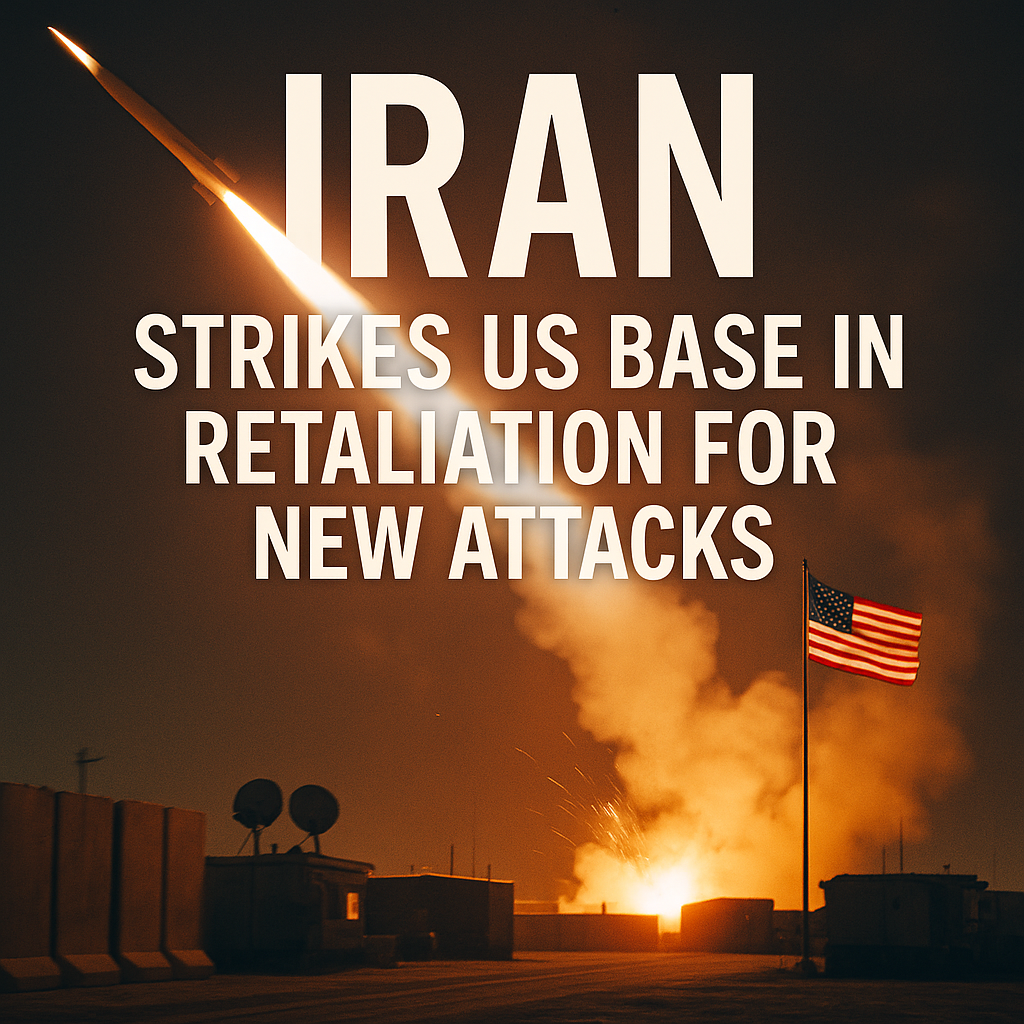
Iran Strikes US Base in Retaliation for New Attacks
Iran Strikes US Base in Retaliation for New Attacks
In an escalating cycle of conflict, Iran carried out a strike against a US military base in Iraq, a move that has garnered widespread attention and varying interpretations from international observers. The backdrop to these hostilities includes mounting tensions following fresh military actions perceived as provocations from the US.

The Context of Retaliation
The decision to target the US base appears rooted in ongoing military skirmishes, with Iran accusing American forces of conducting unauthorized operations in the region. According to reports from RT, the Iranian military confirmed the attack, framing it as a necessary response to prior US actions that have jeopardized its national security. This strike aligns with a broader narrative of Iran asserting its sovereignty and retaliating against perceived aggressions.

Contrastingly, analysts from Al Jazeera underline that while Iran’s actions are positioned as defensive, they may also serve to unify domestic factions ahead of Iran’s upcoming elections. The regional implications are significant as such actions can exacerbate tensions not only with the US but also with other regional players, complicating diplomatic relations in an already unstable area.

The Implications of the Strike
Regional Stability at Risk
The strike against the US base raises critical questions about regional stability. Reports highlight concerns that such retaliatory actions could lead to an all-out conflict, given the interconnected nature of Middle Eastern geopolitics. Experts outline that a stronger Iranian military posture, displayed through missile strikes or drone warfare, might provoke further escalations from the US and its allies.
Furthermore, while both Iran and the US have shown a preference for avoiding direct full-scale warfare, the logical pressures surrounding honor and deterrence in military strategies may leave little room for de-escalation. As Sky News points out, the potential for misinterpretation of military actions could spark retaliatory cycles, where each side feels compelled to respond to maintain their strategic credibility.
Diverging International Perspectives
International reactions to the attack vary, reflecting the complexities of alliances in the region. Some countries, particularly those within the Gulf Cooperation Council, express support for US military presence as a stabilizing force against Iranian expansionism. Meanwhile, others argue that the US military presence is provocative and undermines sovereignty across the region, as highlighted by RT’s coverage of Iranian foreign policy.
Particularly insightful are the perspectives of humanitarian organizations that highlight the risk to civilians in Iraq amidst military escalations. The broader population often bears the brunt of geopolitical rivalries, making it crucial to consider the human cost associated with military strikes and retaliatory actions.
Concluding Thoughts
The Iranian strike against a US military base brings to light the complex narrative of retaliation and resistance. While Tehran points to defensive motives in its actions, the broader implications for regional security and the potential for increased violence can’t be overlooked.
As stakeholders in this conflict navigate a fraught landscape, it remains essential to promote dialogue over military confrontation. The situation underscores the importance of addressing underlying tensions and finding diplomatic solutions to prevent further hostilities. Without concerted efforts toward conflict resolution, the cycle of retaliation may perpetuate instability, posing risks not just to the involved parties, but to global peace and security as a whole.















