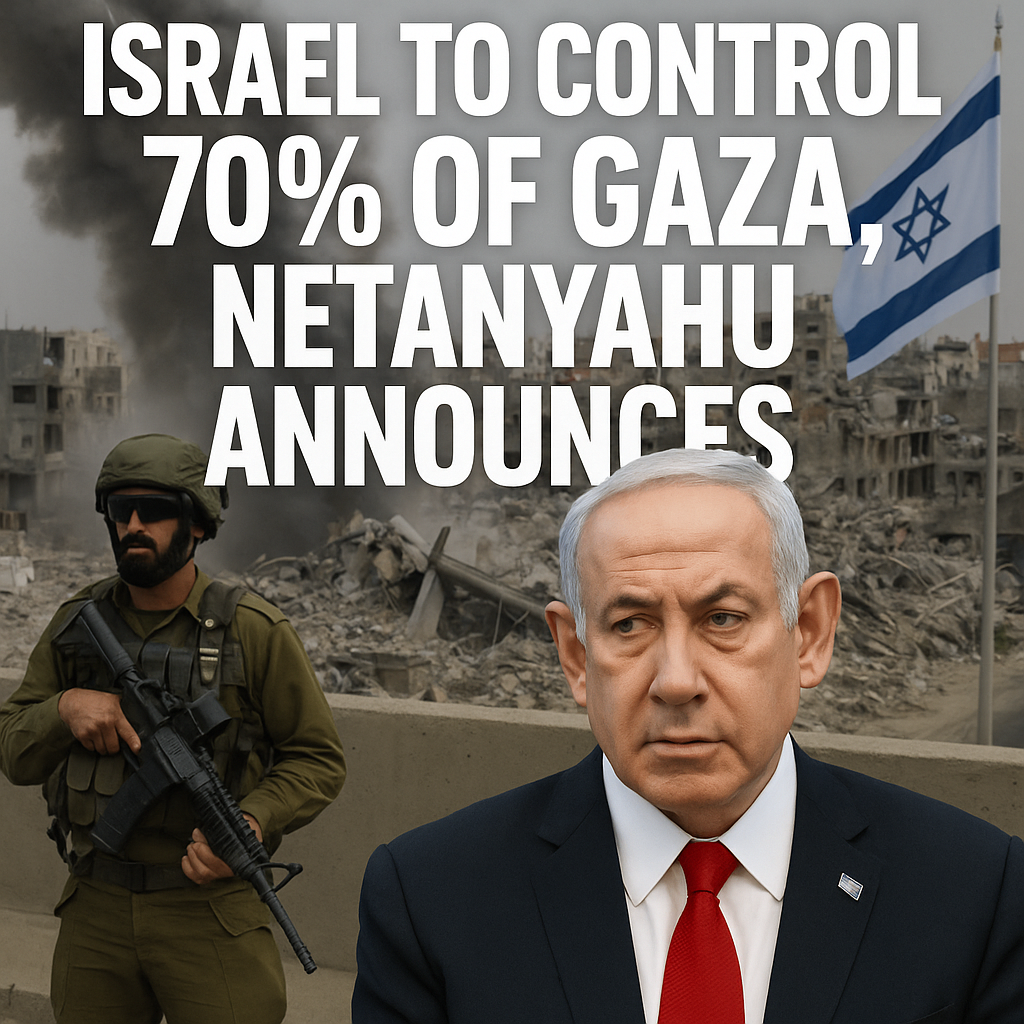
Israel to Control 70% of Gaza, Netanyahu Announces
Israel’s New Strategy: Control Over 70% of Gaza
In a significant shift in policy, Israeli Prime Minister Benjamin Netanyahu has announced plans for Israel to control about 70% of Gaza. This announcement has sparked a flurry of responses from various stakeholders within the region and beyond, highlighting the complex nature of Israeli-Palestinian relations.

The Political Landscape
As tensions in the Gaza Strip escalate, Netanyahu’s declaration comes amid a backdrop of ongoing conflict, humanitarian crises, and political maneuvering. By stating his intent to exert control over a substantial portion of Gaza, Netanyahu aims to bolster security assurances for Israel amid threats from Hamas, the governing body in Gaza. According to reports, he emphasized that this move is essential for the security of Israeli citizens and a necessary step in combating terror factions operating from the region.

Critics, however, argue that such a policy may exacerbate an already dire humanitarian situation in Gaza, where the population suffers from high unemployment rates and limited access to basic services. Organizations like Amnesty International have consistently warned that any move toward expanded Israeli control could further stifle Palestinian rights and reduce the chances of peace negotiations.

Implications for the Palestinian Population
The potential for increased Israeli control introduces significant implications for the Palestinian population in Gaza. An overwhelming majority of Gaza’s inhabitants live under harsh conditions, with limited access to healthcare, clean water, and electricity. Many locals fear that intensified Israeli presence will lead to greater instability, impacting their everyday lives even more significantly.
Reports from various news outlets suggest that this move could result in further displacement, with increased military operations leading to more casualties among civilians. Humanitarian organizations are concerned that the announcement neglects the urgent need for dialogue and resolutions focused on long-term peace, which would engage both sides constructively.
Mixed Reactions and Diverging Views
The international community’s response to Netanyahu’s announcement has been mixed. Some political analysts express cautious support for Israel’s security measures, stressing the need to neutralize threats from militant groups. In contrast, many human rights advocates call out the potential infringement on the rights of Palestinians, claiming that continued occupation will drive the cycle of violence further.
Reports from Al Jazeera highlight a sentiment among Gaza residents, emphasizing the growing frustration and helplessness felt by the populace. Such a strategy, if fully realized, may deepen existing divisions and limit prospects for meaningful dialogue.
China, along with other nations, has urged restraint from Israel, demanding that the needs and rights of the Palestinian people be prioritized in any proposed action. Their calls underscore a broader international desire for a resolution that sustains both Israeli security needs and Palestinian aspirations for statehood.
The Path Forward: Dialogue or Escalation?
The future remains uncertain, with many experts pondering the implications of such a bold policy shift. Will Israel’s intentions lead to increased security, or will they spiral into yet another cycle of violence? The juxtaposition of Israel’s security-focused approach against the backdrop of ongoing humanitarian crises paints a complex picture.
As discussions unfold, it is imperative for all actors involved to consider the multifaceted realities on the ground. Both the Israeli and Palestinian narratives deserve understanding, and the necessity for constructive dialogue cannot be overstated. Engaging with humanitarian organizations and local communities will be crucial for Israel if it hopes to foster an atmosphere of peace, rather than one of retribution and fear.
In conclusion, as Netanyahu moves ahead with plans to control a significant portion of Gaza, the complex interplay between security and humanitarian obligations will define the region’s future. Ultimately, only through genuine engagement with all stakeholders can a sustainable resolution be achieved. The path forward remains steep and fraught with challenges, yet it is a path that must be traversed in pursuit of peace.