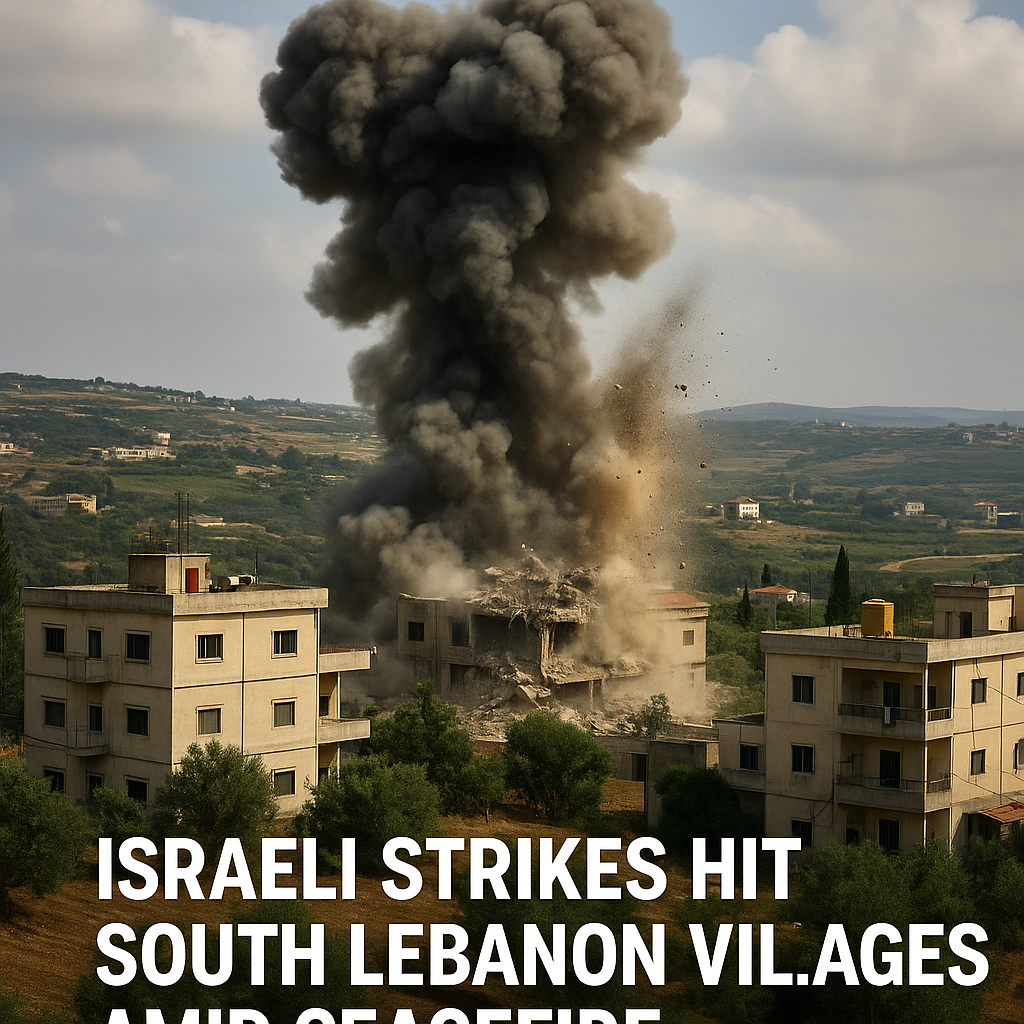
Israeli Strikes Hit South Lebanon Villages Amid Ceasefire
Israeli Strikes Hit South Lebanon Villages Amid Ceasefire
In a troubling escalation of violence, Israeli airstrikes have recently targeted villages in southern Lebanon, even as a ceasefire was reportedly in effect. This renewed conflict between Israel and Hezbollah raises critical questions about the fragile state of peace in the region and the implications for both Lebanese civilians and Israeli security.

Context of the Conflict
The tension between Israel and Hezbollah has a long and complex history, rooted in territorial disputes, political disagreements, and ideological differences. The latest round of violence comes on the heels of earlier skirmishes and rhetoric that have escalated fears of a broader conflict. Reports indicate that Israeli airstrikes hit civilian areas, reportedly leading to casualties among the local population.

According to a statement from Lebanese officials, Israeli forces conducted multiple strikes on villages like Al-Qulaylah and others near the border, targeting what they claimed were Hezbollah positions. However, the civilian toll has raised concerns. “These strikes are unacceptable,” said a spokesperson for the Lebanese military. Such statements underscore the fragility of the current ceasefire and highlight the challenges of maintaining peace amidst ongoing hostilities.

Divergent Perspectives
The contrasting narratives from different factions paint a complex picture of the situation. While Israeli sources frame the strikes as necessary defensive measures against Hezbollah provocations, such as cross-border rocket fire, Lebanese officials and media outlets condemn the attacks as blatant violations of national sovereignty and international law.
For instance, a report from RT emphasizes that the Israeli government justifies its military actions by pointing to an increase in hostility from southern Lebanon, arguing that they are acting in self-defense. Israeli Prime Minister Benjamin Netanyahu claimed that the operations target not just military infrastructure but also mechanisms that threaten Israeli civilians. In contrast, local news outlets in Lebanon report widespread fear and anger among residents, citing that the airstrikes have resulted in civilian casualties and property damage, further deepening the humanitarian crisis.
Humanitarian Concerns Amid Warfare
The implications of these strikes extend beyond immediate military objectives, impacting civilian life and humanitarian conditions in southern Lebanon. Human Rights Watch and other international organizations have voiced concerns about potential violations of international humanitarian law. Residents of hit villages report a dire situation, with essential services disrupted and medical facilities overwhelmed.
Local authorities claim that these ongoing operations exacerbate an already critical humanitarian situation, given that many villages in southern Lebanon still bear the scars of previous conflicts. “People are frightened to return to their homes,” said a local aid worker, revealing the emotional and physical toll on the population. The cycle of retaliatory strikes perpetuates a climate of anxiety and dislocation for civilians.
The Road Ahead
As the situation unfolds, the international community watches closely, urging restraint from both sides. Diplomatic solutions seem urgently needed to establish a sustainable peace framework. The prospects for dialogue appear dim, given current animosities and the entrenched positions of both Israel and Hezbollah.
Observers note that a clear consensus on the next steps is lacking. Analysts are divided on whether a renewed push for negotiations can materialize, especially with the increasing mistrust and mutual accusations of aggression and provocation.
Conclusion
The recent airstrikes by Israel in southern Lebanon highlight the precarious balance of power in the region, where acts of aggression threaten not only military objectives but also the lives of innocent civilians caught in crossfire. The tension raises pressing questions about the effectiveness of ceasefires in such a volatile environment and the broader implications for regional stability. Without timely diplomatic intervention, the cycle of violence may continue, perpetuating suffering and conflict in an already fragile area.