
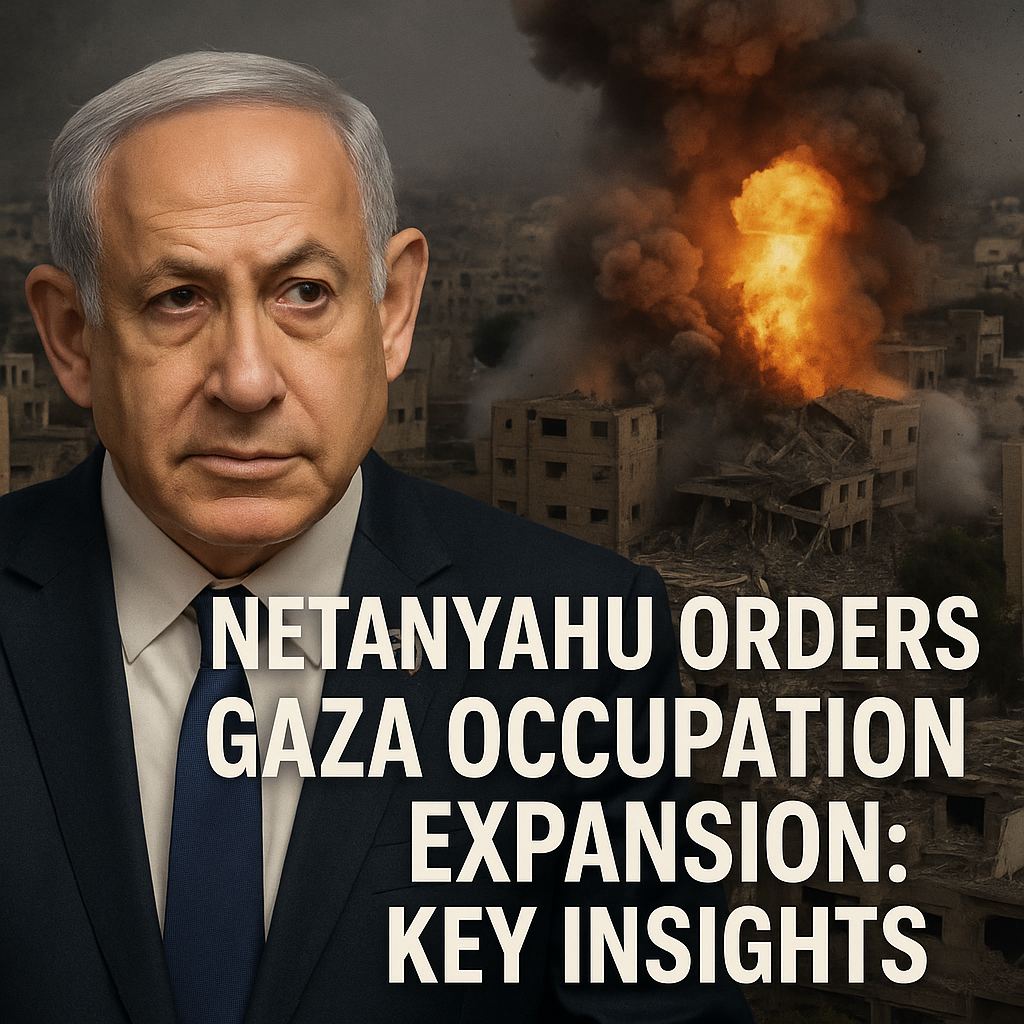
Netanyahu Orders Gaza Occupation Expansion: Key Insights
Netanyahu Orders Gaza Occupation Expansion: Key Insights

The recent decision by Israeli Prime Minister Benjamin Netanyahu to expand the Gaza occupation marks a significant escalation in the ongoing conflict, raising tensions not only within the region but also globally. This multifaceted situation involves complex historical narratives, humanitarian concerns, and geopolitical implications that merit thorough exploration.

Historical Context and Immediate Implications
The roots of the Israeli-Palestinian conflict run deep, characterized by decades of territorial disputes and political strife. Netanyahu’s directive to bolster military presence in Gaza follows a culmination of violence, including escalated rocket fire from Hamas and retaliatory strikes by the Israeli military. As detailed by sources like Al Jazeera, Netanyahu justified the expansion as a necessary step to protect Israeli citizens from ongoing threats, emphasizing the government’s commitment to national security.

This situation reflects a broader historical context where military action is perceived as a primary tool for achieving political objectives. However, critics argue that such measures often exacerbate tensions rather than provide lasting solutions. For instance, RT noted how previous military operations in Gaza led to significant civilian casualties and prompted international condemnation.
Intersecting viewpoints suggest that while immediate security concerns are valid, the long-term effects of occupation can lead to cycles of violence. An increase in military dominance may provide short-term reprieve but potentially alienates moderate voices within Palestinian society. As tensions rise, it’s essential to critically assess whether escalation is truly conducive to peace or merely prolongs a problematic status quo.
Humanitarian Concerns Amidst Militarization
The humanitarian implications of expanding the occupation cannot be overlooked. Gaza, home to approximately two million residents, already faces dire social and economic conditions largely exacerbated by blockades and military actions. Reports from Al Jazeera highlight the precarious situation regarding access to essentials such as food, water, and medical care, and raise alarms about the potential for further humanitarian crises should military operations intensify.
Opponents of Netanyahu’s directive argue that the expansion undermines any chance for meaningful dialogue and peace negotiations. The United Nations has consistently voiced concerns over the humanitarian toll of military actions in Gaza, condemning both the violence and its impact on civilian populations. Critics from numerous platforms stress that military escalation often leads to increased radicalization among Palestinians, perpetuating a cycle of violence that endangers both Israeli and Palestinian lives.
Despite these humanitarian concerns, some analysts suggest that Netanyahu’s actions may actually reflect broader regional dynamics and pressures, including the influence of right-leaning factions within Israeli politics. The decision to expand the Gaza occupation may also be a strategic move to solidify Netanyahu’s standing domestically, where support for tough stances on security often polls well.
International Reactions and Geopolitical Considerations
Global reactions to Netanyahu’s order paint a complex picture. Nations and organizations worldwide have reacted with a mix of support and criticism. Countries with close ties to Israel, such as the United States, typically underscore Israel’s right to defend itself against terrorist threats, aligning with Netanyahu’s security narrative. However, countries promoting a balanced resolution to the Israeli-Palestinian conflict have condemned the occupation’s expansion as a hindrance to peace.
Foreign policy experts have warned against overlooking the geopolitical ramifications of expanding military engagement in Gaza. As highlighted in Sky News reports, regional actors, including Iran and various Arab nations, may perceive increased Israeli military presence as a justification for bolstering their own militaristic postures or support for Palestinian groups. Tensions could escalate beyond Gaza, creating ripple effects throughout the Middle East.
Additionally, this conflict highlights the shifting alignments in international relations—where some countries are beginning to question traditional alliances with Israel in light of humanitarian issues. Such dynamics point toward an increasingly polarized global landscape in which responses to Israeli actions could provoke both support and backlash, reshaping how international politics will play out in future decades.
Concluding Thoughts
Netanyahu’s orders for the expansion of the Gaza occupation represent more than a tactical military decision; they encapsulate a broader conflict marked by historical grievances, humanitarian challenges, and complex geopolitical stakes. As tensions escalate, it is crucial to monitor the situation closely and prioritize dialogue that addresses the underlying issues troubling both Israelis and Palestinians. While immediate security needs warrant attention, pursuing a sustainable peace that respects the rights and needs of all involved remains critical for long-term stability in the region.















