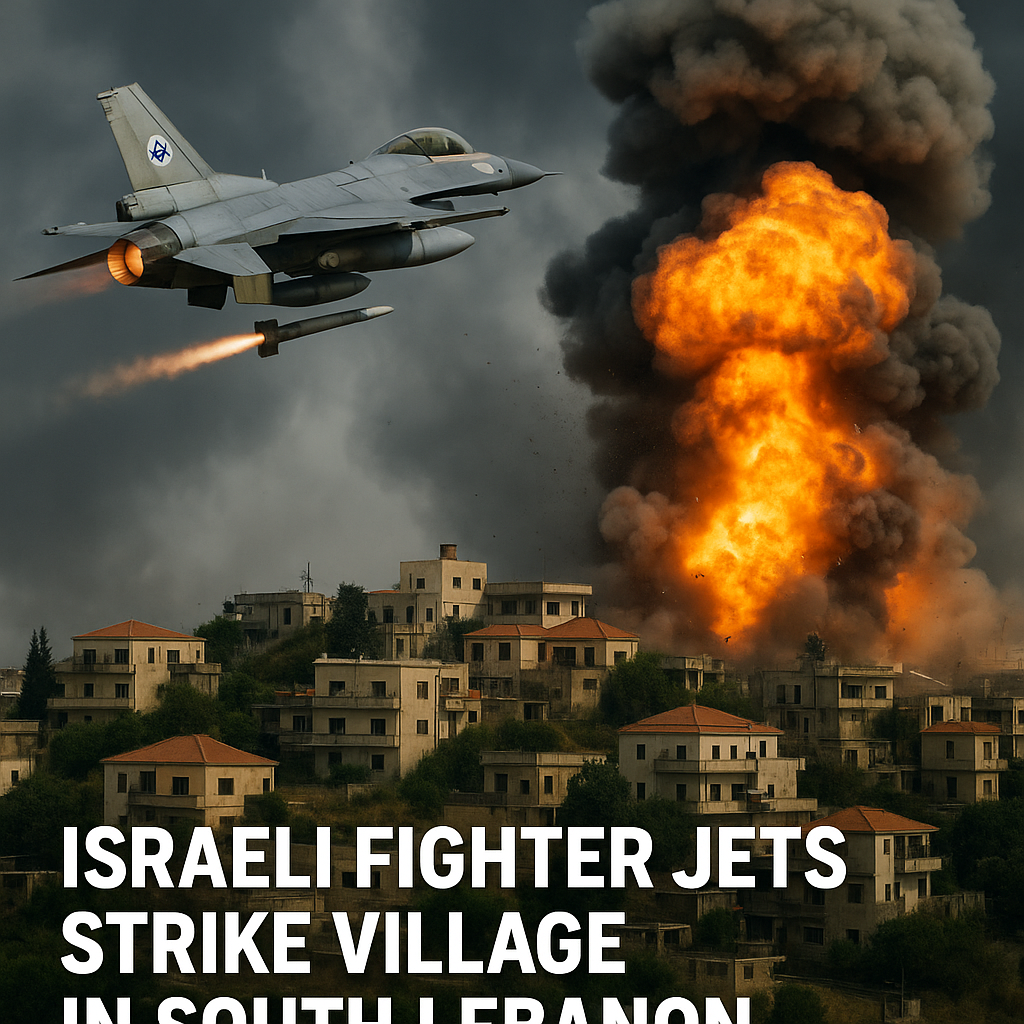
Israeli Fighter Jets Strike Village in South Lebanon
Israeli Fighter Jets Strike Village in South Lebanon: A New Escalation?

In a significant escalation of regional tensions, Israeli fighter jets carried out airstrikes in a village in South Lebanon. This incident not only heightens the long-standing conflict between Israel and its neighbors but also raises serious questions about the future stability of the region.

Background of the Conflict
The history between Israel and Lebanon is fraught with conflict, particularly with the militant group Hezbollah, which has been at the forefront of Israeli-Lebanese hostilities. Recent reports indicate that the airstrikes targeted areas known for Hezbollah activity. An article from Al Jazeera emphasizes that these actions are part of Israel’s ongoing strategy to diminish Hezbollah’s military capabilities.

Hezbollah, a group that Israel views as a direct threat, has been bolstered by the support of countries like Iran. They maintain a military presence along the Lebanese-Israeli border, and frequent skirmishes underscore the fragility of the peace in the area. The airstrikes are seen as a proactive measure by Israel to deter any potential aggression from Hezbollah.
Diverging Perspectives on the Airstrikes
Different news sources provide varying perspectives on these airstrikes, reflecting the complexity of the situation.
Supporting Israeli Actions
Some reports, particularly from Israeli news outlets, frame the airstrikes as necessary for national security. They argue that by launching a preemptive strike, Israel is safeguarding its citizens from potential threats posed by Hezbollah. Sky News quotes a military analyst who asserts, “Israel’s tactical strikes aim to neutralize imminent threats and send a clear message to other regional actors.” This viewpoint highlights a belief in the efficacy of military measures to maintain deterrence.
Condemnation of the Airstrikes
On the other hand, sources such as RT underscore the humanitarian implications of the strikes, describing them as provocative actions that could escalate violence throughout the region. They report on the civilian casualties and damage to infrastructure caused by the airstrikes, which exacerbate an already volatile situation. This perspective advocates for diplomatic solutions rather than military actions, emphasizing the need to protect innocent lives and work towards peace.
Responses from the International Community
The airstrikes have not gone unnoticed by the international community. Following the attacks, various nations have called for restraint. Diplomats urge both Israel and Lebanon to avoid further escalation, recognizing that indiscriminate violence could lead to wider regional instability. The United Nations has expressed concern over the potential for civilian casualties and has called for an immediate ceasefire.
Conclusion: A Call for Dialogue
As tensions mount, the need for an open dialogue becomes increasingly crucial. While military actions may provide short-term solutions, the long-term stability of the region hinges on understanding and negotiation. The contrasting perspectives on these strikes highlight the complexity of the Israeli-Lebanese conflict.
Though Israel views its military operations as a preventative measure against an imminent threat from Hezbollah, the prevailing sentiment from other sources advocates for restraint, emphasizing a path toward diplomatic resolutions. As regional dynamics continue to evolve, finding common ground through dialogue remains imperative for peace in the Middle East.
The recent airstrikes are a stark reminder of the fragile state of affairs in the region, underscoring the urgency of addressing underlying issues through collaboration rather than confrontation. Only by entering into constructive conversations can the cycle of violence hope to be broken.