
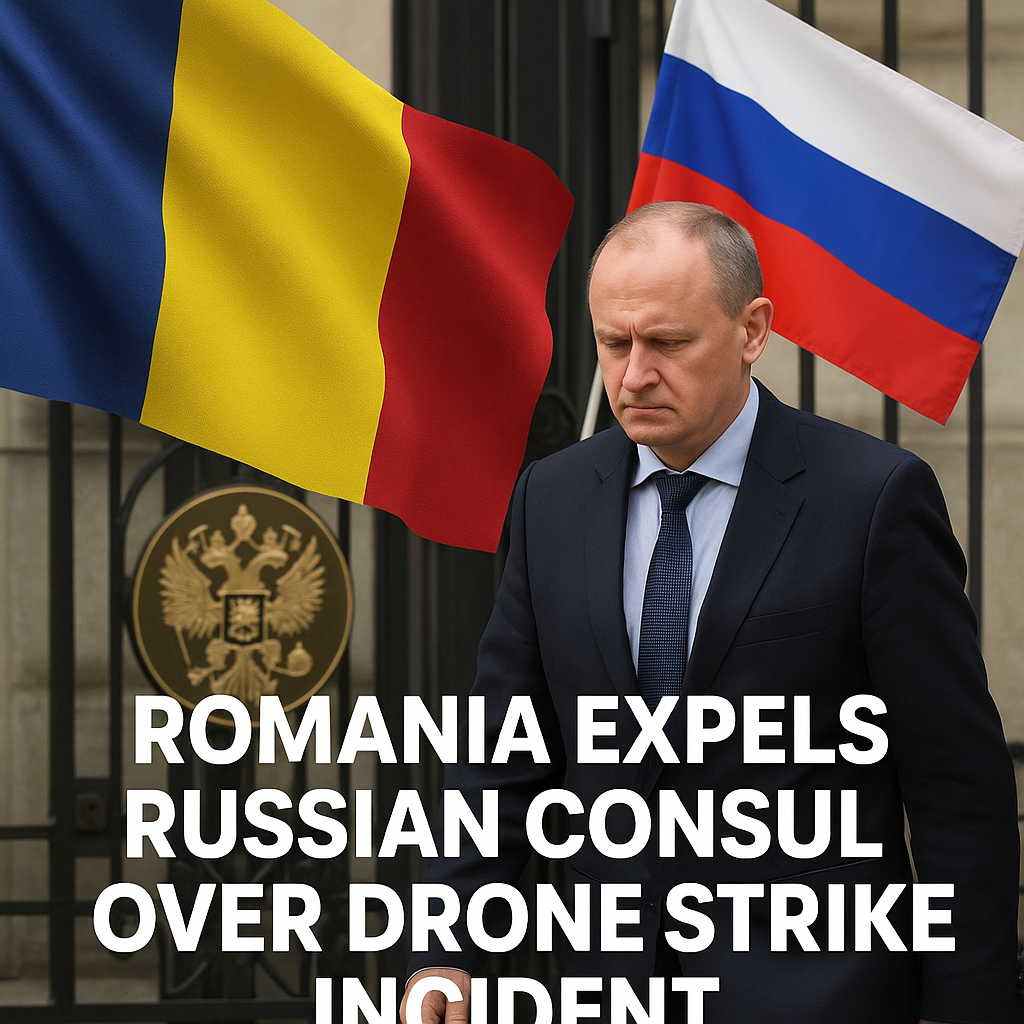
Romania Expels Russian Consul Over Drone Strike Incident
Romania Expels Russian Consul Over Drone Strike Incident
In an escalating diplomatic crisis, Romania has decided to expel a Russian consul following a drone strike that landed within its borders. This incident, which occurred in the vicinity of Romanian territory during ongoing tensions related to the conflict in Ukraine, has intensified scrutiny on Russia’s military actions and their implications for neighboring countries.

The Incident: Context and Reaction
The drone strike, attributed to forces linked to Russia, reportedly targeted an area near the Danube River, raising alarms in Romania, a NATO member that has been attentive to security issues stemming from the Ukraine war. The Romanian government, highlighting its commitment to national security, swiftly took measures against the Russian diplomatic presence, branding the act of aggression unacceptable.

In statements to the media, Romanian officials described the strike as a violation of their sovereignty. Prime Minister Nicolae Ciucă emphasized that “Romania will not tolerate any threats to its territorial integrity.” This perspective has been echoed by analysts who argue that such military actions could embolden further aggressions in the region if left unchecked.

Conversely, Russian sources, including state-run media outlets, have dismissed the accusations as unfounded, asserting that Romania is engaging in anti-Russian propaganda. Officials from Moscow have labeled the expulsion of the consul as a “hostile act” and indicated potential retaliatory measures. This response reflects a broader pattern observed in diplomatic relations where incidents are often viewed through the lens of national narratives.
Broader Implications: Geopolitical Landscape
The expulsion of the Russian consul is not merely a bilateral issue between Romania and Russia but resonates within the wider context of NATO-Russia relations. This event may signal a shift in Romania’s diplomatic stance as it seeks to bolster its security alliances in light of perceived threats.
Romania has been increasingly vocal about regional security, participating in joint military exercises with NATO allies and advocating for enhanced Eastern European defense strategies. This incident may serve to galvanize support among NATO member states for robust measures against acts of aggression from Russia, particularly in light of the ongoing war in Ukraine, where civilian areas have frequently been targeted in conflict.
However, there are nuances to consider. Some analysts caution against overreacting to provocations, arguing that a measured approach is essential for maintaining regional stability. They suggest that while decisive action is important, it is equally crucial to avoid escalating tensions that could lead to further military confrontations.
Conclusions: Navigating a Complex Landscape
Romania’s decision to expel the Russian consul serves as a stark reminder of the delicate balance in international relations, particularly in Eastern Europe. The drones used in the strike are indicative of the broader security issues at play, as the war in Ukraine continues to have ripple effects on neighboring nations.
While the incident has drawn a clear line for Romanian authorities, the ramifications of such actions can lead to further geopolitical complexities. Observers are left to ponder what the next steps will be for both Romania and Russia. Will Romania fortify its position within NATO, or will diplomatic channels remain open despite rising tensions?
As these developments unfold, the global community watches closely, aware that each action taken may contribute to a larger narrative in the ongoing struggle for national sovereignty and regional peace.















